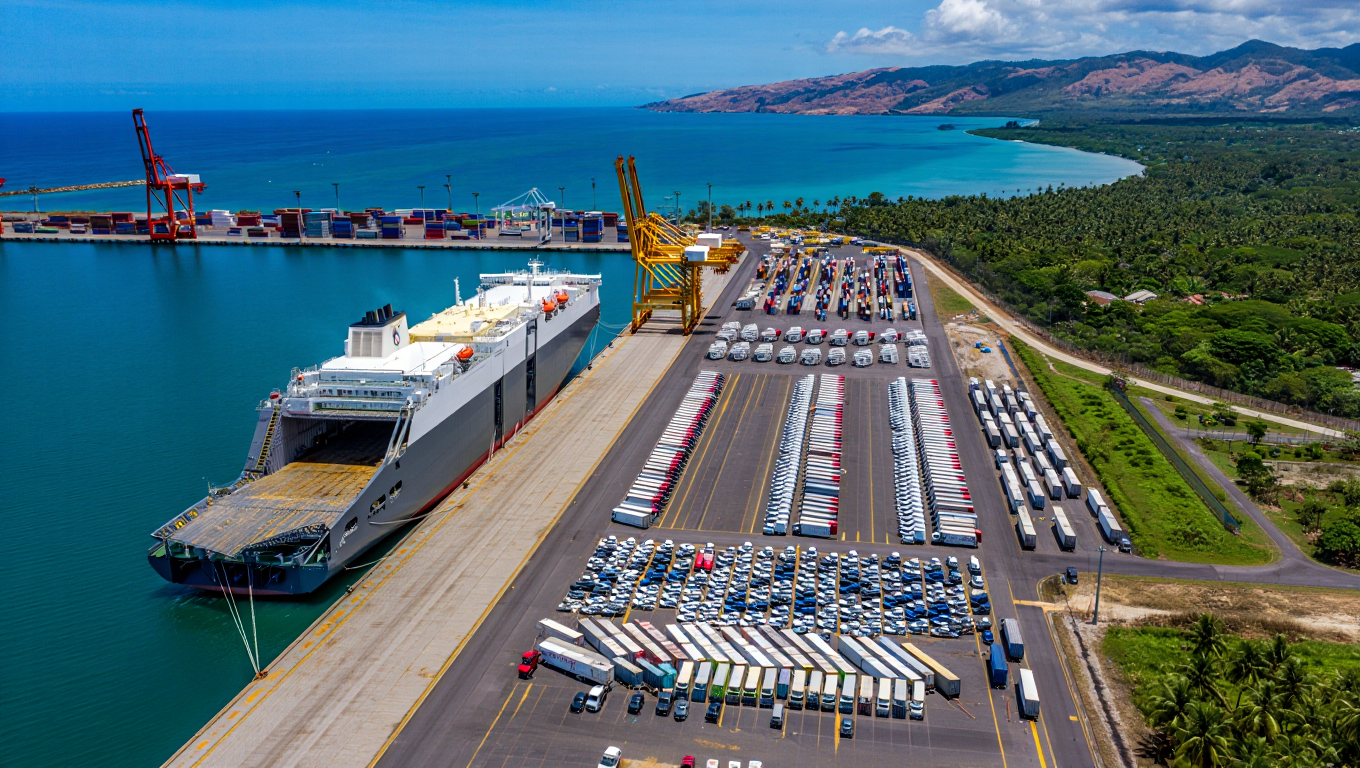
Peru is a central logistics hub on the Pacific coast of South America. The port of Callao in particular offers ideal conditions for shipping vehicles, machinery and rollable project cargo. Thanks to RoRo (roll-on/roll-off), predictable processes, short port times and low packaging costs are possible.
In 2025, stricter requirements will also apply to emissions, fuels and vehicle registration. Those who set up their booking process properly will save time and avoid unnecessary additional costs.
Key message: Successful shipping to Peru requires complete data, realistic schedules, properly prepared vehicles and clear customs coordination.
Routes & transit times: How to plan realistically
Typical RoRo routes start in Northern Europe (e.g. Hamburg, Bremerhaven, Zeebrugge) and travel via the Atlantic, Panama Canal and Pacific to Callao. Depending on the service, Paita or Matarani may also be possible destination ports.
Influencing factors: Season, weather, canal passages and slot availability.
How long does shipping to Peru by RoRo take? Depending on the route and service, several weeks – take seasonal effects and canal passages into account.
What documents do I need to import goods into Peru? Vehicle documents, proof of ownership, commercial invoice (if applicable), proof of export, power of attorney.
Can I leave personal belongings in the car? No – vehicles must be handed over without any items visible inside.
What emission/diesel regulations apply? Strict requirements for used diesel vehicles. Check SUNAT guidelines.
How much does shipping cost? Depends on the project – reliable figures are only available upon request.
How do I find the right descent? With live timetables and flexible time slots: Timetables – ODS Orient
Conclusion: Reach your goal faster with structure
Structured shipping saves time, reduces cost risks and avoids stress with customs. Complete data, thorough preparation and realistic planning make all the difference.
Disclaimer: All information in this article has been carefully researched but is subject to change at any time. ODS Orient accepts no liability for the topicality, accuracy and completeness of the information provided.
Do you have any questions or would you like to make use of our RoRo service?
A motorhome is more than just a vehicle - it is a travelling companion, a home on wheels and often a considerable investment. Anyone who wants to transport it by sea is quickly faced with the key question: container vs roro for motorhome - which method really suits the vehicle, route and risk profile? This is exactly where most wrong decisions are made: People only look at [...]
With every RoRo shipment, proper preparation determines whether a vehicle is loaded smoothly - or whether it fails at the terminal. In practice, delays rarely occur at sea, but almost always at the port: missing documents, vehicles that are not ready to travel or discrepancies between registration and actual condition. This is exactly where this roro loading checklist comes in. [...]