Shipping a motorhome: Container or RoRo? The big comparison for reliable planning
January 27, 2026
Reading time: 2 minutes
A motorhome is more than just a vehicle - it is a travelling companion, a home on wheels and often a considerable investment. Anyone who wants to transport it by sea is quickly faced with the key question: container vs roro for motorhome - Which method really suits the vehicle, route and risk profile? This is exactly where most wrong decisions are made: People only look at „fast“ or „protected“ and overlook details such as dimensional limits, port processes, loading rules, battery or gas regulations and customs requirements.
This guide provides you with a practical decision-making aid. You will find out when RoRo (roll-on/roll-off) is the more efficient choice, when the container offers more control - and which preparation steps are mandatory regardless of the method. We deliberately do not quote specific prices, as costs depend heavily on the route, season, vehicle data and availability. For reliable figures, a personalised offer required.
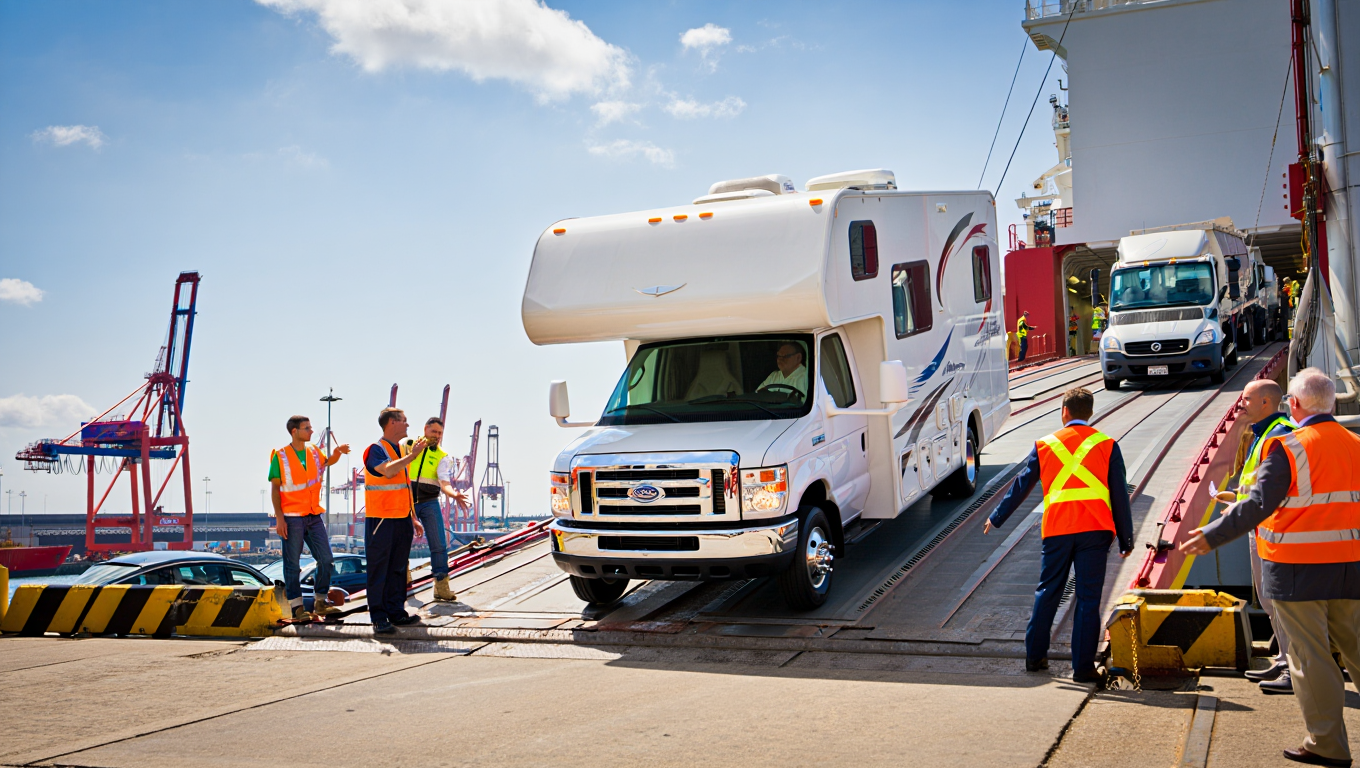
RoRo loading at the terminal: Vehicles roll on board via ramps - efficiently, but with clear guidelines.
RoRo vs. container: briefly explained
RoRo (roll-on/roll-off)
With RoRo, the motorhome drives directly onto the ship on its own axle via a ramp. This reduces handling points and simplifies the process considerably. The prerequisite is that the vehicle is ready to drive.
Container
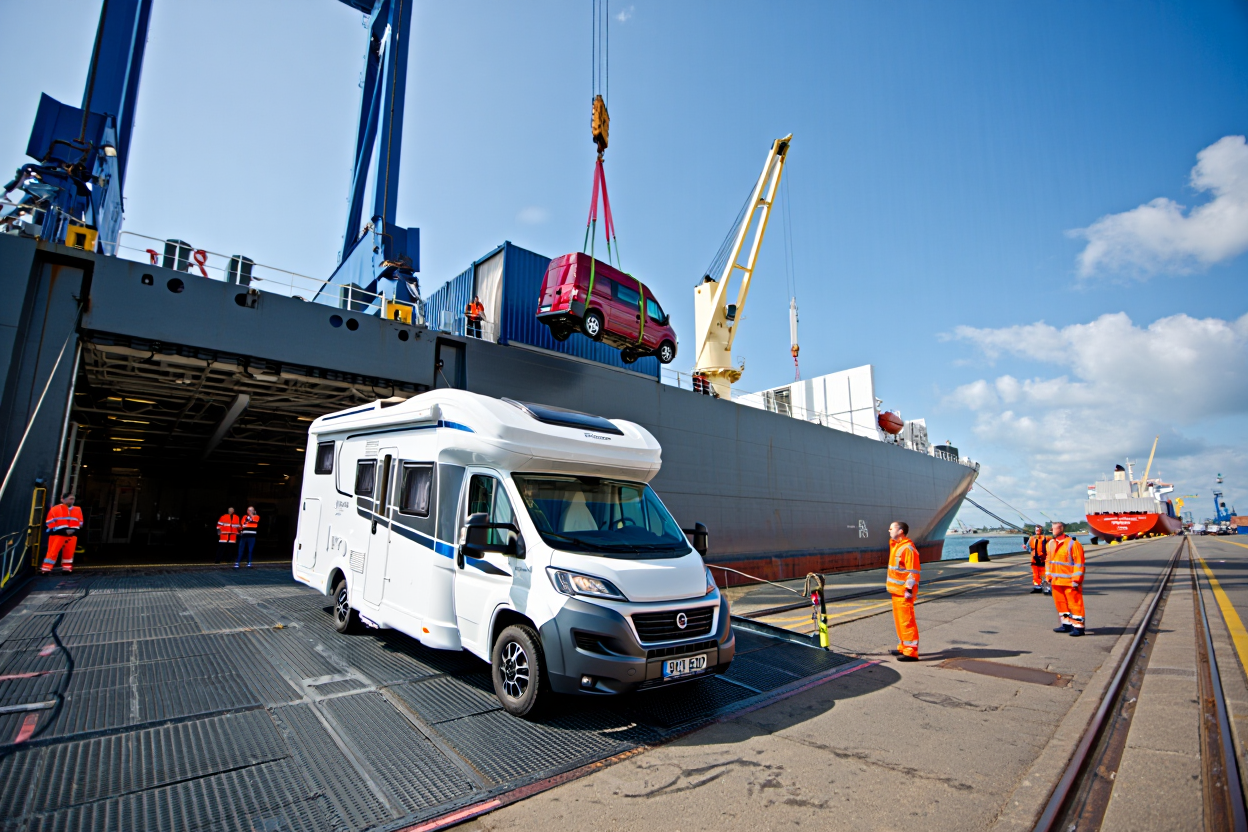
During container transport, the motorhome is loaded into a sea container. This offers additional protection from the weather and external access, but requires precise dimensional checks and professional load securing.
Container transport via standardised terminal processes with crane handling.
Container vs roro for motorhome: The most important differences
The CTU Code applies internationally for safe load securing: IMO CTU Code
Avoid typical mistakes
Inaccurate dimensions
Loose objects in the vehicle
Incomplete or contradictory documents
Time planning too tight
Conclusion: container vs roro for motorhome
The decision between container vs roro for motorhome always depends on the vehicle type, route and individual requirements. RoRo impresses with its simplicity and efficiency for large, roadworthy motorhomes. The container scores with protection and flexibility. Individual advice and a personalised offer are essential for reliable planning.
FAQ - Frequently asked questions
Is RoRo always cheaper?
Not necessarily. The cost-effectiveness depends on the route, season and vehicle data.
Can luggage stay in the motorhome?
Generally not for RoRo. For containers, only after prior agreement and documentation.
What if my motorhome is not roadworthy?
Then container transport is usually the only option.
How important are exact dimensions?
Extremely important - they decide on feasibility and mode of transport.
How early should I plan?
As early as possible in order to comply with availabilities and cut-offs.
Disclaimer: All information in this article has been carefully researched but is subject to change at any time. ODS Orient accepts no liability for the topicality, accuracy and completeness of the information provided.
Do you have any questions or would you like to make use of our RoRo service?
RoRo shipping is the easiest way to get your car from Germany to Turkey. From Bremerhaven or Hamburg, you can reach Turkish ports such as Derince, Gemlik or Mersin in 7 to 12 days. The correct customs documents and the Turkish ÖTV tax are important. Good preparation saves time and money - especially for used cars. Short answer in [...]
The pure transit time of a RoRo shipment from Europe is between 10 and 40 days, depending on the destination region. It takes around 14-18 days to Jeddah, 12-18 days to West Africa, 18-28 days to South America and 30-40 days to Australia. Important: The total delivery time also includes pre-carriage, documentation and customs clearance - expect a total of 3-8 weeks. Short answer in 5 [...]