Why shipping India needs planning security
With ports such as JNPA/JNPT, Mundra, Chennai/Ennore, Kolkata/Haldia and Cochin, India is one of the most dynamic maritime trade markets in Asia. At the same time, clear import and reporting obligations apply: Imports are made electronically via ICEGATE or CBIC. Those who submit their consignment data correctly and in full reduce idle times and additional costs - and ensure smooth processing.
Main routes & harbours: West and east coast at a glance
The most common routes are via the Mediterranean, the Suez Canal and the Arabian Sea to the west coast or further into the Bay of Bengal to the east coast.
Important destination ports:
- JNPA/JNPT (Mumbai): India's most important container port, ideal connection for north-west India.
- Mundra (Gujarat): Large private harbour with strong rail connections.
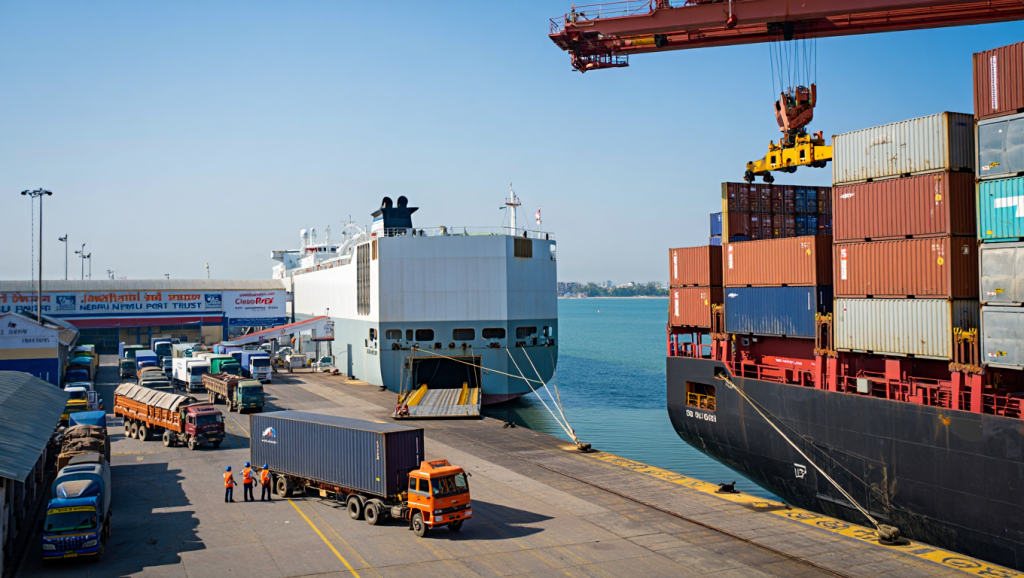
- Chennai/Ennore (Tamil Nadu): South Indian transshipment centre with RoRo capacity.
- Kolkata/Haldia (West Bengal): Important for the north-east, depending on the tide.
- Cochin (Kerala): Gateway for south-west India, also for general cargo.
Tip: Check live timetables and plan for seasonal effects (monsoon, storms) and Suez bypasses. See: Schedules
Transport types: RoRo vs. container
| Criterion | RoRo | Container (FCL/LCL) |
|---|---|---|
| suitability | Roadworthy vehicles | General cargo, dismantled vehicles |
| packaging | Low | Higher (stowage, lashing) |
| handling points | Few, gentle | Multiple envelopes |
| Cost logic | Dimensions, weight, deck area | Equipment & stowage |
| risks | Sea state, terminal handling | Handling risks |
| Special cases | High & Heavy, Machines | Accessories, spare parts |
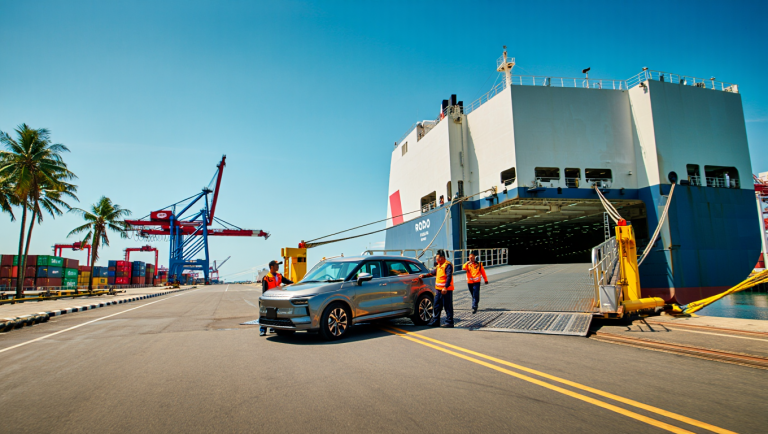
Practice: Ready-to-run vehicles = RoRo. The container is better for spare parts or parts collections. Details on RoRo preparation: What do I need to bear in mind for a RoRo shipment?
Documents & compliance: India's customs regulations at a glance
On the export side:
- Commercial invoice & packing list
- Export customs declaration (e.g. EU-MRN)
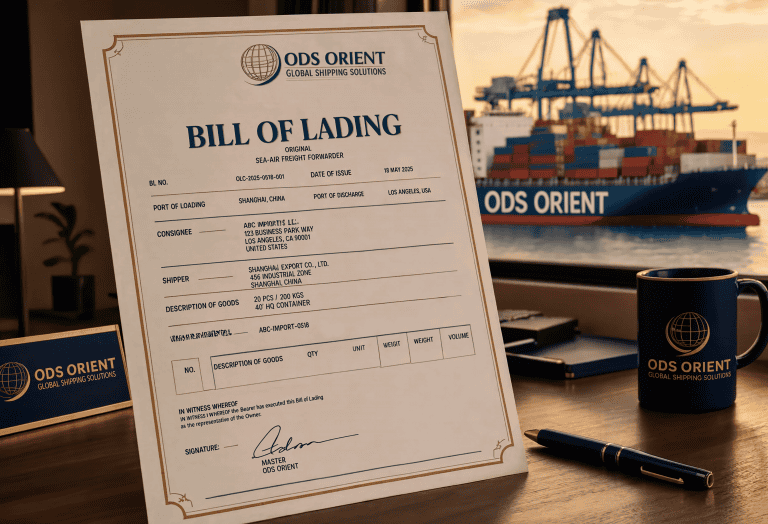
- Bill of Lading (Original/Telex Release)
On the import side (India):
- Bill of Entry (via ICEGATE)
- Import licence or registration depending on the goods
- Customs duties incl. IGST (creditable if applicable)
Official sources:
The digital booking & dispatch process - step by step
- Enquiry & Routing: Departure/destination, dimensions, weight, VIN if applicable
- Offer & Slot: Booking number, cut-offs, terminal information
- Finalise documents: Invoice, packing list, export customs, B/L
- Prepare the programme:
- RoRo: „Blickleer“, tank < ¼, steerable/rollable
- Container: suitable for stowage/packaging, moisture protection
- Gate-in & loading: Terminal check & stowage
- Tracking & arrival: B/L, VIN, import processing
Time windows & cut-offs - what you should expect
| process step | Typical time window | Notes |
|---|---|---|
| document cut-off | 2–5 working days before ETD | Carrier-dependent |
| Gate-In | 2–3 working days before ETD | Confirm slot |
| B/L creation | After departure (Sailed) | Plan corrections |
| Destination port status | Before ETA/upon arrival | Use for exemption |
| collection | ETA + X days | Avoid demurrage charges |
Common stumbling blocks – and how to avoid them
- Wrong mode: Accessories do not belong in RoRo - clarify mixed forms
- Incomplete documentation: Exact dimensions, VIN & photo documentation required
- RoRo error: No „empty look“, high tank level = risk of rejection
- Outdated timetables: Only use live schedules: Schedules
- Customs rules clarified late: Check import specifications at an early stage - ICEGATE/CBIC
Checklist: Quick start for shipping India
Before booking:
- Define load profile precisely
- ✅ Set destination harbour & alternatives
- ✅ Check the live timetable: Schedules
- ✅ Check transport insurance
- ✅ Coordinate India import specifications via ICEGATE/CBIC
During the booking process:
- ✅ Complete documents (invoice, packing list, B/L, MRN)
- Comply with cut-offs
- ✅ Prepare overrun
After departure:
- Tracking via B/L/VIN
- Provide import documents
- ✅ Coordinate exemption & collection
Practical table: Information for quick testing
| Category | Mandatory information | Additional info |
|---|---|---|
| load | VIN, dimensions, weight | Photo documentation, modifications, list of accessories |
| Routing | Port of destination, ETD/ETA | Alternative ports |
| Documents | Invoice, packing list, B/L, MRN | HS code, country of origin, tax ID |
| permits | Registrations depending on goods | BIS/FSSAI/DGFT references |
| Insurance | Policy & cover | GA, deductible, door-to-door |
Port focus: JNPA/JNPT & Chennai/Ennore
- JNPT (Mumbai): India's largest container port, West India Gateway
- Chennai/Ennore: Ideal for South India, RoRo terminals also available
Note: Observe health/quarantine regulations for certain goods - consultation with import agent necessary.
FAQ: Frequently asked questions about shipping India
How long does it take to ship to India by sea?
Several weeks depending on the route. Note seasonal influences & harbour location. Use live timetables.
Do I need special import authorisations?
Depending on the type of goods. Many goods require registrations (e.g. BIS, FSSAI, DGFT). Check ICEGATE/CBIC.
RoRo or container - which is better?
RoRo for roadworthy vehicles, containers for spare parts & sensitive goods.
Which documents are mandatory?
Invoice, packing list, bill of lading, export customs (MRN), bill of entry in India via ICEGATE.
What does shipping to India cost?
Depending on cargo, harbour, service & season. Prices only on request.
How can I avoid delays?
Complete documents, clarify import specifications early on, observe live schedules & cut-offs.
Conclusion: Achieving your goal with structure
Shipping India is a success if the data quality, documentation and timings are right. Those who plan early, use live schedules and prepare cargo correctly will meet deadlines - whether via RoRo or container. For reliable prices and transport solutions, we recommend a customised offer.
Disclaimer: All information in this article has been carefully researched but is subject to change at any time. ODS Orient accepts no liability for the topicality, accuracy and completeness of the information provided.