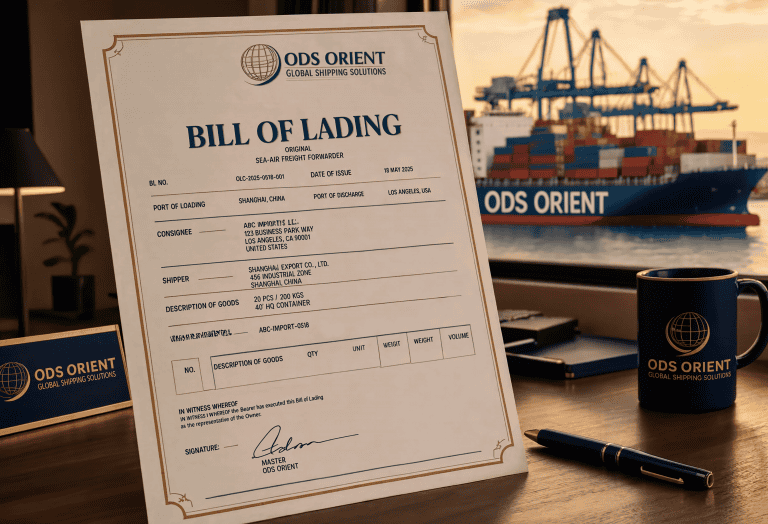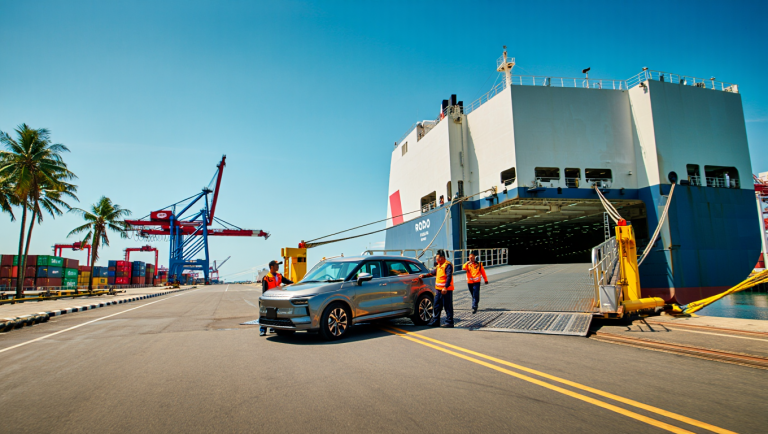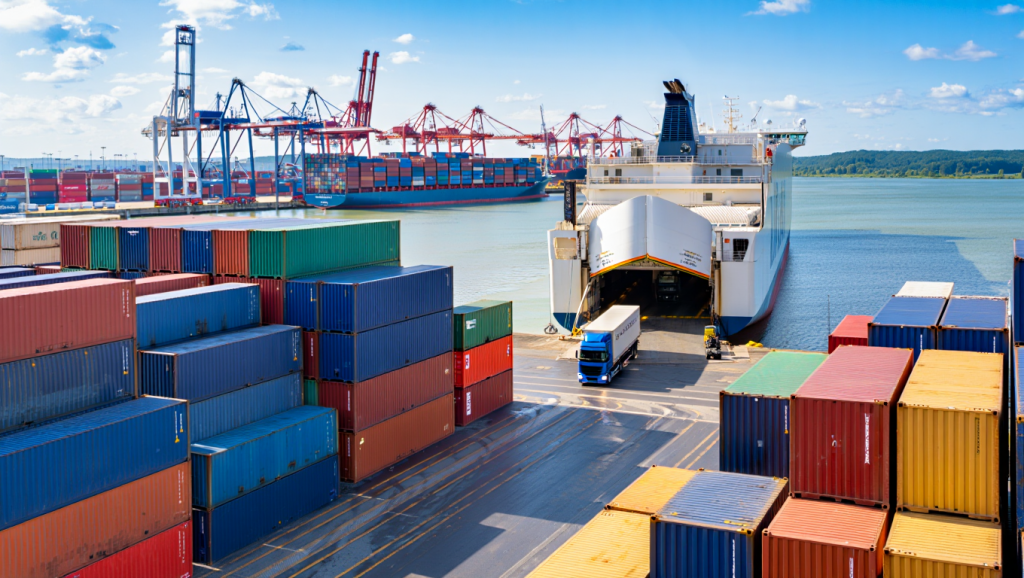
The topic of lcl vs fcl vs roro is a comparison of three common transport methods in international shipping. LCL (Less-than-ContainerLoad), FCL (Full ContainerLoad) and RORO (Roll-on/Roll-off) differ primarily in terms of volume, type of cargo and delivery time. In this article, we show when which variant makes sense. Prices are deliberately avoided - instead, we recommend obtaining a personalised quote.
Overview: lcl vs fcl vs roro
- LCL (Less than Container Load)
Ideal for smaller consignments that share the container compartment with others. Particularly suitable for low shipping volumes and flexible schedules. - FCL (Full Container Load)
Occupies an entire container - even if it is not completely full. Offers greater safety and direct transport routes. - RORO (Roll on/Roll off)
Vehicles and other wheeled goods are driven onto special ships via ramps and unloaded there again - efficiently for vehicles, construction machinery and special cargo.
Decision criteria in comparison
| Criterion | LCL | FCL | RORO |
|---|---|---|---|
| Volume | < 15 m³ or a few pallets | From approx. 15 m³ | Vehicles, construction machinery, rolling cargo |
| Cost structure | Billing per volume share | Flat rate per container | Depending on route and freight type |
| speed | Delay due to sorting | Direct charging enables speed | Fastest handling process |
| Security | Higher risk due to transhipment | Sealed container, secure | Minimal turnover, but dependent on weather conditions |
| Flexibility | Frequent departures, flexible | Plannability for regular shipments | Only available on certain routes |
When is which variant worthwhile?
- LCL is recommended for:
- small, irregular programmes
- Testing new markets or budget restrictions
- FCL offers advantages for:
- large shipping volume
- sensitive or valuable goods
- Desire for secure, direct processing
- RORO is particularly suitable for:
- Vehicles (cars, lorries, construction machinery)
- Large, rollable special goods with direct loading facilities
Checklist for the right choice
- Shipping volume (CBM / number of pallets)
- Urgency of the delivery
- Sensitivity and value of the freight
- Availability of suitable routes or services
- Request a personalised quote
FAQ
What does "lcl vs fcl vs roro" mean?
The comparison between partial containerised shipping (LCL), full containerised shipping (FCL) and roll-on/roll-off (RORO).
When is LCL advantageous?
For small volumes, flexible time windows and irregular consignments.
When does FCL start to pay off?
From around 15 m³ or for regular, larger shipments; particularly secure and plannable.
What are RORO's strengths?
Efficient roll-on/roll-off loading - ideal for vehicles and rollable machines.
How do I get reliable prices?
As costs depend heavily on the route, volume and type of freight, we recommend requesting a customised quote.
Conclusion
The decision between lcl vs fcl vs roro depends heavily on the shipment volume, time required, type of cargo and security requirements. LCL offers flexibility for small consignments, FCL offers efficiency and security for large volumes, and RORO is the first choice for vehicles and rollable special goods. For the best decision, a personalised offer is essential.
Disclaimer: All information in this article has been carefully researched but is subject to change at any time. ODS Orient accepts no liability for the topicality, accuracy and completeness of the information provided.