Why head to the west coast now?
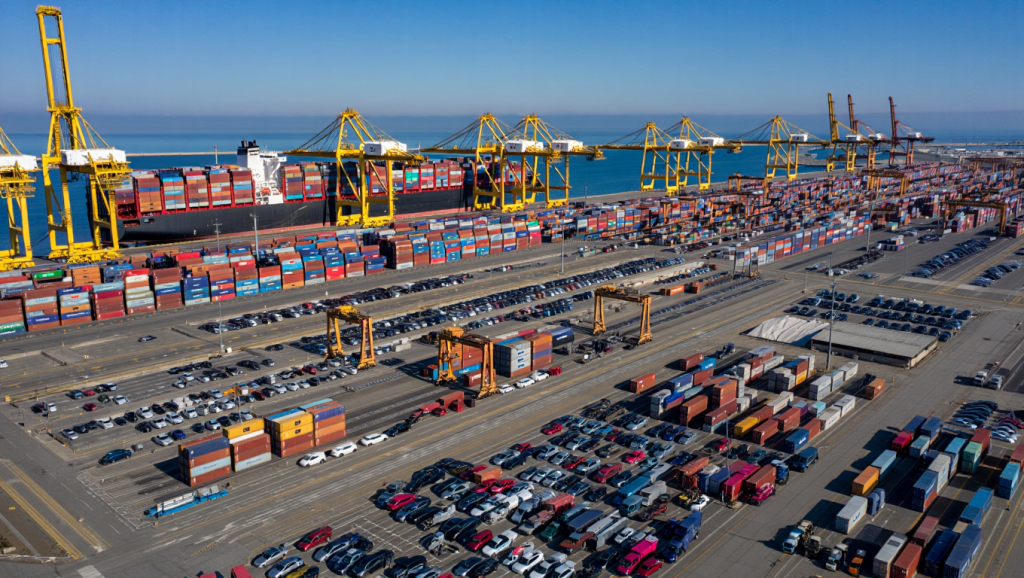
The ports on the west coast of North America – including Los Angeles/Long Beach, Oakland, Seattle/Tacoma and Vancouver/Prince Rupert in Canada – are central hubs for vehicle, machinery and project cargo. In 2025, port emission requirements in California will become more stringent (e.g. CARB At-Berth Rule), while US Customs (CBP), EPA/DOT and Transport Canada/RIV will specify clear processes for vehicle imports. Those who set up their RoRo booking process properly will reduce queries, demurrage charges and terminal times – and keep shipping to the North American west coast reliably on track.
Routes & ports: How the west coast is efficiently connected
The most common routes run from Northern Europe (e.g. Zeebrugge, Bremerhaven, Hamburg) via the Atlantic–Panama–Pacific to the major West Coast hubs:
- USA: Los Angeles/Long Beach, Oakland, Seattle/Tacoma, Portland, occasionally Port Hueneme for RoRo
- Canada: Vancouver as the largest Pacific hub, Prince Rupert with fast connections to Asia
Planning tip: Those who are flexible with departure windows (± 1 week) and destination ports can secure slots more easily and optimise their ETA.
Check timetables live:
- Timetables → https://odsorient.com/fahrplaene
- What do I need to bear in mind when shipping by RoRo? → https://odsorient.com/was-muss-ich-bei-einer-roro-verschiffung-beachten
RoRo vs. container: Which mode of transport is right for you?
| Criterion | RoRo | Container (FCL/LCL) |
|---|---|---|
| packaging costs | low (roadworthy) | higher (congestion/packaging) |
| Terminal handling | quickly (gate-in, lashing) | more envelopes (CY, Devanning) |
| Cost logic | highly dependent on dimensions/weight | more sensitive to equipment/rates |
| suitability | Vehicles, trailers, machinery | General cargo, fragile/loose goods |
| Risk/Handling | professional on-board handling | additional handling risks possible |
The digital booking process – step by step
1) Enquiry & Routing
- Port of departure/destination, ETD/ETA, flexibility
- Vehicle data: dimensions, weight, VIN, drive type
- Services: Insurance, pre-carriage/post-carriage, documents
2) Offer & slot reservation
- Individual offer, booking confirmation, cut-offs
- Note: Prices are project-dependent.
3) Documents & Export
- EU export documents, vehicle registration, power of attorney if applicable
- USA/Canada: Check import requirements in advance
4) Vehicle preparation
- Cleaning, empty, < ¼ tank, battery charged
- Enclose keys, document condition
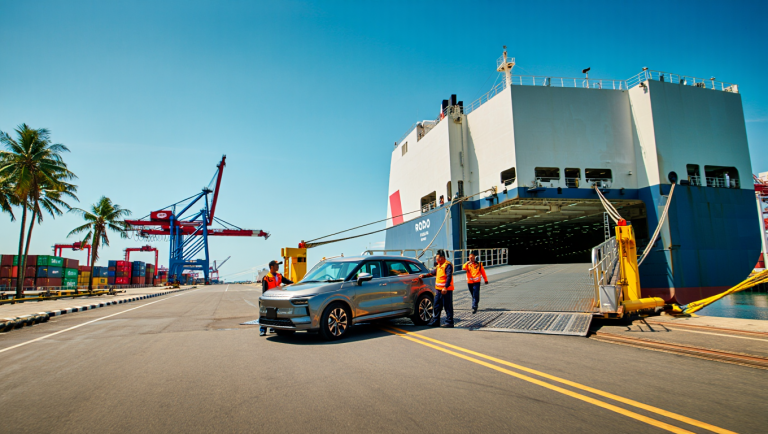
5) Gate-In & Loading
- Terminal delivery, condition report, lashing on board
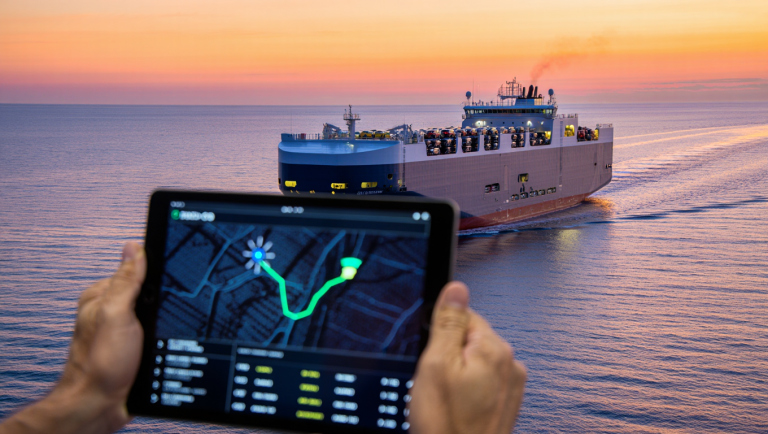
6) Tracking & arrival
- Status via booking number/VIN/B/L
- Exemption and collection at the port of destination
Required information for booking
| type of programme | Mandatory information | Optional |
|---|---|---|
| Car/Van/SUV | VIN, dimensions, weight, drive type | Photos, ground clearance, modifications |
| Truck Head/Lorry | VIN, dimensions, weight, steering, fuel tank | Photos, structure, lashing points |
| Construction machine | Type, dimensions, weight, ramp-compatible | Focus, drawings |
| Trailer | Dimensions, weight, axles, brakes | Load, lashing points, photos |
Customs & Import: USA 2025
- CBP: https://www.cbp.gov/trade/basic-import-export/importing-car
- EPA 3520-1: https://www.epa.gov/importing-vehicles-and-engines/learn-about-importing-vehicles-and-engines
- DOT HS-7: https://www.nhtsa.gov/sites/nhtsa.gov/files/documents/hs7_rv9-tag.pdf
Note: If necessary, have non-compliant vehicles retrofitted via ICI.
Customs & Import: Canada 2025
- Transport Canada: https://tc.canada.ca/en/road-transportation/importing-vehicle
- RIV: https://www.riv.ca/
- CBSA: https://www.cbsa-asfc.gc.ca/publications/dm-md/d19/d19-12-1-eng.html
Important: RIV inspection within deadline, clarify recalls.
Environmental and port regulations: California 2025
- CARB At-Berth Rule: https://ww2.arb.ca.gov/our-work/programs/ocean-going-vessels-berth-regulation
Mandatory from 2025: Observe CAECS (e.g. shore power), reporting requirements and sanctions framework.
Time slots & cut-offs
| process step | Typical time window | Hint |
|---|---|---|
| document cut-off | 2–5 days before ETD | Dependent on the shipping company |
| Gate-In vehicle | 2–3 days before ETD | Terminal slot required |
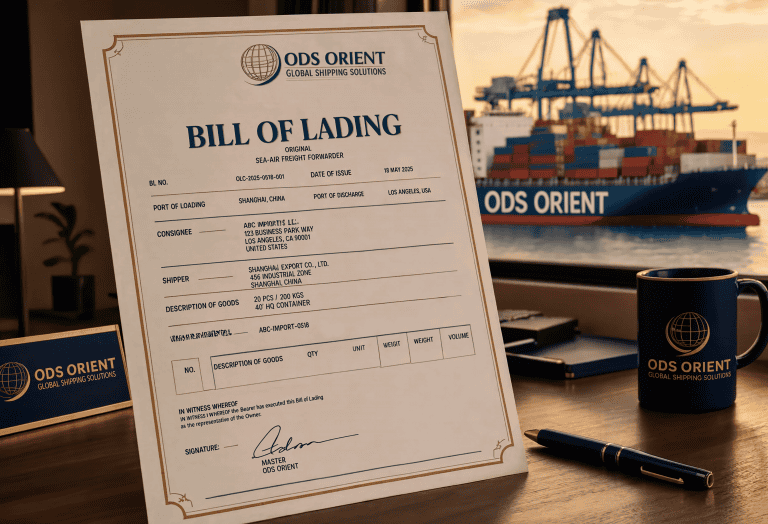
| B/L creation | after departure | Data release required |
| Avis destination port | before arrival | For customs and collection |
| exemption | ETA + X days | Avoid late fees |
Common stumbling blocks – and how to avoid them
- Inaccurate measurements – measure attachments precisely
- Vehicle not prepared – fuel tank, cleaning, keys
- Customs forms delayed – clarify early for the USA/Canada
- Old timetables – only work with live data
- Price focus without data – personal enquiry required
Checklist: Your quick start to the west coast
Before booking
- Vehicle data (VIN, dimensions, weight, drive)
- Port of destination & alternatives
- Check live timetables: https://odsorient.com/fahrplaene
- Customs inspection: USA/Canada depending on destination
During the booking process
- Request a personalised quote
- Note cut-offs
- Clarify transport insurance
Before Gate-In
- Wash vehicle, empty it, charge battery
- Enclose key
- Take photographs of the condition
During the journey
- Tracking via VIN/B/L
- Prepare import documents
On arrival
- Secure customs clearance
- Coordinate collection/onward transport
- Document condition
FAQ: Frequently asked questions about West Coast shipping
How long does the shipment take?
Several weeks – depending on route, season, port location. Use live timetables.
What documents are required for the USA?
CBP, EPA 3520-1, DOT HS-7 – see official sources.
Any special features for Canada?
RIV programme with inspection and recall check within 45 days.
Can I leave personal items in the vehicle?
No – vehicles must be empty.
How much does shipping cost?
Depends on the project – please request a personal quote.
Are there environmental regulations in California?
Yes – from 2025, CAECS obligations will apply to ro-ro ships (e.g. shore power).
Conclusion: Achieving your goal with structure
Shipping to the west coast of North America can be planned if data quality, customs requirements and live schedules are taken into account at an early stage. Implementing CARB requirements, adhering to cut-offs and ensuring vehicles are properly prepared saves time and money. For individual quotes, we recommend making a personal enquiry.
Further ODS resources:
- Timetables & slots: https://odsorient.com/fahrplaene
- RoRo preparation: https://odsorient.com/was-muss-ich-bei-einer-roro-verschiffung-beachten
Official sources (selection):
- USA – CBP: https://www.cbp.gov/trade/basic-import-export/importing-car
- EPA: https://www.epa.gov/importing-vehicles-and-engines/learn-about-importing-vehicles-and-engines
- DOT/NHTSA: https://www.nhtsa.gov/sites/nhtsa.gov/files/documents/hs7_rv9-tag.pdf
- Canada – Transport Canada: https://tc.canada.ca/en/road-transportation/importing-vehicle
- CBSA: https://www.cbsa-asfc.gc.ca/publications/dm-md/d19/d19-12-1-eng.html
- California – CARB: https://ww2.arb.ca.gov/our-work/programs/ocean-going-vessels-berth-regulation
Disclaimer: All information in this article has been carefully researched but is subject to change at any time. ODS Orient accepts no liability for the topicality, accuracy and completeness of the information provided.