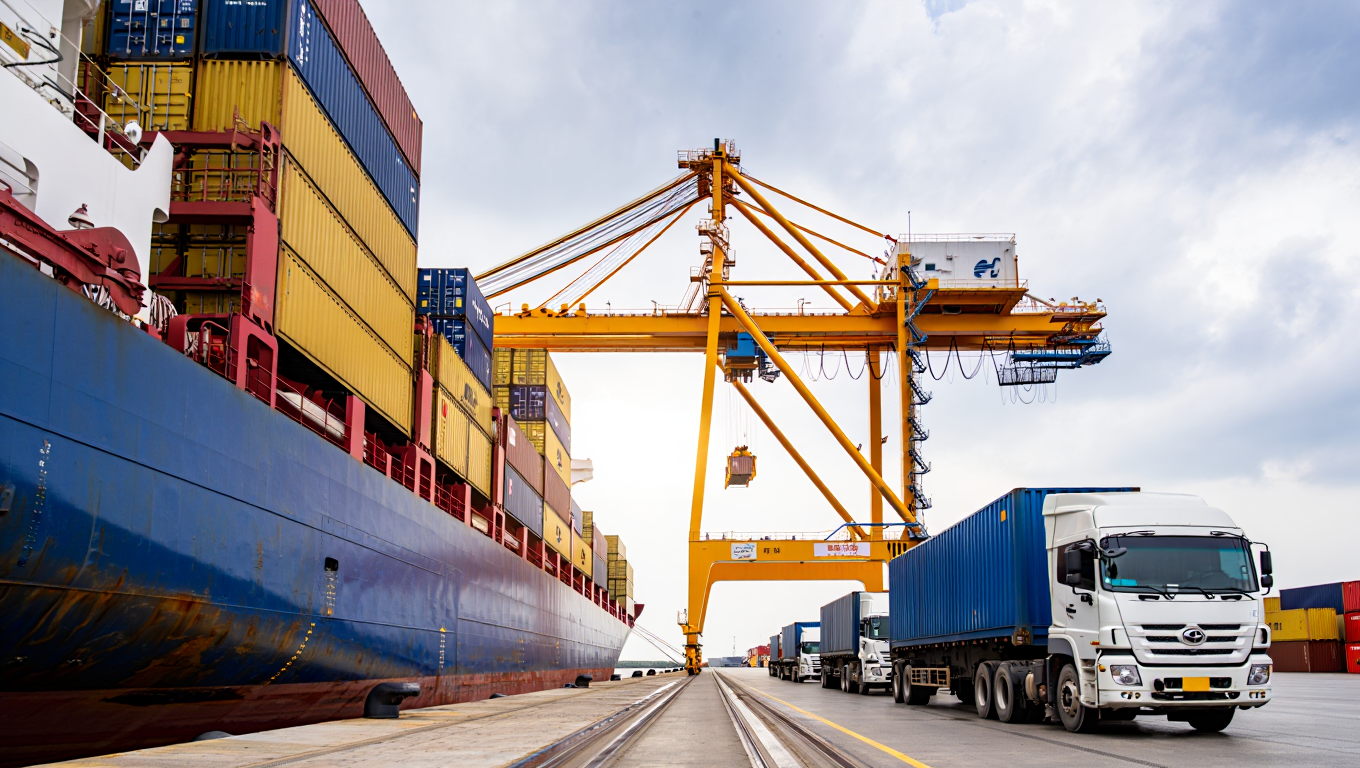
The shipping china is a central component of international supply chains for many companies. China will remain one of the world's most important trading partners in 2025 - not only as a production location, but also as a sales market. If you want to ship goods to China reliably and in compliance with the law, you need to take numerous aspects into account: Transport routes, customs regulations, cost structures and logistical peculiarities. This article provides a comprehensive overview of the most important factors for successful sea freight to China.
Why 2025 poses special challenges
The year 2025 will bring numerous changes to international trade. The Chinese customs administration has introduced new digital procedures to check shipments more efficiently. At the same time, the requirements for sustainability and transparency along the supply chain are increasing.
The market is also reacting to global developments such as geopolitical tensions, volatile freight rates and changing trade agreements. Well-prepared shipments to China are therefore more important than ever.
Transport options: Which shipping method is the right one?
Sea freight (FCL/LCL)
Classic container freight - whether full containerised (FCL) or groupage (LCL) - is the most frequently chosen mode of transport for exports to China. It is suitable for almost all types of goods and offers a good cost-to-capacity ratio.
RoRo shipping
RoRo shipping is the ideal solution for rolling goods such as vehicles, construction machinery or agricultural vehicles. It enables direct loading without containerisation - efficiently and safely.
Air transport can also be worthwhile for time-critical shipments or high-value goods - albeit at significantly higher costs. Rail freight via the so-called New Silk Road is an interesting alternative for medium-haul routes.
Main routes & important harbours
China's major seaports have excellent international connections. The most important destinations include:
Shanghai
Ningbo-Zhoushan
Shenzhen
Guangzhou
Tianjin
Depending on the port of departure in Europe (e.g. Hamburg, Bremerhaven or Antwerp), transit times vary between 28 and 40 days. Supra-regional feeder connections and hinterland transport should be taken into account in the planning.
Table: Comparison of typical transport routes
Type of transport
Duration (approx.)
Suitable for
Sea freight (FCL)
30-40 days
Large volumes, palletised goods
RoRo
25-35 days
Vehicles, machines, rolling goods
Air freight
2-5 days
Urgent consignments, electronics etc.
Rail freight
14-20 days
Medium-sized, high-quality goods
Alt text for the table: Comparison of duration and areas of application of different types of transport to China in 2025.
Customs regulations & import requirements
China has clear and sometimes very detailed requirements for imports. Particular attention should be paid to
Customs tariff number (HS code)
Import licences for certain goods
CE marking or CCC certification
Packaging specifications incl. IPPC labelling
Obligation to declare in the Chinese customs system (single window)
The exact costs depend heavily on factors such as the volume of goods, weight, distance, port of departure and destination and the selected service level.
Typical cost components:
Sea freight costs (by volume or weight)
Terminal Handling Charges (THC)
Document fees
Pre- and on-carriage (domestic transport)
Customs clearance and possible import sales tax
Note: It is not possible to provide a flat-rate price. A customised offer is required for a reliable cost calculation.
FAQ on shipping to China
How long does a shipment to China take? Depending on the route and mode of transport, the transit time is between 25 and 40 days.
What do I need to bear in mind when clearing customs in China? All documents must be complete and correct. Strict regulations also apply to certain product groups.
Is there groupage transport (LCL) for small consignments? Yes, LCL is a good option for smaller consignments. Precise packaging and declaration are important here.
The shipping china will remain a key issue for exporters in Europe in 2025. If you want to ship successfully to China, you need a good understanding of the processes, customs regulations and logistical options. Whether container transport or RoRo shipping - professional preparation saves time, costs and nerves. Utilise existing resources and get individual advice if required to make the most of your export strategy.
Disclaimer: All information in this article has been carefully researched but is subject to change at any time. ODS Orient accepts no liability for the topicality, accuracy and completeness of the information provided.
Do you have any questions or would you like to make use of our RoRo service?
RoRo construction machinery transport is one of the most efficient methods of shipping construction machinery internationally. Vehicles are driven directly onto a RoRo ship via a ramp. Technical factors such as ramp angle, ground clearance and machine dimensions are decisive. In addition, documents such as B L, ETD ETA information as well as POL and POD must be prepared correctly. In practice, the [...]
The decision between RoRo and container transport depends heavily on the type of cargo, the route and the safety requirements. When comparing ro-ro vs container, it is often found that ro-ro is particularly efficient for vehicles ready to travel or heavy machinery, while container solutions offer more protection and flexibility for sensitive or smaller cargo. In practice, the decisive factor is often [...]