Due to the current political situation, the following harbours are temporarily closed: Jebel Ali, Abu Dhabi, Sohar, Bahrain, Kuwait & Dammam!
Shipping to Algeria: Costs, routes & customs 2025
January 20, 2026
Reading time: 3 minutes
The demand for predictable transport solutions to North Africa remains high - and Algeria is one of the more demanding target markets. Whoever wants a Shipment to Algeria The transport company must not only choose the right route and mode of transport, but must above all ensure that documents, customs processes and harbour procedures are properly synchronised. Even minor discrepancies between the invoice, packing list and freight documents can lead to delays. At the same time, the Algerian seaports offer a solid infrastructure for container, RoRo and project cargo, provided the shipment is prepared correctly.
This guide provides you with a practical overview of routes, process steps, typical cost factors (without specific prices), customs requirements and best practices. The aim is for you to shipping algeria 2025 - from booking to release at the port of destination. A personalised offer is always required for individual costs and a reliable calculation, as conditions vary greatly depending on the cargo, season, shipping company, equipment and port.
Why Algeria 2025 requires special care
Algeria is a large import market, but at the same time the formal requirements for import and clearance are often stricter in practice than in many other destinations. Frequent success factors are:
Complete, consistent documents (in terms of content and form)
Early coordination with the importer and customs agent in the destination country
Correct classification of goods and clear product descriptions
Professional packaging and load securing
Realistic time planning with buffers
For time-critical projects in particular, it is worth considering the entire process as a process chain. Favourable sea freight alone is not enough if downtimes or additional demands increase the overall costs.
Important harbours in Algeria
Algiers (Algiers) - Central container and general cargo port
Oran - Relevant for Western Algeria and industrial imports
Skikda - frequently for industrial and energy projects
Annaba - useful for recipients in eastern Algeria
Routes & transit windows
Most routes for the Shipping Algeria sail via the Mediterranean. Departures from Northern Europe are usually transhipped, from Southern Europe more often direct. In addition to the pure transit time, cut-off times, terminal utilisation and local public holidays should be taken into account.
For operational planning, we always recommend using the latest Timetables, to define realistic departure and arrival windows.
Suitable modes of transport
Container (FCL / LCL)
Suitable for palletised goods, machines, spare parts and consumer goods. A particularly precise goods description is crucial for Algeria.
For oversized or heavy goods. Technical drawings, exact dimensions and proper stowage planning are essential here.
Cost factors for shipping to Algeria
Cost area
Influencing factors
Sea freight
Route, season, shipping company, equipment
Terminal & Handling
Harbour, type of loading, idle times
Customs & Documents
Product group, inspection effort
Lead / Lag
Distance, vehicle type, time window
Specific prices cannot be reliably quoted without details. A personalised quote is always required for individual costs.
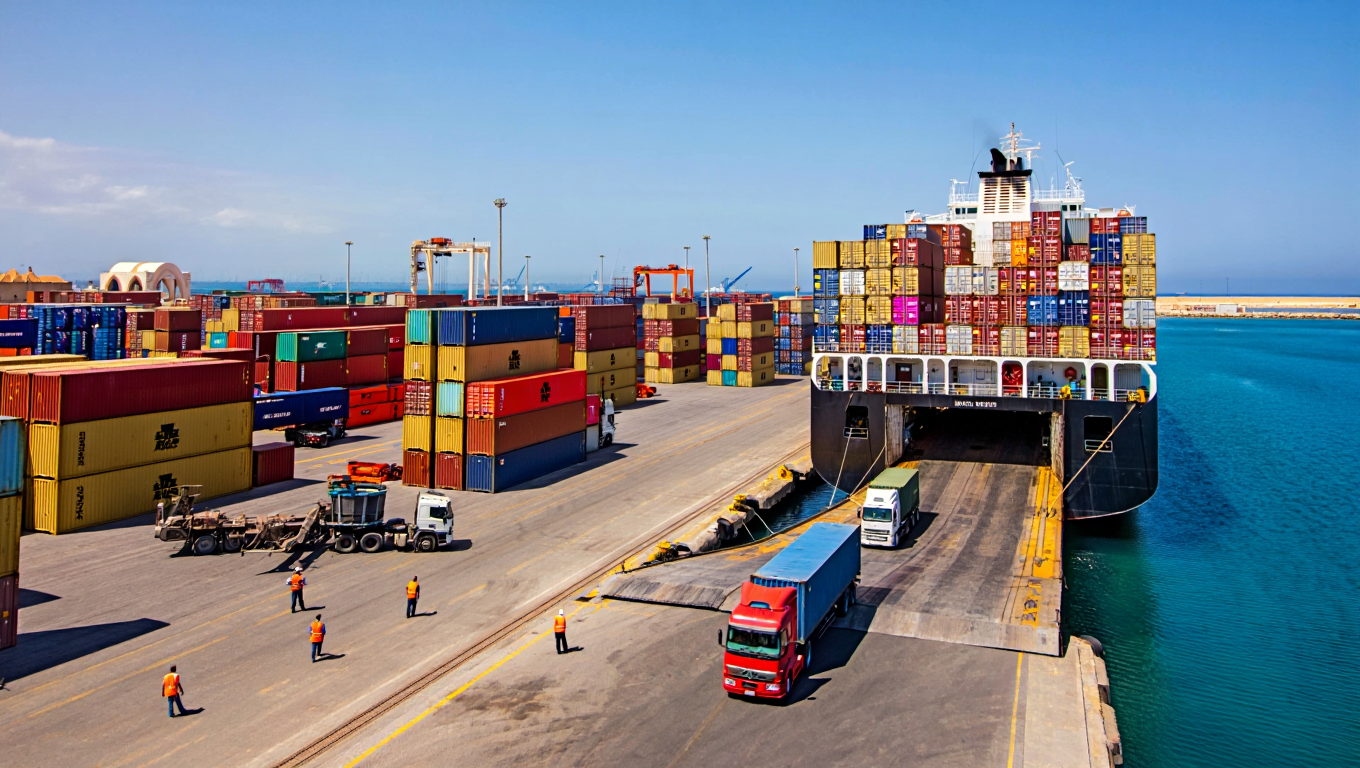
Image description (optional): Container terminal with stacked containers and RoRo ship in the background. Alt text: „Container and RoRo shipping to Algeria in comparison“.
Customs & Documentation
Customs clearance is often the most critical point in the Shipment to Algeria. Central documents are:
Commercial invoice with detailed description of goods
Packing list with quantities and weights
Bill of lading (B/L)
Proof of origin or conformity (if required)
An internationally recognised reference for safe packaging and load securing is the IMO - CTU Code.
Checklist: Shipping to Algeria
Importability of the goods checked
Suitable mode of transport selected
Documents complete and consistent
Seaworthy packaging and labelling
Departure window planned based on current timetables
Customs clearance coordinated with importer
FAQ - Frequently asked questions
How long does it take to ship to Algeria?
The duration depends on the route, port of departure and clearance processes. In addition to the sea transit time, a buffer should always be planned for the terminal and customs.
Are there fixed rates for shipping Algeria?
No. The costs are individual and depend on many factors. A personalised quote is required.
Is RoRo suitable for Algeria?
Yes, especially for vehicles and mobile units, provided they are correctly prepared and documented.
How can customs delays be avoided?
Through complete, consistent documents and early coordination with the local importer or customs agent.
Conclusion
The shipping algeria in 2025 requires structured planning, clear documentation and realistic timeframes. Coordinating the type of transport, route and customs processes at an early stage reduces risks and avoids unnecessary additional costs. For a reliable calculation, the following applies: individual requirements always require a personalised offer.
Disclaimer: All information in this article has been carefully researched but is subject to change at any time. ODS Orient accepts no liability for the topicality, accuracy and completeness of the information provided.
Do you have any questions or would you like to make use of our RoRo service?
It is possible to ship a car to Indonesia by RoRo via the ports of Jakarta (Tanjung Priok) and Surabaya (Tanjung Perak). The transit time from Europe is around 28 to 35 days. Indonesia requires SNI certification, levies a luxury tax on certain vehicles and has strict import regulations. Careful preparation is therefore essential. A brief summary in 5 bullet points […]
Once your vehicle has arrived at the port of destination, customs clearance begins in the country of destination. For this, you will need the original bill of lading, a commercial invoice, the vehicle registration document and other country-specific documents. A local clearing agent will handle the process on site. Storage fees will apply if customs clearance is delayed. Quick answer in 5 bullet points What happens after your vehicle arrives at the port of destination? […]