Yes, even non-roadworthy vehicles can be shipped via RoRo – though only under certain conditions. Options such as MAFI trailers, tow bars or forklift loading make this possible. The additional costs vary depending on the method and terminal. In some cases, a container is the more economical and safer solution.
Short answer in 5 bullet points
- Non-roadworthy vehicles can be loaded onto the Ro-Ro ship using a MAFI trailer.
- Tow bars enable the transport of vehicles that can be steered but cannot be driven.
- Forklift loading is possible for smaller, lighter vehicles.
- There are always additional costs for special loading – the amount depends on the method used.
- For vehicles that are completely immobile, a container is often the better option.
What does „non-roadworthy" mean in the context of Ro-Ro shipping?
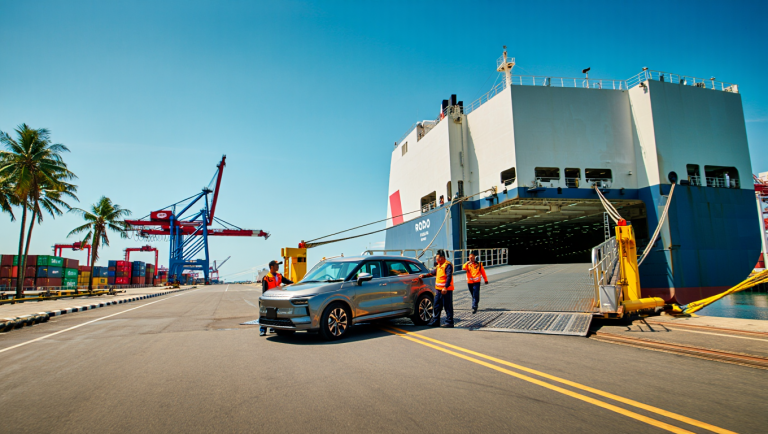
In the context of Ro-Ro shipping, „roadworthy" means that a vehicle can drive onto the ship under its own power. The engine must start, the steering must work and the brakes must be effective. If any of these conditions are not met, the vehicle is considered unroadworthy.
There are many reasons for this: a flat battery, engine failure, seized brakes, missing tyres, or simply damage caused by an accident. Depending on the nature of the fault, there are various ways of still shipping the vehicle by RoRo.
| Condition | Steerable | Scrollable | Ro-Ro available |
| Engine faulty, rest intact | Yes | Yes | Yes – using a tow bar |
| Battery flat | Yes | Yes | Yes – jump-start or tow bar |
| Brakes locked | Yes | No | By MAFI trailer only |
| Serious accident damage | No | No | By MAFI or container only |
| No tyres | No | No | Recommended for container shipping only |
How does loading onto a MAFI trailer work?
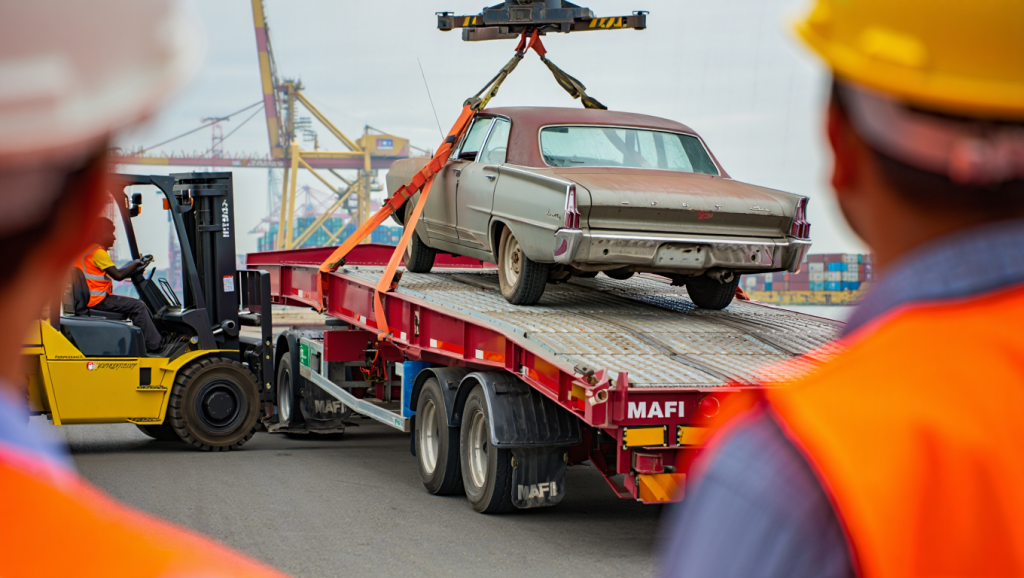
The MAFI trailer is the most common solution for non-self-propelled vehicles in the RoRo sector. A MAFI is a flat, roll-on platform that is towed by a terminal vehicle and rolls onto the ship via the RoRo ramp.
Your vehicle will be lifted onto the MAFI using a forklift or crane and secured there with straps and chocks. The loaded MAFI is then pulled onto the ship just like a standard wheeled vehicle.
- Suitable for vehicles of all sizes – from small cars to SUVs.
- Professional load securing by terminal staff is included.
- Additional charges for the use of MAFI and loading.
- Not available at every terminal – please check in advance.
When is a tow bar the right solution?
A tow bar is the simplest and often the cheapest option – but it only works if your vehicle can be steered and rolled. The engine doesn’t need to be running, but the wheels must be turning and the steering must be free to move.
A terminal vehicle will pull your car onto the ship using a tow bar. The steering is controlled by a member of staff sitting in the vehicle. If your car has an automatic gearbox, please ensure that it can be put into neutral.
Advantages: The tow bar incurs the lowest additional costs of all special methods. Disadvantage: Only works on vehicles that are partially intact.
Can a forklift truck load the vehicle onto the ship?
In some cases, terminals use forklift trucks to lift vehicles directly onto the ship. However, this is only possible with lighter vehicles and depends heavily on the terminal and the ship’s configuration.
- The weight limit is typically between two and three tonnes, depending on the forklift truck.
- The vehicle must be securely accessible – the underbody must be sturdy enough.
- Not all terminals offer this option.
- There is a higher risk of damage to the underbody or bodywork than with MAFI.
Tip: Check with your carrier in advance whether the forklift option is available at your terminal and whether your insurance covers this loading process.
What additional costs are incurred for vehicles that are not roadworthy?
Non-roadworthy vehicles generally incur additional costs compared to standard loading. The exact amount depends on the method chosen, the terminal and the route.
| Method | additional effort | Typical application |
| Tow bar | Low | Engine faulty, rest intact |
| MAFI trailer | Medium to high | Vehicles that cannot be rolled |
| Forklift truck | means | Light vehicles, depending on the terminal |
| Container (alternative) | Variable | Vehicles that are completely immobile |
Important: Always ask for a detailed quote that breaks down all additional charges. This will help you avoid any nasty surprises when the final bill arrives.
When is a container a better choice than RoRo?
There are situations in which a container is more cost-effective and safer than a special RoRo solution. This is particularly true for vehicles that cannot be steered or rolled.
Complete failure: If the vehicle cannot be moved at all, the container is often the simpler option.
Valuable vehicles: A locked container offers better protection against the weather and theft.
Additional load: You can include spare parts or personal belongings in the container.
No MAFI available: If the terminal does not offer a MAFI service, the container remains the alternative.
Insurance cover: Some insurers offer better terms for damaged vehicles when they are in a container.
An experienced freight forwarder can help you make a decision and provide a cost comparison for both options.
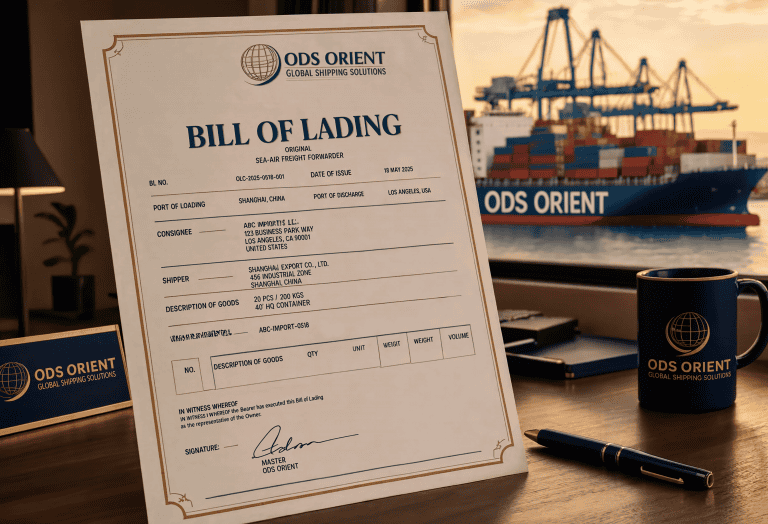
What additional documents do you need for non-roadworthy vehicles?
In addition to the standard documents required for Ro-Ro shipping, further documentation may be required for non-roadworthy vehicles.
- Vehicle condition report with a description of the fault.
- Confirmation that no operating fluids are leaking (particularly in the case of vehicles involved in accidents).
- Possible approval of the terminal for special cargo.
- Statement regarding the condition of the fuel tank.
- Photos showing the current condition of the vehicle, attached to the consignment note.
Particularly in the case of accident-damaged vehicles, the terminals carry out a thorough check to determine whether there is any environmental risk posed by leaking fluids. If necessary, have these properly drained before delivery.
FAQ - Frequently asked questions
Can every Ro-Ro terminal accept non-roadworthy vehicles?
No, not every terminal is equipped to handle special loads. Check with your freight forwarder in advance to find out which terminals offer MAFI trailers and special loading services.
Is insurance for non-roadworthy vehicles more expensive?
Generally speaking, yes. Non-roadworthy vehicles are considered a higher risk, as the loading process is more complex. Please request a separate insurance quote.
Do I need to report the fault with my vehicle to the haulier?
Absolutely. The exact condition of the vehicle determines the loading method, the costs and the insurance. Do not conceal any faults – this could lead to problems at the terminal.
How long does the special loading at the terminal take?
Loading using a MAFI trailer or forklift truck usually takes thirty to sixty minutes longer than standard loading. Please allow extra time accordingly.
Can I ship a damaged vehicle without tyres via RoRo?
In theory, yes, using a MAFI trailer. In practice, however, most hauliers recommend a container if tyres are missing, as securing the load on a MAFI trailer is more difficult and more expensive.
Conclusion
It is possible to ship non-roadworthy vehicles via RoRo – but it requires more planning and incurs additional costs. The best method depends on the condition of your vehicle and the facilities available at the terminal.
Whether you need a MAFI trailer, a tow bar or a container – ODS Orient will find the best solution for your vehicle. Get in touch with a description of the vehicle’s condition and we’ll put together a bespoke quote for you.
Do you have any questions or would you like a non-binding offer? Contact us directly: https://odsorient.com/kontakt
All information in this article has been carefully researched but is subject to change at any time. ODS Orient accepts no liability for the topicality, accuracy and completeness of the information provided.