What exactly does "roll-on, roll-off" mean?
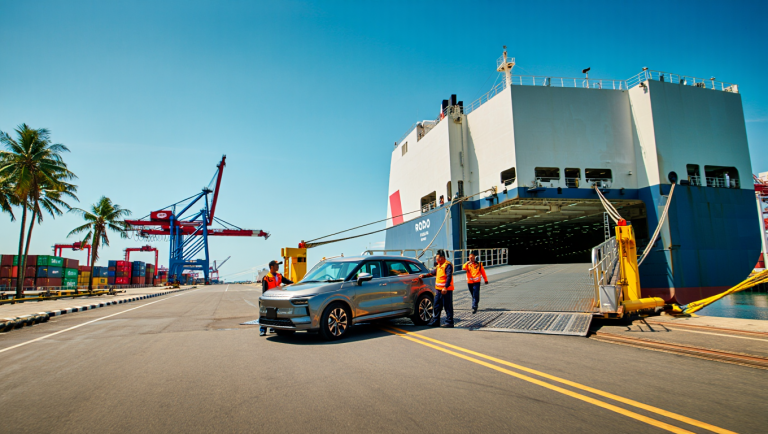
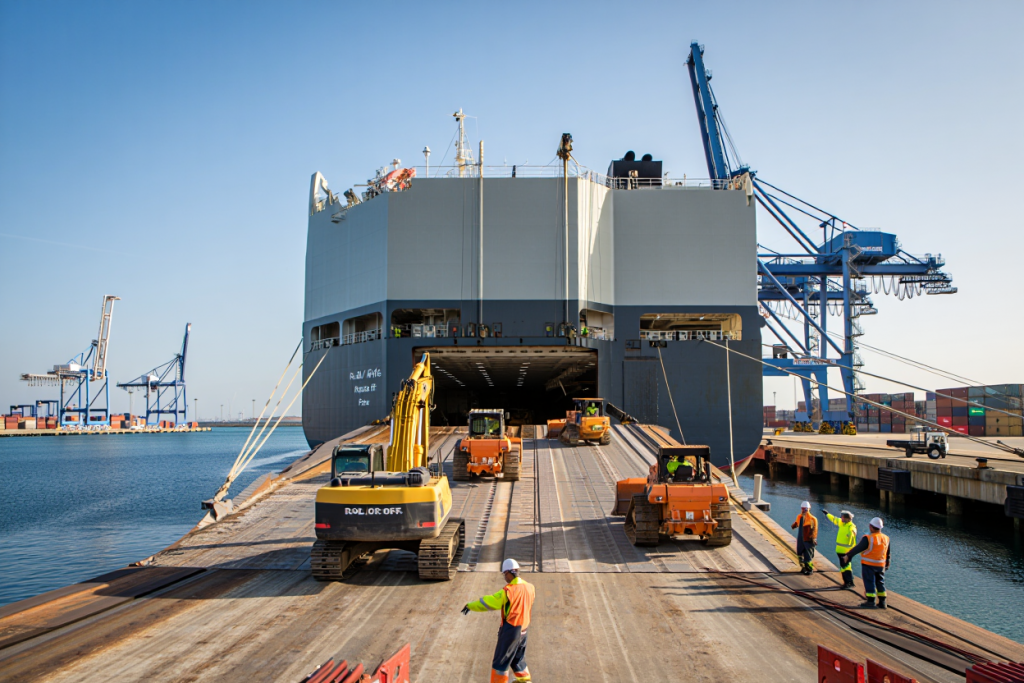
"Roll-on, roll-off", or RoRo for short, describes a loading method in which cargo can be rolled onto the ship and then rolled off again. In contrast to container transport, where goods are loaded by crane, RoRo transport uses ramps and special ships to make loading quick and efficient.
Importance and relevance of RoRo in global trade
RoRo transport plays a decisive role in the global exchange of goods. Especially in the automotive industry and for heavy machinery, this method offers enormous advantages in terms of speed, flexibility and cost efficiency. It is ideal for goods that are difficult to ship by container due to their size or weight.
Typical goods that are shipped with RoRo
The classic goods in RoRo transport are vehicles of all kinds: cars, lorries, construction machinery, agricultural machinery and buses. In addition, special transports such as motorhomes, boats, military vehicles and even helicopters are also shipped by RoRo.
Overview of common RoRo loading mechanisms
Use of hydraulic ramps for heavy vehicles and construction machinery
Hydraulic ramps enable the safe and controlled loading of particularly heavy or bulky goods. These ramps can be customised and inclined, which significantly increases flexibility during loading and improves safety at the same time.
Lift-on/lift-off (LoLo) vs. roll-on/roll-off (RoRo): When what makes sense
While RoRo is ideal for rolling cargo, LoLo is used for goods that are not ready to move. Heavy or very sensitive goods that cannot move on their own require the use of cranes (LoLo). RoRo, on the other hand, is much faster and more efficient for vehicles and heavy rolling machinery.
Ramp adjustment and flexible deck heights: Technical requirements and advantages
RoRo ships have adjustable ramps and decks to accommodate different heights and sizes of cargo. This flexibility makes it possible to transport different types of cargo at the same time and maximises the use of available ship space.
Sequence of the loading process
The loading process in detail
The RoRo loading process begins with the careful planning of space allocation on board. Vehicles are usually driven, positioned and secured directly on board by drivers or specialised drivers. Planning is essential in order to utilise the space efficiently and ensure safety during the journey.
RoRo loading risks and how to avoid them
The main risks include unsecured loads, incorrect weight calculations and inadequate communication. These risks can be minimised by using professional shippers who monitor the entire process, carry out securing and accurately calculate the weight of the loads.
Safety regulations and standards in the RoRo sector
International standards such as the IMO (International Maritime Organisation) regulate strict regulations regarding cargo securing, fire protection and safety. Regular staff training and ship maintenance ensure that these standards are adhered to.
Tips for safe and efficient handling of the loading process
The most important tips are detailed advance planning, clear communication between all parties involved and regular security checks. It is also important to always use high-quality and tested securing equipment and to secure loads according to their specific requirements.
Innovations and trends in RoRo loading
Digitalisation in RoRo transport: new technologies and automation
The use of modern IT systems enables real-time tracking of loads, optimises planning processes and improves communication between all parties involved. Automated load securing systems and intelligent ramp technologies are becoming increasingly important.
Sustainable solutions and environmental aspects in the RoRo sector
New trends include the use of sustainable and low-emission drive technologies and energy-saving ship designs. The increasing use of electric vehicles and alternative drive technologies poses new challenges, but also offers opportunities for more sustainable transport solutions.
Future developments and innovations in the RoRo industry
Innovations such as autonomous vehicles and fully automated loading processes could become a reality in the next few years. The RoRo industry is facing exciting changes that could bring both efficiency gains and environmental benefits.