Yes, in many cases rollable vehicles or machines can also be shipped by RoRo without a road licence. The decisive factor is not whether the vehicle is approved for road transport, but whether it can be rolled safely and fulfils the shipping company's requirements. In practice, such cargo is often treated as a special cargo and moved via port logistics or MAFI trailers. Complete documentation, a correctly issued B L and clear information on weight, dimensions and loading capacity are important.
Short answer in 5 bullet points
The most important factor for RoRo shipments is whether a vehicle or machine can be moved safely. A road licence is not absolutely necessary for this.
In practice, the term roro not registered usually describes vehicles without a licence plate or without national registration for road traffic.
Such cargo is often classified as project cargo or special vehicles and is moved by terminal personnel or with the help of MAFI trailers.
Technical data, weight, loading condition and complete shipping documents are decisive for the shipment.
Before each shipment, it is advisable to coordinate with the forwarding agent, terminal and shipping company to avoid risks and delays.
Introduction Why the question roro not authorised is often asked
In international vehicle logistics, the same question comes up again and again. What happens if a vehicle is roadworthy but does not have a road licence? This is not uncommon, especially for export vehicles, prototypes of construction machinery or military vehicles.
Many shippers initially assume that RoRo shipments are only possible with authorised vehicles. After all, cars and lorries are usually driven directly onto the ship via ramps in the port.
However, the reality of maritime transport is more nuanced. The decisive point is not the road traffic licence but the ability to move the vehicle safely and secure it on board.
In this context, the term roro not authorised appears particularly frequently. This refers to cargo that can be rolled but has not been officially registered for road transport.
How does a RoRo shipment work in principle
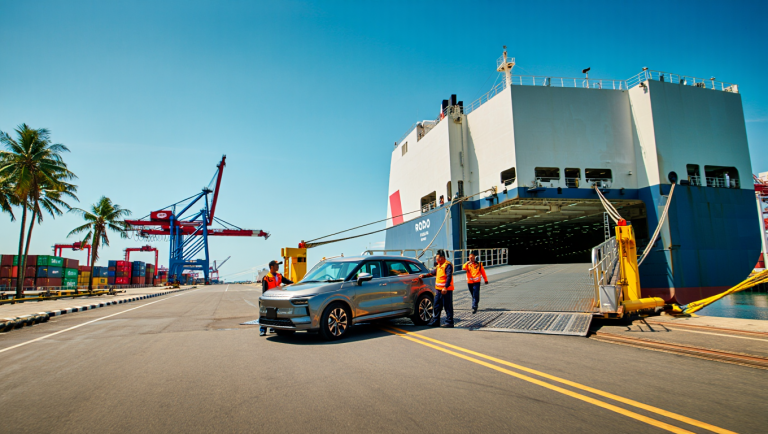
In roll on roll off transport, vehicles or rolling goods are driven directly onto the ship via a ramp. This process differs significantly from container transport, where cargo is loaded into boxes.
A detailed introduction to the system can be found in the article How RoRo works https://odsorient.com/wie-funktioniert-roro
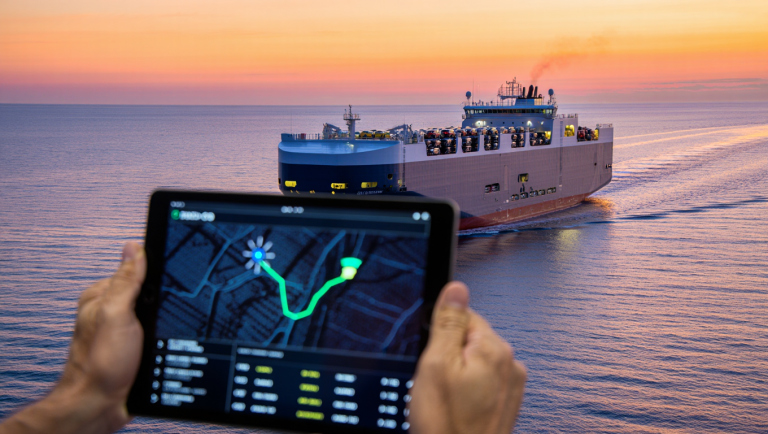
Typical RoRo ships are so-called PCTC carriers. This abbreviation stands for Pure Car and Truck Carrier. They have several decks that are specially designed for vehicles.
The procedure in the harbour usually follows a clearly structured process.
The vehicle is first registered at the terminal. A visual inspection is then carried out by the harbour staff. It is then driven on board via the ramp and positioned on the designated deck.
Important logistical parameters are ETD and ETA as well as the port designations POL and POD.
ETD refers to the planned departure date of a ship.
ETA describes the expected time of arrival at the port of destination.
POL stands for Port of Loading while POD describes the Port of Discharge.
What does roro not authorised mean in practice
The term roro not authorised is often misunderstood in practice. It does not automatically mean that transport is impossible.
Rather, it describes a special category of vehicles or machines.
These include, among others
Prototype vehicles without road approval
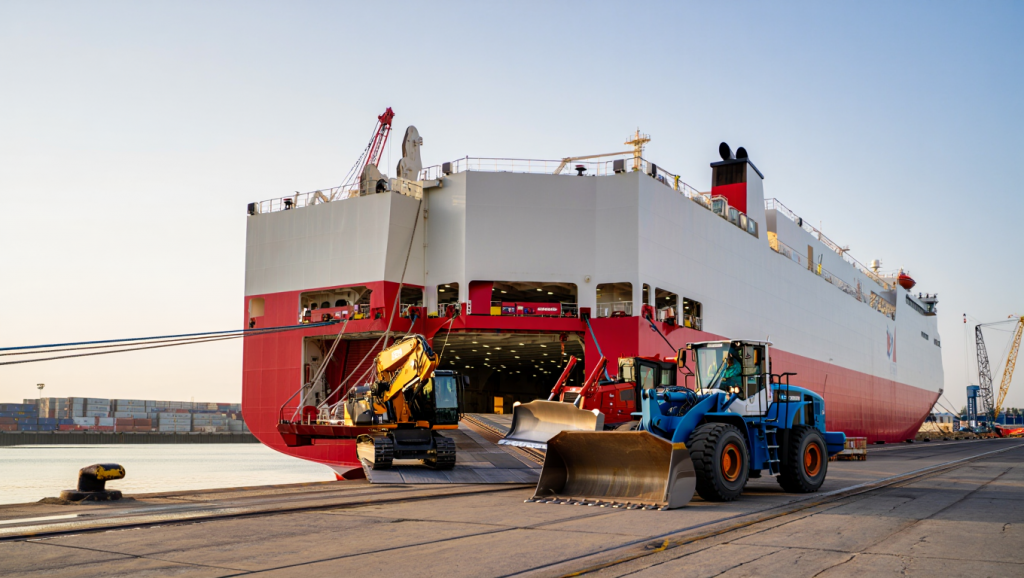
Construction machinery or agricultural machinery
Military vehicles
Industrial vehicles
Test vehicles from the automotive industry
These units often do not have licence plates or national registration. However, this is not necessarily a problem for transport by ship.
The only important thing is that they can be rolled or at least moved using the appropriate technology.
What role do MAFI trailers play for unauthorised vehicles?
So-called MAFI trailers are often used when vehicles are able to roll but are not allowed to drive independently.
A MAFI trailer is a special platform for harbour logistics. It is moved by terminal tractors and enables a wide variety of cargo to be transported.
In practice, the process often looks like this.
The machine or vehicle is placed on a MAFI trailer in the terminal.
The terminal tractor pulls the trailer over the ramp onto the ship.
The unit is secured on board and fixed with lashing material.
This method is particularly common when the load is technically capable of rolling but cannot be driven for safety or insurance reasons.
What documents are required for RoRo transports
Even if a vehicle is not authorised, the documentation process remains almost identical to other RoRo transports.
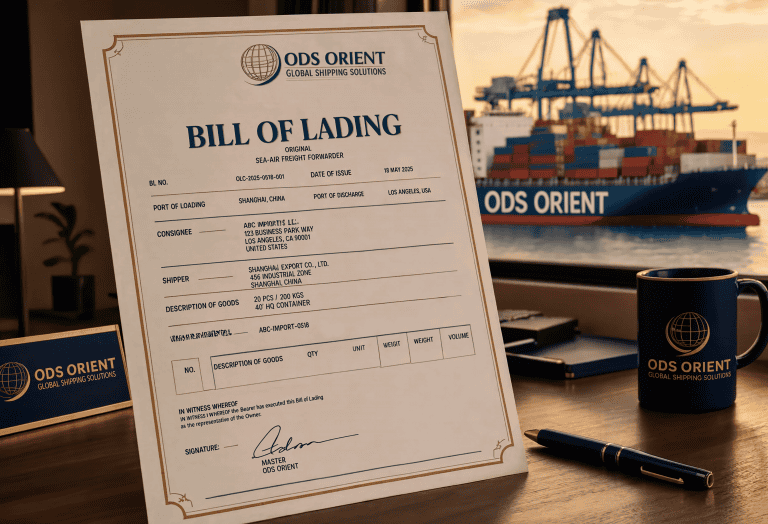
The most important document is the B L, i.e. Bill of Lading. It confirms the transport contract and contains all relevant information about the cargo.
Typical details in the B L are
Consignor and consignee
POL and POD
Vehicle data
Weight
Dimensions
Serial number or chassis number
Additional documents may also be required.
These include export documents, technical data sheets or special licences.
International standards such as the CTU Code published by the International Maritime Organisation apply to the safe securing of cargo.
https://www.imo.org/en/OurWork/Safety/Pages/CTU-Code.aspx
This guide describes in detail how cargo should be correctly secured in transport chains.
What risks arise with roro not authorised
Even if transport is technically possible, additional challenges arise with unauthorised vehicles.
A common problem is the lack of roadworthiness. If vehicles do not start or cannot be steered, loading can become much more complicated.
In practice, incomplete technical information often leads to delays.
Typical errors are inaccurate weight specifications, incorrect dimensions or missing references to special requirements.
Another risk concerns insurance and liability. Some shipping companies require additional information if vehicles are not authorised for road traffic.
Early coordination with the forwarding agent, terminal and shipping company is therefore particularly important.
What preparation makes sense before shipping
Good preparation significantly reduces the risk of delays.
Firstly, it should be checked whether the vehicle can drive independently or whether a MAFI trailer is required.
This is followed by the document check. All technical data should be complete.
The state of charge is also crucial. Fuel Battery condition and fuse points must be checked.
A helpful guide to general requirements can be found in the article What do I need to consider for a RoRo shipment? https://odsorient.com/was-muss-ich-bei-einer-roro-verschiffung-beachten
In practice, many problems arise due to a lack of communication. The earlier all parties involved are informed, the smoother the process.
What costs are incurred for such transport
The cost of a RoRo shipment depends on various factors.
This includes dimensions, weight, transport route and additional harbour services.
If vehicles cannot drive themselves, there are often additional terminal costs for MAFI trailers or special handling.
As each transport is individual, concrete prices are normally only calculated after checking all technical data.
A customised quotation is therefore required for a reliable calculation.
FAQ Frequently asked questions about roro not authorised
Can a car be shipped by RoRo without a licence plate?
Yes, in many cases this is possible. The decisive factor is whether the vehicle is capable of rolling and fulfils the safety requirements of the shipping company.
What happens if a vehicle cannot drive
It is then often moved using harbour logistics or on a MAFI trailer. This means that it can still be brought onto the ship via the ramp.
Must a vehicle be authorised for RoRo
No, a road licence is not absolutely necessary. Technical transportability is important.
What data must be provided before booking
The main details are the weight, length, width, height, chassis number and load status.
What does the term roro not authorised mean
It describes vehicles or machines that are capable of rolling but do not have an official road licence.
Conclusion
The question of whether roro is not authorised can be answered clearly. A lack of road approval does not automatically mean that transport is not possible.
The decisive factor is whether the vehicle or machine can be moved safely and secured on board.
By using port logistics and MAFI trailers, even complex transport cases can be realised.
In practice, however, it is clear that careful preparation is crucial. Complete technical data, clear documentation and early coordination with all parties involved ensure that even unauthorised vehicles can be transported safely by RoRo.
Disclaimer: All information in this article has been carefully researched but is subject to change at any time. ODS Orient accepts no liability for the topicality, accuracy and completeness of the information provided.