Several key documents are required for international vehicle transport via RoRo ships. The most important roro documents customs include the commercial invoice, the vehicle title or proof of ownership, the bill of lading and, if applicable, a Telex release. These documents enable customs clearance, confirm ownership rights and control the release of the cargo at the port of destination. Errors or incomplete information often lead to delays in clearance or additional checks by customs authorities.
Short answer in five central points
RoRo transports require several binding shipping documents for export and import.
The most important roro documents customs are commercial invoice, vehicle title, bill of lading and optionally a telex release.
These documents confirm ownership, value of goods and transport details.
Incorrect information often leads to delays in customs and port handling.
Structured preparation reduces risks and speeds up release at the port of destination.
Introduction Why documents are crucial for RoRo transport
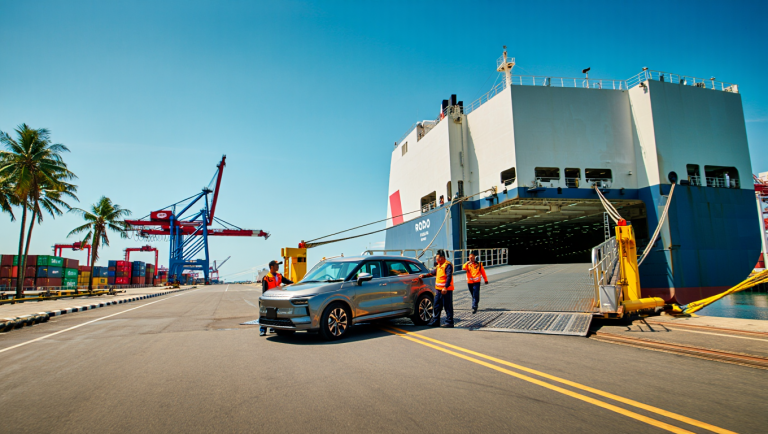
International vehicle transport via roll on roll off ships is one of the most efficient methods for exporting cars, commercial vehicles, construction machinery or other rolling goods. Vehicles are driven directly onto the ship via a ramp and secured inside the carrier.
Despite this logistically simple method, the administrative part remains complex. Customs authorities, shipping companies and port agents require a range of documents in order to transport and release the cargo in a legally correct manner.
In practice, it is often the case that delays in RoRo shipments are not caused by the logistics itself, but by missing or incorrect documents. Proof of ownership and export documents play a decisive role, especially for vehicles.
If you want to understand the process, you can find a basic explanation in the article on RoRo transport at
https://odsorient.com/ro ro transport simply explains everything you need to know
This article focuses on the most important roro dokumente zoll and explains step by step which documents are required, which functions they fulfil and which errors frequently occur.
Which documents are required for RoRo transports
Several standard documents are required for almost every RoRo shipment. They fulfil different functions in international trade.
The most important roro documents customs include
Commercial invoice
Vehicle title or proof of ownership
Bill of Lading
Telex release on demand
Depending on the country, additional documents may also be required, such as export licences or customs declarations.
Commercial invoice basis for customs and proof of value
The commercial invoice is one of the most important documents in international trade. It serves as the basis for customs to value the goods and calculate any import duties.
For vehicle exports, the commercial invoice usually contains the following information
Seller and buyer
Vehicle data such as make model chassis number
Purchase price of the vehicle
Country of origin
Shipping conditions
Port details such as POL and POD
POL stands for Port of Loading, i.e. the port of departure. POD stands for Port of Discharge, i.e. the port of destination.
The commercial invoice is used for both export customs and import customs and is therefore one of the central customs documents.
Vehicle Title Proof of ownership for vehicle export
Proof of ownership is particularly important when exporting vehicles. In many countries, the title serves as the official vehicle registration document.
The title confirms
ownership of the vehicle
the chassis number
the lawful export
Customs authorities check this proof very closely to prevent theft or illegal vehicle exports.
In practice, it is often the case that delays occur when
the title is not available in the original
the chassis number does not match the vehicle data
the document is damaged or illegible
Careful inspection before shipping reduces such risks considerably.
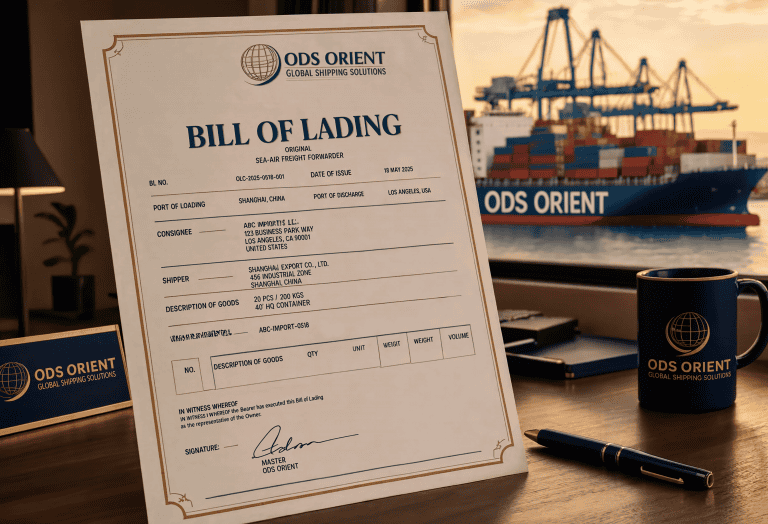
Bill of Lading The central transport document
The Bill of Lading is one of the most important documents in international maritime transport.
It fulfils several functions at the same time
Transport contract between shipper and shipping company
Confirmation of receipt for the goods
Ownership document for the cargo
An Original Bill of Lading is often issued for RoRo transport. This document must be presented at the port of destination in order to collect the cargo.
A B L typically contains the following information
Name of the sender
Name of the recipient
Ship and shipping company
ETD and ETA
Vehicle description
Chassis number
POL and POD
ETD stands for Estimated Time of Departure and describes the planned departure date. ETA describes the expected arrival at the port of destination.
As the B L is also regarded as proof of ownership, it is one of the most sensitive customs documents.
Telex Release Digital release of the load
In addition to the classic original Bill of Lading, many shipping companies today use the so-called Telex Release.
The original B L is handed in to the shipping company. An electronic release is then deposited at the port of destination.
The recipient can then collect the load without a physical document.
Advantages of a Telex release
Faster document processing
No need to send original documents
Lower risk of document loss
This method is frequently used for time-critical transports in particular.
How does the document check for RoRo export work?
The document check takes place in several steps along the transport chain.
Firstly, the exporter creates the commercial invoice and the vehicle data. This information is then sent to the freight forwarder and the shipping company.
The documents are often pre-checked before shipping. For example, chassis numbers and proof of ownership are checked.
Once the ship has been loaded, the shipping company draws up the Bill of Lading. This document is then handed over to the shipper or their bank.
At the port of destination, the import agent checks all documents again before customs clearance takes place.
Typical errors in RoRo shipping documents
In practice, similar problems occur time and again. Many of them can be avoided through careful preparation.
The most common errors include
Different chassis numbers between documents
incomplete commercial invoices
Missing proof of ownership
Outdated documents
incorrect information on the port or recipient
Such errors often lead to delays at the port or additional inspections by customs authorities.
Structured preparation helps to significantly reduce these risks. The checklist for preparing a RoRo shipment also provides a helpful overview at
https://odsorient.com/checkliste-fuer-die-roro-verschiffung
International safety guidelines for cargo and documentation
In addition to national customs regulations, international guidelines also apply to the safe transport of cargo.
An important reference is the CTU Code of the International Maritime Organisation. This guideline describes standards for the safe packing and documentation of cargo in international maritime transport.
Further information can be found at
https://www.imo.org/en/OurWork/Safety/Pages/CTU-Code.aspx
The CTU Code is used worldwide as a guideline for safe transport processes.
Practice checklist for complete RoRo documents
In practice, it is advisable to prepare all documents clearly before the vehicle is delivered to the port.
Important test points are
Correct chassis number on all documents
complete commercial invoice
valid proof of ownership
Correct recipient data
Correct harbour details
This simple preparation significantly reduces delays in the export process.
FAQ Frequently asked questions about RoRo documents and customs
Which documents are absolutely necessary for RoRo transports
In most cases, a commercial invoice, vehicle title or proof of ownership and a bill of lading are required. In addition, a telex release can be used to release the cargo without an original document.
Why is the Bill of Lading so important
The Bill of Lading confirms the transport contract and also serves as a document of ownership. Without this document, the cargo cannot usually be collected at the port of destination.
What happens if documents are issued incorrectly
Incorrect documents often lead to delays in customs clearance. In some cases, the cargo may even be temporarily blocked in the harbour.
Can a Telex Release replace the original B L
Yes, with the telex release the original document is deposited with the shipping company and an electronic release is sent to the port of destination.
How often are roro documents customs checked
Documents are typically checked several times. Firstly during export, then by the shipping company and finally by customs at the port of destination.
Conclusion Documents are the key to smooth RoRo transports
RoRo transport is one of the most efficient solutions for international vehicle export. At the same time, this transport requires precise documentation.
The most important roro dokumente zoll are the commercial invoice, vehicle title, bill of lading and, if applicable, a telex release. They form the basis for proof of ownership, customs clearance and transport release.
In practice, it is often the case that well-prepared documents significantly reduce delays. Companies therefore benefit from clear processes and an early review of all documents.
As transport requirements can vary depending on the route, vehicle type and destination country, individual advice is recommended for more complex consignments. A personalised quote is usually required for specific transport costs.
Disclaimer: All information in this article has been carefully researched but is subject to change at any time. ODS Orient accepts no liability for the topicality, accuracy and completeness of the information provided.