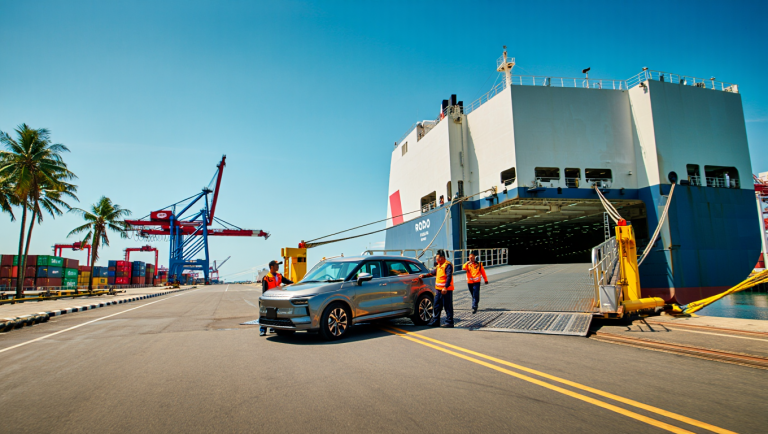
You must prepare your vehicle thoroughly before RoRo shipping. This includes the correct tank level (maximum one quarter), the removal of personal items, comprehensive photo documentation, the handover of both sets of keys and a basic technical inspection. If you follow these steps, you will avoid delays at the terminal and ensure a smooth process.
Short answer in 5 bullet points
- Reduce tank filling to a maximum of a quarter - a requirement at every RoRo terminal.
- Remove all personal items and loose parts from the vehicle.
- Take photos of the entire vehicle before handover.
- Have both sets of keys ready and hand them over to the carrier.
- Carry out a basic technical check: Battery, brakes, tyre pressure and fluid levels.
Why is the right preparation so important?
Preparing your vehicle for RoRo shipping is not an optional step - it is a mandatory requirement. Terminals regularly reject vehicles that do not comply with the regulations. For you, this means additional costs, loss of time and, in the worst case, a missed departure.
A well-prepared vehicle passes the terminal inspection without any complaints. At the same time, you protect yourself from liability disputes if damage occurs during transport. The following checklist covers every relevant point.
How full can the tank be for RoRo shipping?
The tank level is one of the most common reasons for refusals at the terminal. The regulation is clear: the tank must not be more than a quarter full. This applies equally to petrol, diesel and hybrid vehicles.
The reason is simple: fuel is a source of dangerous goods. A full tank significantly increases the risk of fire on the ship. Therefore, plan to fill the tank to the prescribed level in good time before delivery.
- refuelling to a maximum of a quarter - at some terminals even less.
- Vehicles with gas systems (LPG/CNG): Empty the gas tank completely and close the valve.
- Electric vehicles: Keep the charge level between 40 and 60 per cent.
Which personal items must be removed?
Everything that is not firmly attached to the vehicle must be removed. That sounds strict, but there are good reasons for it: Loose objects can slip during the journey and cause damage to the interior. In addition, the insurance company accepts no liability for personal items.
- Remove navigation systems, mobile phone mounts and dashcams.
- Remove child seats, blankets, sports equipment and toolboxes.
- Empty the glove compartment, centre console and boot completely.
- Remove roof boxes, bike racks and other attachments.
- Take valuables such as sunglasses and charging cables with you.
Tip: Make a list of all removed parts and keep it together with the vehicle documents.
How do you document the vehicle condition correctly?
Complete photo documentation is your best protection in the event of damage claims. Systematically photograph the vehicle from all sides and record every scratch, dent and stone chip.
Exterior shots: All four sides, front, rear and roof - in daylight.
Close-ups: Close-up of existing damage such as scratches, dents and chipped paintwork.
Interior: Document the dashboard, seats, steering wheel and boot.
Mileage: Take a picture of the speedometer - with the date visible on a second picture.
Rims and tyres: Record the tread depth and any kerb damage.
Save the photos with the date and send a copy to your forwarding agent. This will provide a clear basis for comparison on arrival at the port of destination.
What technical checks are necessary before shipping?
The vehicle must be rollable - this is the basic requirement for every RoRo shipment. A brief technical check ensures that your vehicle can be driven onto the ship without any problems.
| Checkpoint | What to look out for | Why important |
| Battery | Fully charged, poles clean | Engine must start at the terminal |
| Brakes | Check function, test handbrake | Securing on the ship |
| Tyre pressure | Comply with the manufacturer's instructions | Uniform rolling during loading and unloading |
| Liquids | Oil, coolant, brake fluid | No leakage during transport |
| Lighting | All lights in working order | Safety regulations at the terminal |
| Steering | Smooth-running, no noise | Manoeuvrability on the ship |
If defects are found, you should have them rectified before delivery. An engine that does not start or defective brakes can lead to rejection.
Which keys and documents do you need at the terminal?
You usually have to hand in both sets of keys at the terminal. This is because the vehicle is rearranged several times on the ship and a spare key is required for security reasons.
- Original key and spare key in a labelled envelope.
- Copy of the vehicle registration certificate (registration certificate part II) or ownership document.
- Commercial Invoice for export vehicles.
- Export declaration or MRN number from customs.
- Booking confirmation from the freight forwarder.
Important: Original registration documents should be kept separately and securely - do not leave them in the vehicle.
What are the most common reasons for refusal at the terminal?
Despite careful preparation, vehicles are rejected at the terminal. The most common reasons can be avoided with the right checklist.
Tank too full: More than a quarter full is the classic reason for rejection.
Personal items in the vehicle: Even a forgotten umbrella can become a problem.
Vehicle cannot be rolled: If the engine does not start, the car will not be loaded.
Missing documents: No loading without the correct papers - check everything in advance.
Leaks: Oil or cooling water leaks lead to immediate rejection.
Incorrect dimensions: The registered dimensions must be correct for special vehicles.
If your vehicle is rejected, you will incur storage fees and possibly rebooking costs. It is better to invest an hour in thorough preparation in advance.
What is the procedure on the day of delivery?
On the day of terminal delivery, everything runs according to a fixed schedule. If you are prepared, the whole process usually takes no longer than an hour.
Registration at the gate: Report to the terminal entrance with booking confirmation and vehicle documents.
Incoming inspection: Terminal employees check the tank level, condition and documents.
Photo documentation: The terminal creates its own status photos - compare these with yours.
Handing over the keys: Hand over both keys in the envelope to the responsible employee.
Collection receipt: You will receive confirmation of the vehicle handover - keep it safe.
Allow enough time and arrive on time. Late deliveries are often postponed to the next slot.
FAQ - Frequently asked questions
Do I have to wash the vehicle before the RoRo shipment?
A thorough exterior wash is recommended, but not mandatory. A clean vehicle makes photo documentation and recognising existing damage much easier.
Can I leave spare parts in the vehicle?
No, loose objects - including spare parts - must be removed. Permanently mounted parts such as the spare wheel in the compartment provided are excluded from this.
What happens if my vehicle is rejected at the terminal?
You must rectify the defect and deliver the vehicle again. This may incur storage fees and rebooking costs. It is therefore essential that you adhere to the checklist.
Can I also have the freight forwarder do the preparation?
Many freight forwarders offer a preparation service. However, you are ultimately responsible for the condition. Clarify the scope of services in writing beforehand.
How long before departure do I have to deliver the vehicle?
Usually three to five working days before the planned departure date. Your freight forwarder will inform you of the exact cut-off date with the booking confirmation.
Conclusion
Preparing your vehicle for RoRo shipping is not rocket science - but it does require care. This checklist covers all the relevant points: from the tank level and photo documentation to handing over the keys.
Take the time to prepare thoroughly. This will help you avoid rejections at the terminal, unnecessary costs and stress on the day of delivery. If you are unsure, the ODS Orient team will be happy to help you every step of the way.
Do you have any questions or would you like a non-binding offer? Contact us directly: https://odsorient.com/kontakt
All information in this article has been carefully researched but is subject to change at any time. ODS Orient accepts no liability for the topicality, accuracy and completeness of the information provided.