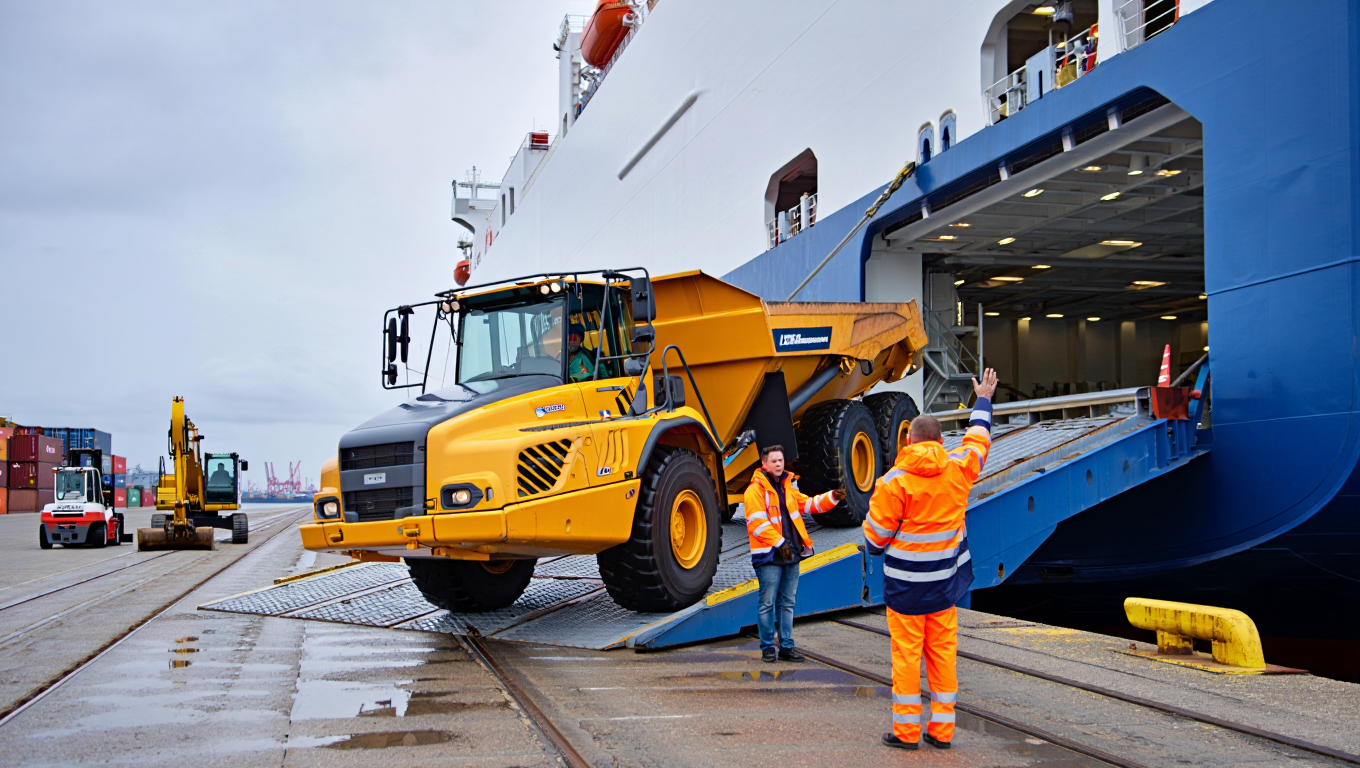
The transport of extra-wide or extra-high vehicles using the RoRo method requires precise planning, exact measurements and early coordination with shipping companies. Correct classification as OOG, suitable loading units such as MAFI or LoLo options and complete documentation are crucial. Those who avoid typical errors and specify all dimensions correctly can also realise complex transports safely and efficiently.
Short answer in 5 bullet points
- roro overwidth overheight requires exact dimensions including attachments
- Early booking and coordination with the shipping company is crucial
- Selection of the right loading unit such as MAFI or direct deck loading
- Complete documents including B L and technical data required
- Risks usually arise due to incorrect dimensions or lack of planning
Introduction
The worldwide transport of vehicles via RoRo ships is one of the most efficient methods in international maritime transport. However, as soon as vehicles exceed the standard dimensions, they are referred to as Out of Gauge (OOG). This is where things get challenging. The requirements for planning, communication and documentation increase considerably, especially when it comes to ro-ro overheight.
In practice, it is often the case that even small deviations in width or height can lead to considerable problems. These include delays in shipping, additional costs or, in the worst case, rejection by the shipping company.
This article shows you step by step how to professionally plan OOG vehicles using the RoRo method and avoid typical mistakes.
What exactly does roro overheight mean
When is a vehicle considered OOG
A vehicle is classified as OOG as soon as it exceeds the standard dimensions of a RoRo deck. These vary depending on the type of ship, such as PCTC, but are often around:
- Width over 2.6 metres
- Height over 4.5 to 5.0 metres
- Length beyond standard car or lorry dimensions
So roro ueberbreite ueberhoehe is not only about extreme special transports, but often also about construction machinery, agricultural machinery or special vehicles.
Why this is particularly relevant in RoRo
RoRo ships are designed for rolling cargo. This means that vehicles are driven directly on board via ramps. If a vehicle is too wide or too high, it can:
- the ramp cannot be used
- the deck height is not sufficient
- special safety measures may be necessary
How does the planning of OOG vehicles in RoRo work?
Step 1 Exact measurement
The most important step is the precise recording of all measurements. This includes
- Total length including attachments
- Overall width including mirror or side parts
- Overall height including superstructure
- Weight
In practice, it is often the case that add-on parts such as aerials or hydraulic arms are forgotten.
Step 2 Selecting the right transport solution
Different options are available depending on the size:
- Direct loading onto RoRo deck
- Use of MAFI trailers
- Combination with LoLo loading for extreme dimensions
The choice depends heavily on the route, the ship and the available capacity.
Step 3 Coordination with the shipping company
All measurements must be provided before booking. The shipping company checks:
- whether the vehicle fits on the ship
- Which decks are suitable
- whether special authorisations are required
Step 4 Documentation
Important documents are
- Bill of Lading
- Technical data sheets
- Photos of the vehicle
- Loading instructions
Step 5 Scheduling with ETD and ETA
The planning of ETD and ETA is particularly important at OOG, as:
- Loading times are longer
- Special handling must be planned
- Port processes are more complex
Which documents are required
Mandatory documents at a glance
The following documents are essential for overheight transport:
- Bill of Lading as the main transport document
- Commercial Invoice
- Packing list or vehicle description
- Technical drawings for special vehicles
- Photos from different perspectives
Why photos are so important
Photos are not only used for documentation, but also to minimise risk. They help:
- Recognise damage in advance
- Create loading plans
- Avoid misunderstandings
What risks are there with OOG in RoRo
Typical errors in practice
In practice, the following errors often occur:
- Incorrect height specifications
- Underestimated width due to add-on parts
- Missing weight information
- Inadequate communication with the shipping company
Effects of planning errors
Errors can lead to the following problems:
- Loading is refused
- Delays in the harbour
- Additional transhipments
- Security risks
What role do MAFI trailers and PCTC ships play?
MAFI Trailer
MAFI trailers are special platforms for heavy or oversized loads. They enable:
- More flexible positioning
- Better weight distribution
- Easier loading
PCTC ships
PCTC stands for Pure Car and Truck Carrier. These ships are specially designed for vehicles and offer:
- several decks
- High capacities
- Special security systems
Choosing the right type of ship is crucial when it comes to overheight.
Checklist for roro wide overheight transports
Preparation
- Record all dimensions precisely
- Create photos
- Collect technical data
Planning
- Determine suitable route POL and POD
- Check availability of RoRo capacities
- Coordination with freight forwarder
Booking
- Submit all data completely
- Clarify special requirements
- Obtain confirmation from the shipping company
Realisation
- Prepare vehicle
- Secure loose parts
- Monitor loading
Tracking
- Use tracking
- Check status regularly
- Archive documents
You can use this guide for transparent shipment tracking:
https://odsorient.com/so-trackst-du-dein-fahrzeug-waehrend-der-roro-ueberfahrt-4
How can you optimise the transport
Early planning
The earlier you start planning, the easier it is to plan:
- Secure capacities
- Optimise costs
- Minimise risks
Clear communication
Close coordination with all parties involved is crucial:
- Freight forwarder
- Shipping company
- Harbour
Personalised advice
As every transport is unique, individual advice is recommended:
https://odsorient.com/kontakt
What role does digitalisation play in RoRo transport
Digitalisation is also gaining in importance in the area of roo ueberhoehe. Topics such as performance and loading times are reminiscent of developments such as:
https://web.dev/blog/inp-cwv-march-12
Fast information flows and transparent processes are crucial for efficient logistics today.
FAQ Frequently asked questions
What does OOG mean in RoRo transport?
OOG stands for Out of Gauge and describes vehicles or goods that exceed the standard dimensions.
Can any extra-wide vehicle be shipped by RoRo
No, the feasibility depends on the ship, route and dimensions.
How important are exact measurements
Very important. Even small deviations can lead to problems.
What does an OOG transport cost?
The costs are individual and depend on size, weight, route and effort. A personalised quote is required.
How long does a RoRo transport take
This depends on the route as well as ETD and ETA.
Conclusion
The transport of vehicles with a roro overheight is challenging, but with the right planning it can be easily managed. Precise data, early coordination and a structured approach are crucial.
If you avoid typical mistakes and rely on professional support, you can also carry out complex OOG transports safely and efficiently.
Disclaimer All information in this article has been carefully researched but is subject to change without notice ODS Orient accepts no liability for the accuracy, completeness or timeliness of the information provided