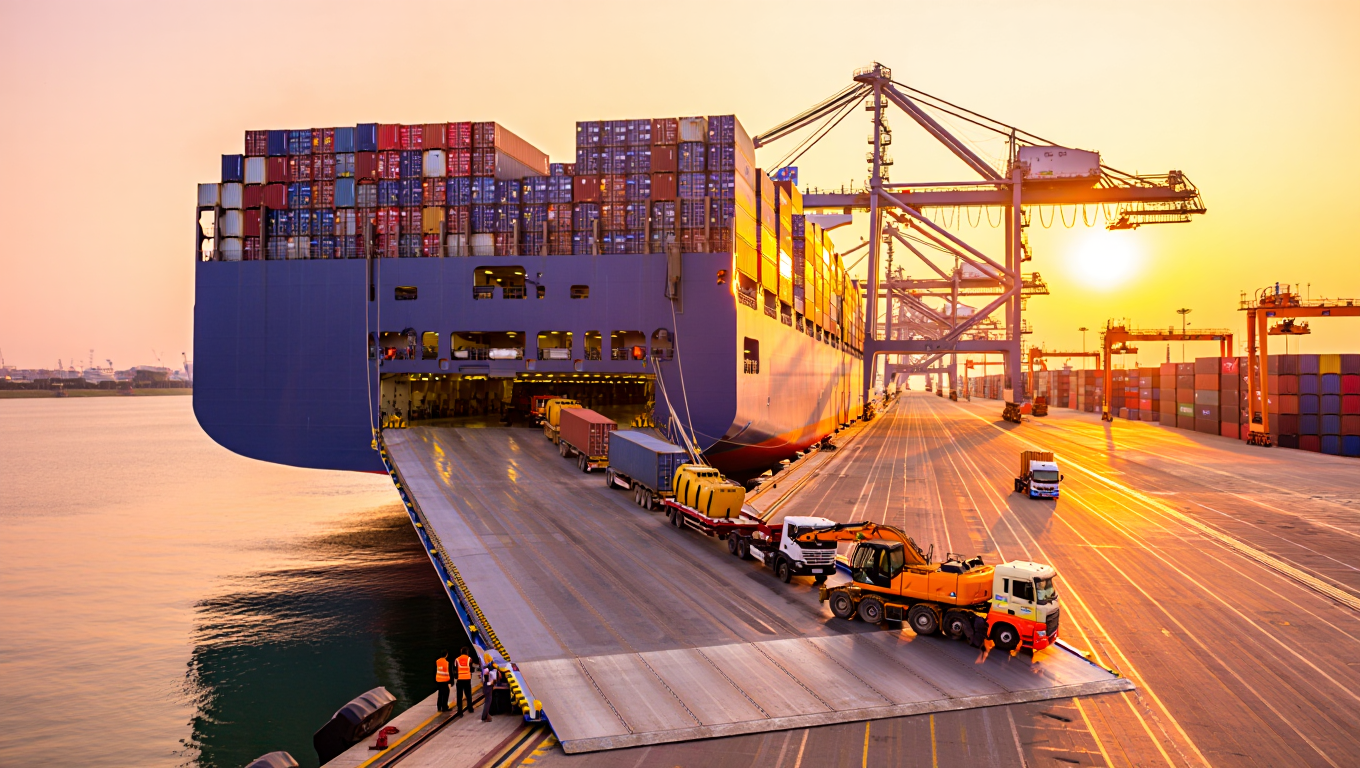
The eu ets shipping roro obliges shipping companies to fully include relevant CO2 emissions in EU transport from 2026. This will result in additional emissions costs, which are usually passed on via surcharges. For shippers and forwarders, transparency requirements, documentation obligations and the pressure to efficiently plan POL/POD, ETD/ETA and cargo concepts with RoRo, PCTC and MAFI are increasing. Structuring processes and taking emissions data into account at an early stage ensures planning reliability and reduces operational risks.
Short answer in 5 bullet points
- eu ets shipping roro leads to full emissions coverage for EU-related maritime transport in 2026
- Shipping companies calculate CO2 costs in freight rates or separate surcharges
- Increasing documentation and reporting requirements for all parties involved
- Route selection, speed and harbour sequence POL/POD indirectly influence costs
- Digital booking and data processes are becoming a competitive factor
Introduction: Why the eu ets shipping roro 2026 will be strategically relevant
The expansion of EU emissions trading to include maritime shipping will significantly change the cost and planning structure in European short sea and deep sea transport. Emission costs have a direct impact on the transport chain, particularly in the roll-on/roll-off segment, i.e. for RoRo and PCTC ships.
The eu ets shipping roro applies to all journeys involving EU ports. Depending on the route, emissions are included in full or proportionately. For shippers and forwarders, this means that CO2 becomes a fixed calculation parameter.
At the same time, the International Maritime Organisation is also discussing further-reaching climate instruments, such as CO2-related fee models. Reuters provides an up-to-date overview of the IMO 2025 deal:
https://www.reuters.com/sustainability/boards-policy-regulation/un-shipping-agency-strikes-deal-fuel-emissions-co2-fees-2025-04-11/
What exactly will change for RoRo and PCTC transport in 2026?
From 2026, shipping companies will have to hold certificates for 100 per cent of the emissions recorded in EU-relevant voyages. In practice, this is often the case:
- Emission surcharges are recognised as a separate item
- CO2 costs are included in long-term service contracts
- Speed and timetable organisation influence fuel consumption
RoRo ships and PCTC carriers transport vehicles, machinery and project cargo. Depending on the stowage concept on MAFI trailers or rolling cargo, weight and energy consumption vary - indirectly relevant for the calculation.
How are costs passed on within the framework of eu ets shipping roro?
Who bears the CO2 costs?
The shipping company is legally obliged to do this. Economically, however, the costs incurred are regularly passed on to shippers and forwarders via surcharges.
How do EU ETS costs appear on documents?
Typical documents relating to the cost structure:
- Booking confirmation
- Sea freight invoice
- B/L
- Service contract or instalment agreement
In practice, it is often the case that surcharges are dynamically adjusted and linked to market prices for emission allowances. Specific costs depend on the individual routing and the tonnage used. A personalised offer is therefore required for a valid calculation.
What operational impact does this have on shippers and forwarders?
1. more precise planning of POL and POD
The selection of POL and POD influences the calculation of emissions. Direct connections can reduce emissions, while transhipments cause additional consumption.
2. ETD/ETA management
Slower driving to reduce emissions can cause ETD/ETA shifts. Forwarders must realistically factor in buffer times.
3. optimised loading concepts
Efficient use of deck space, correct weight specifications and optimised MAFI planning reduce operational inefficiencies. Incorrect information often leads to:
- Congestion plan adjustments
- Delays in the terminal
- Increased indirect costs
The checklist for RoRo shipping offers practical preparation:
https://odsorient.com/checkliste-fuer-die-roro-verschiffung
Process optimisation: Why digitalisation will be crucial in 2026
eu ets shipping roro is reinforcing the trend towards data transparency. Calculating emissions, reporting and cost breakdowns require clean data sets.
A structured digital workflow reduces sources of error, particularly with:
- Vehicle data
- Dimensions and weights
- Hazardous goods labelling
- Document upload
Find out more in the article Digital RoRo booking process:
https://odsorient.com/digitaler-roro-buchungsprozess-so-bereitest-du-deine-verschiffung-optimal-vor-2
Checklist: EU ETS Ready for RoRo shippers
Check before each booking:
- Current routing and EU reference of the route
- Transparent labelling of EU ETS surcharges
- Correct weights and dimensions
- Comparison of ETD/ETA with production or delivery dates
- Contractual regulation for cost adjustment
This structured approach increases planning security and reduces subsequent renegotiations.
FAQ - Frequently asked questions about eu ets shipping roro
Does the eu ets shipping roro only apply to intra-EU transport?
No. International transport with an EU port connection is also affected proportionately or completely.
Are RoRo and PCTC equally included?
Yes, both types of ship are covered by the emissions regulations, provided they fulfil the relevant criteria.
Are EU ETS costs recognised separately?
In practice, often yes. The specific structure depends on the carrier and the contract.
Does the choice of POL influence the issue costs?
Yes, routing, distance and port sequence have an indirect effect on fuel consumption and thus on the cost structure.
Can I calculate EU ETS costs as a lump sum?
No. The actual costs depend on the route, type of ship, capacity utilisation and market development of the certificates. A customised offer is required for a reliable calculation.
Conclusion: Strategic factor instead of ancillary cost item
By 2026, eu ets shipping roro will no longer be a peripheral issue, but a structural component of transport costing. For shippers and forwarders, this means greater transparency, more precise data processes and a strategic view of routes, documentation and contract design.
Those who structure operational processes properly, use digital booking systems and take emissions aspects into account at an early stage create competitive advantages in an increasingly regulated market environment.
Disclaimer: All information in this article has been carefully researched but is subject to change at any time. ODS Orient accepts no liability for the topicality, accuracy and completeness of the information provided.