Due to the current political situation, the following harbours are temporarily closed: Jebel Ali, Abu Dhabi, Sohar, Bahrain, Kuwait & Dammam!
Digital RoRo booking process - how to optimally prepare your shipment
October 30, 2025
Reading time: 4 minutes
Whether fleet, construction machine or private vehicle - anyone who dispatches vehicles by roll-on/roll-off today benefits from an end-to-end digital roro booking process. Portals, APIs and automated workflows replace email ping-pong, reduce error rates and make deadlines and statuses transparent. This guide provides you with practical step-by-step instructions, a compact document checklist, information on security and customs declarations (e.g. ENS/ICS2), plus internal resources for in-depth study.
Note: For specific prices, please always request a customised quotation - only real measurements/ratios provide reliable figures.
What does "Digital RoRo booking process"?
Under the roro booking process we understand all steps from the first route enquiry to the handover at the port of destination - digitally supported in a portal or via interfaces. This includes, for example
Real-time timetables
Structured offer masks
Document uploads with mandatory fields
Electronic releases
Automated cut-off reminders
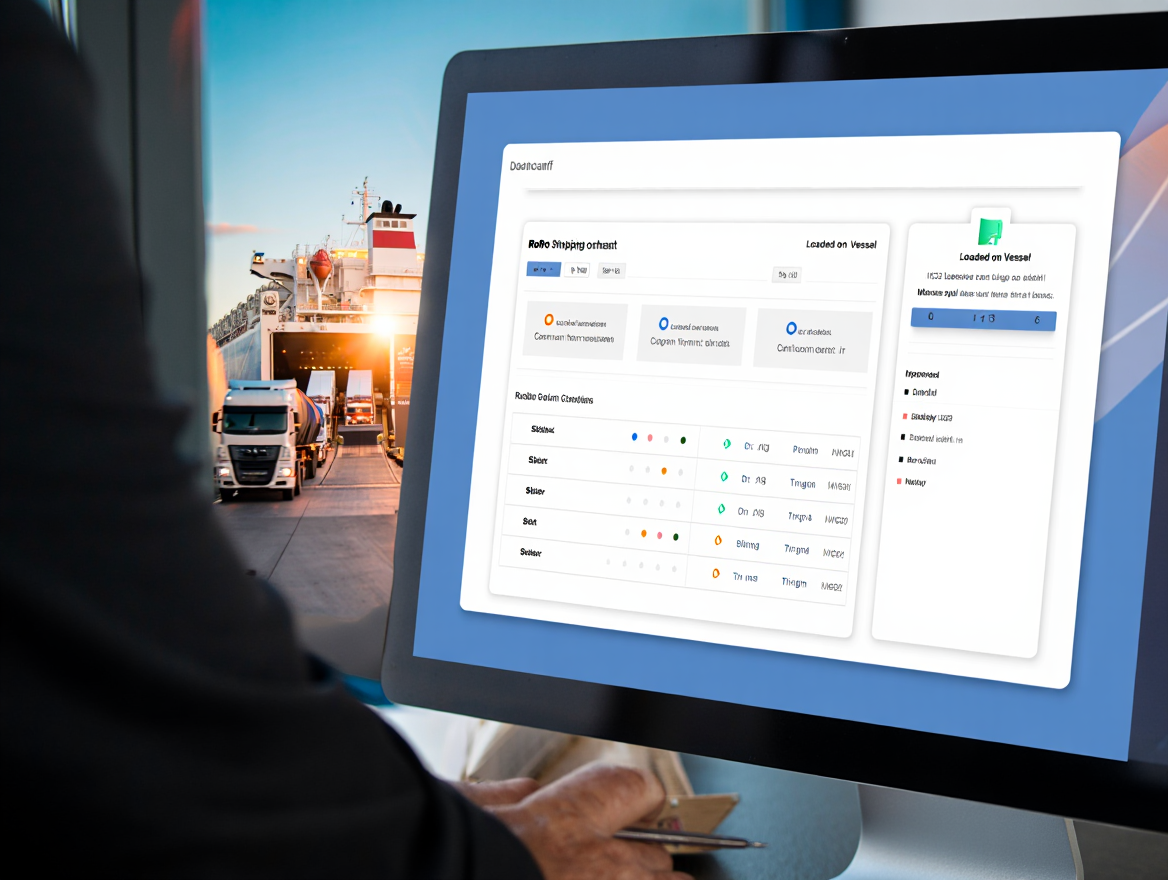
Status pushes ("Loaded on Vessel")
Audit-proof archive
Tip: Plan backwards: Check ETD/ETA directly in the Timetables in real time and work from destination to departure.
The process in 8 steps - from enquiry to delivery
1) Determine routing & compare departures
Select port of departure/destination
Compare direct services vs. transshipment
ETD/ETA, frequencies and bottlenecks in the Live timetable check
2) Request a quote (data basis instead of estimated values)
Enter vehicle type, dimensions, gross weight, special features
No all-inclusive prices: Only real data ensures availability & budget
3) Upload digital documents
Uploads with mandatory fields avoid gaps
Usual: Commercial invoice, proof of ownership, ID (for private individuals), packing list if applicable
VGM generally not required for RoRo
4) Technical preparation & vehicle condition
Rolling, steerable, no leaks, tank level ≤ 1/4
Empty inside, batteries secured, photos of previous damage
EV/hybrid: State of charge and insulation check according to specification
5) Manage booking confirmation, slots & cut-offs
Note booking reference, gate slot and cut-off
Activate reminder, allow 1-2 working days buffer
6) Gate check-in & terminal handover
Document check, vehicle acceptance, loading by harbour staff
Milestones in the portal: "Gate-in", "Loaded", "Sailed"
7) Tracking & exception handling
Automated status updates
Proactively recognise & act on deviations
8) Arrival, customs clearance & on-carriage
Roll-off, customs clearance, delivery or collection
All data remains documented in the portal
Core components in the roro booking processData, documents, deadlines
A modern roro booking process is fast, transparent and secure - if:
Data correct
Documents are complete
Deadlines are met
Use digital tools such as timetables, automated reminders and structured uploads. Systematically plan security and customs declarations (ENS/ICS2). Request your customised offer - and get started with the Route planning via the timetables in real time.
More practice? Read: Customs documents for RoRo transport or Checklist for RoRo shipping.
Disclaimer: All information in this article has been carefully researched but is subject to change at any time. ODS Orient accepts no liability for the topicality, accuracy and completeness of the information provided.
Do you have any questions or would you like to make use of our RoRo service?
Yes, even non-roadworthy vehicles can be shipped via RoRo – though only under certain conditions. Options such as MAFI trailers, tow bars or forklift loading make this possible. The additional costs vary depending on the method and terminal. In some cases, a container is the more economical and safer solution. Short answer in 5 bullet points What does „non-roadworthy" mean in the context […]
When exporting vehicles from the EU, there are several customs regulations to bear in mind. You will need an EORI number, must declare the export electronically via the ATLAS system, and will receive an MRN as proof. Depending on the destination country, T1 transit procedures and proof of preferential treatment may also be required. Correct processing avoids delays and fines. Quick guide in 5 bullet points What is an EORI number and why do you need […]