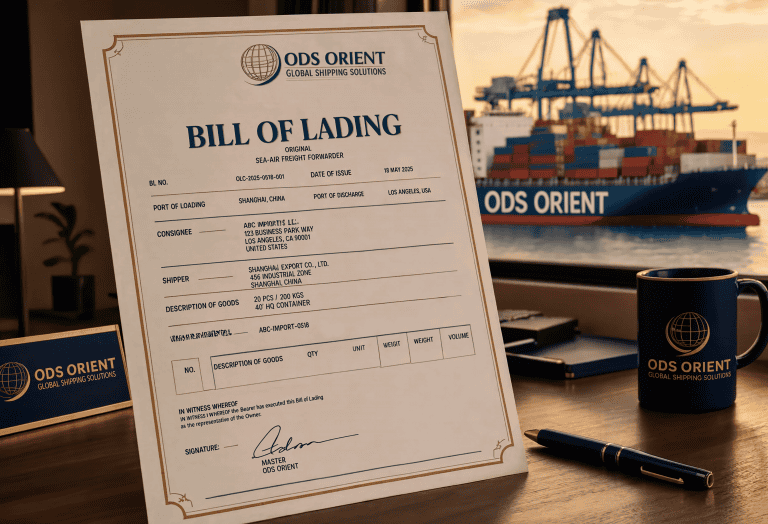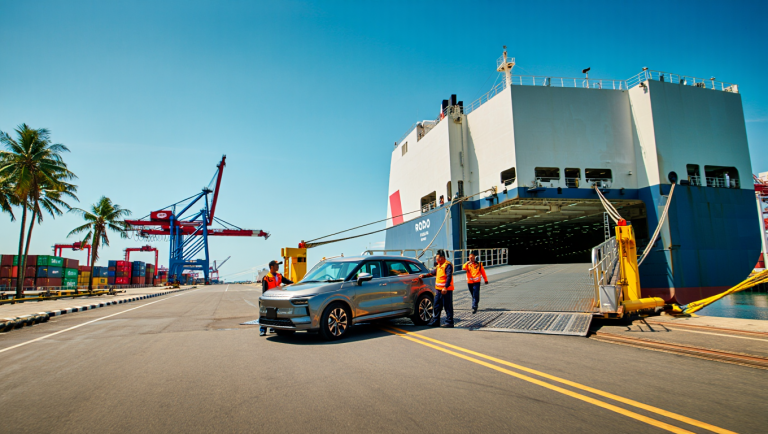
When exporting vehicles from the EU, there are several customs regulations to be observed. You will need an EORI number, must declare the export electronically via the ATLAS system, and will receive an MRN as proof. Depending on the destination country, T1 transit procedures and proof of preferential treatment may also be required. Correct processing avoids delays and fines.
Short answer in 5 bullet points
- An EORI number is a mandatory requirement for all customs clearance procedures within the EU.
- The export declaration is submitted electronically via the ATLAS system.
- The MRN (Movement Reference Number) serves as the central export document.
- The T1 transit procedure applies to transit through other EU Member States.
- Preferential proofs of origin may entitle goods to preferential tariff treatment in the country of destination.
What is an EORI number and why do you need one?
The EORI number (Economic Operators Registration and Identification) is your unique identifier for EU customs authorities. Without this number, you cannot submit an export declaration – it is an absolute prerequisite for any vehicle export.
Applications must be submitted to the relevant main customs office and are free of charge. Both individuals and businesses can apply for an EORI number. Processing usually takes a few working days, so it is advisable to submit your application well in advance.
- Application to the Main Customs Office – can be submitted online or using a form.
- Documents required: ID card or extract from the commercial register, tax registration number.
- The EORI number is valid throughout the EU and only needs to be applied for once.
- No export declaration will be accepted without a valid EORI number.
How does the ATLAS system work when exporting vehicles?
ATLAS (Automated Tariff and Local Customs Clearance System) is the German customs administration’s electronic platform. Since the complete digitisation of customs processes, export declarations for vehicles have been submitted exclusively via this system.
In practice, this means that you or your customs agent enter the export data electronically into ATLAS. The system automatically checks the details and, if they are accepted, generates the MRN.
Data collection: Enter the vehicle details, consignee, destination country and value of goods.
Pricing: Assign the correct customs tariff code (usually 8703 for passenger cars).
Transmission: Electronic transmission to the competent customs office of export.
Exam: ATLAS checks the data and, if necessary, orders an inspection.
Release: Once accepted, the MRN is generated and the export is declared.
What is the MRN and what role does it play in exports?
The MRN (Movement Reference Number) serves as the key proof that an export declaration has been correctly received by customs. It accompanies the vehicle from the point of origin to the port of departure, where it is validated by the customs office at that port.
No vehicle may leave the EU customs territory without a valid MRN. The terminal checks the MRN upon delivery and reports the physical export to customs. The export is only considered complete once this confirmation has been received.
The MRN is particularly important for VAT purposes: it serves as proof of a tax-exempt export supply under Section 6 of the Value Added Tax Act. You should therefore keep the MRN confirmation for at least ten years.
When is a T1 transit procedure required?
A T1 transit procedure (Community transit – external transit) is used if your vehicle does not leave the EU directly via a German customs office of departure, but is first transported through another EU country or an EFTA country.
A typical example: you are exporting a vehicle from Germany via the port of Antwerp (Belgium). Although the export is declared in Germany, the vehicle physically leaves the EU in Belgium. In this case, the T1 procedure ensures the customs status of the goods whilst in transit.
- T1 is required if the customs office of exit is located in another EU Member State.
- The procedure is handled via the NCTS (New Computerised Transit System).
- A security deposit (guarantee) may be required for the T1 procedure.
- The T1 clearance certificate is essential for providing full proof of export.
What role does preferential origin play in vehicle exports?
Preferential proofs of origin can provide the recipient in the destination country with significant customs benefits. If a vehicle has been manufactured in the EU and the destination country has a free trade agreement with the EU, a proof of origin can reduce the import duty at the destination.
The EU has free trade agreements with numerous countries and regions. Whether proof of preferential treatment is appropriate in your case depends on the destination country and the vehicle’s country of origin.
| Document | Area of application | Issued by |
| EUR.1 | Countries with EU free trade agreements | Customs authorities, upon request |
| Declaration of origin | Shipments below the value threshold | The exporter itself |
| EUR-MED | Pan-European-Mediterranean Zone | Customs authorities, upon request |
| Form A | Generalised System of Preferences (GSP) | authority in the country of origin |
What is the step-by-step process for export clearance?
The export clearance process follows a clearly defined procedure. With the right preparation, the whole process usually takes just a few days.
Check EORI number: Please ensure that your EORI number is valid and active.
Gathering documents: Commercial invoice, vehicle registration document, power of attorney for the customs agent.
Submit an export declaration: Submit your application online via ATLAS.
Received MRN: Once approved, save the MRN and forward it to the carrier.
Delivery to the terminal: Deliver the vehicle to the terminal and present the MRN.
Issuing note: The customs office of exit confirms the physical export.
Archive export records: Keep the MRN confirmation and dispatch note for at least ten years.
What mistakes should you avoid when clearing customs?
Errors in customs clearance can lead to delays, fines and, in the worst case, the vehicle being impounded. With a little care, the most common sources of error can be avoided.
- Incorrect tariff code – results in the rejection of the entire declaration.
- Missing or invalid proof of export – a problem for VAT.
- The value stated on the commercial invoice does not match that on the customs declaration.
- Late declaration – the export must be declared before the goods are physically moved.
- Lack of power of attorney for the customs service provider – no declaration without the power to act on behalf of the client.
Tip: If you are exporting a vehicle for the first time, use an experienced customs agent. The investment is well worth it, as it ensures a smooth process.
FAQ - Frequently asked questions
As a private individual, do I need an EORI number to export a vehicle?
Yes, private individuals also need an EORI number to complete an export declaration. Applying for one at the main customs office is free of charge and usually takes a few working days.
Can my freight forwarder handle the entire customs clearance process?
Yes, provided they have the appropriate power of attorney, a customs service provider can prepare and submit the entire export declaration on your behalf. However, you remain legally responsible as the exporter.
How much does it cost to submit an export declaration to customs?
The export declaration itself is free of charge when filed with Customs. Costs are incurred only when engaging a customs agent and, where applicable, for security deposits under the T1 procedure.
How long does customs clearance take for a vehicle export?
Provided the documentation is complete, the export declaration is usually processed within one working day. Incomplete declarations or requested inspections may delay the process by several days.
What happens if I cannot provide proof of export?
Without valid proof of export, the supply will be subject to VAT. The tax office may impose a back-date VAT charge, plus interest. It is therefore essential to have complete proof of export.
Does the commercial invoice have to be written in a specific language?
There are no legal requirements regarding the language to be used, but English or German are recommended. The commercial invoice must include the value of the goods, the recipient and a detailed description of the goods.
Conclusion
The customs regulations governing the export of vehicles from the EU are complex, but can be easily managed with the right preparation. From the EORI number and the ATLAS declaration to the exit endorsement – every step follows a clear process.
If this is your first time exporting a vehicle, we recommend working with an experienced customs agent. The team at ODS Orient will guide you through the entire process and ensure that your export goes smoothly.
Do you have any questions or would you like a non-binding offer? Contact us directly: https://odsorient.com/kontakt
All information in this article has been carefully researched but is subject to change at any time. ODS Orient accepts no liability for the topicality, accuracy and completeness of the information provided.