FuelEU Maritime obliges shipping companies to gradually reduce the greenhouse gas intensity of marine fuels from 2026. For the RoRo sector, this means new surcharge models, more complex timetable planning and stricter documentation requirements. The main keyword fueleu maritime roro is therefore becoming a central issue for shippers, charterers and shipping companies. If you want to reliably maintain ETD and ETA and efficiently manage POL and POD, you need to integrate emissions requirements into planning and contracts at an early stage.
Short answer in 5 bullet points
FuelEU Maritime leads to new CO2-based surcharges in RoRo transport.
Timetables must be optimised to take account of emission values and alternative fuels.
Shipping companies need more precise data on bunker quality, consumption and transport performance.
Shippers should review their contract clauses on B L, ETD ETA and surcharges.
Early coordination between shipping company, terminal and customer reduces operational risks.
Introduction: Why FuelEU Maritime is crucial for RoRo
The European FuelEU Maritime Regulation is part of the Fit for 55 package and aims to significantly reduce the greenhouse gas intensity of maritime transport. Binding limits for the emission intensity of the energy used on board will apply from 2026.
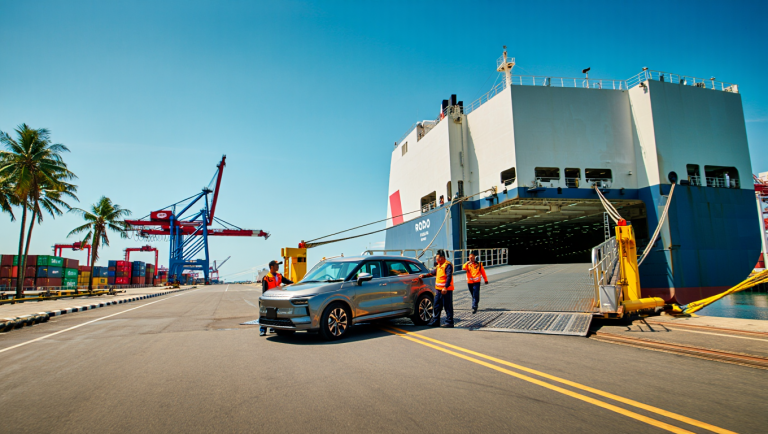
The effects on traditional container transport have already been discussed in detail. However, there are particular challenges in the fueleu maritime roro sector. RoRo ships, PCTC units and MAFI trailers often operate with tight schedules, short lay times and high handling pressure. Every adjustment to speed, fuel or routing has a direct impact on ETD and ETA.
You can find more detailed information on operational processes under Timetables https://odsorient.com/fahrplaene as well as under What do I have to consider for a RoRo shipment? https://odsorient.com/was-muss-ich-bei-einer-roro-verschiffung-beachten.
What is FuelEU Maritime and who does it affect?
FuelEU Maritime obliges ship operators to gradually reduce the greenhouse gas intensity of the energy used on board. The decisive factor is the energy consumption per transport performance. This is based on EU-wide monitoring, reporting and verification systems.
Ships of 5000 GT or more that call at EU ports are affected. For the fueleu maritime roro sector, this means that almost all larger ro-ro and PCTC units are covered.
What are the objectives of the regulation?
The ordinance is based on a gradual reduction in emissions intensity.
It promotes alternative fuels such as LNG, methanol and biofuels.
It incentivises the use of shore-side electricity in EU ports.
It includes EU-relevant transport shares in order to avoid carbon leakage.
Official information is available from the European Commission at https://transport.ec.europa.eu/transport-modes/maritime/decarbonising-maritime-transport-fueleu-maritime_en. The IMO CTU Code also remains relevant for safe loading specifications https://www.imo.org/en/OurWork/Safety/Pages/CTU-Code.aspx.
How do the requirements affect surcharges?
Why are new surcharges being created?
Compliance with the emission limits causes additional costs through the use of alternative fuels, technical retrofitting and extended monitoring.
In the context of fueleu maritime roro, these additional costs are often passed on via specific environmental or decarbonisation surcharges. Unlike traditional bunker adjustment factors, they are based more on emissions intensity and regulatory target values.
How are surcharges calculated?
There are different models in practice.
Flat-rate emission surcharges per vehicle or per MAFI unit.
Tonne-based surcharges per transported unit.
Route-dependent surcharges depending on POL and POD within the EU.
An individual quotation is always required for specific cost calculations.
What impact does FuelEU Maritime have on timetable planning?
Do RoRo ships have to travel more slowly?
Slow steaming is a common measure for reducing emissions. Lower speed reduces fuel consumption and thus the intensity of emissions.
For fueleu maritime roro this can mean
Postponement of ETD and ETA.
Longer transit times between POL and POD.
Adjustment of lead and lag times.
In tightly synchronised automotive supply chains, a delay of just 24 hours can have a significant impact.
How are harbour calls changing?
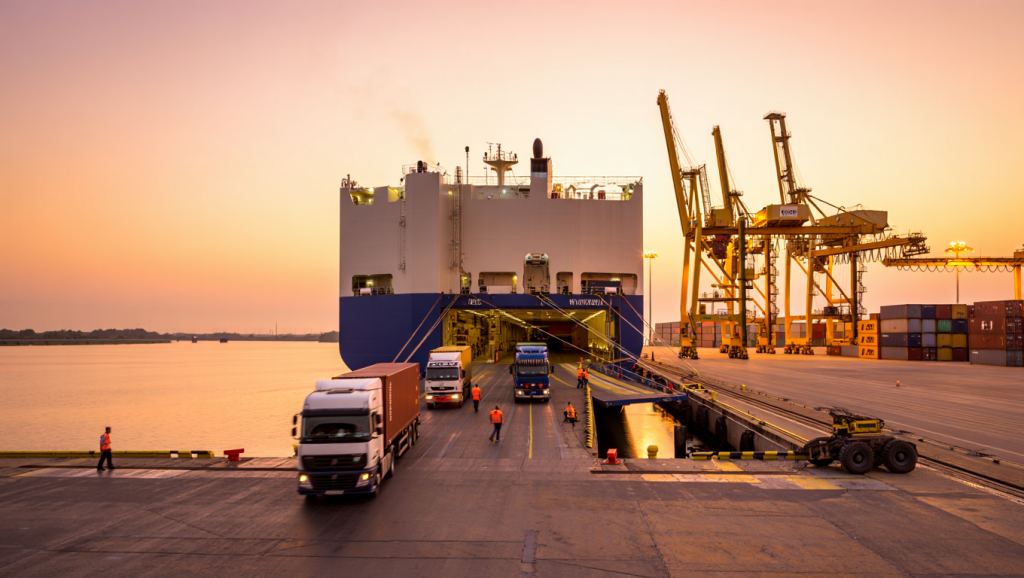
Shipping companies are increasingly looking at route optimisation to minimise empty runs, better utilisation of PCTC decks and the integration of shore power.
This makes schedules more flexible, but also more complex. Shippers should request regular updates and adapt their internal planning processes.
Which documents and data are gaining in importance?
What role does the B L play?
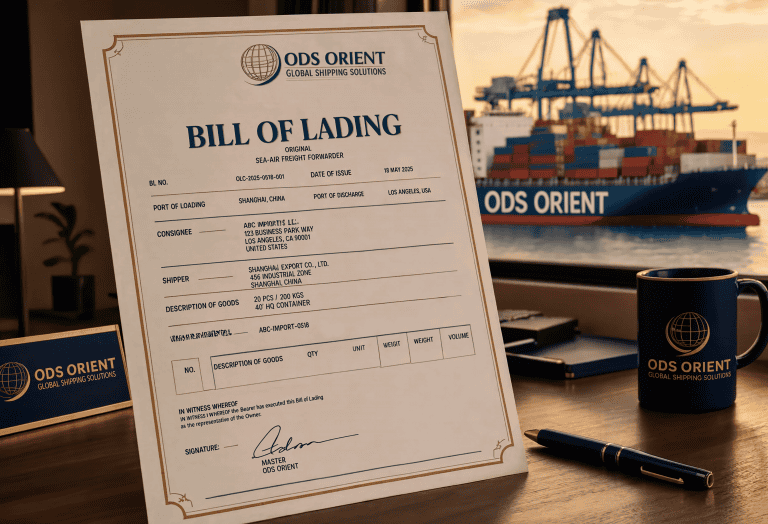
The Bill of Lading remains the central transport document. In the context of fueleu maritime roro, additional information on emission categories or environmental surcharges may become relevant in future.
Shippers should ensure that weight, load type and routing are correctly specified, as these parameters can be included in emission calculations.
Which operational data is critical?
Exact specification of ETD and ETA.
Correct assignment of POL and POD.
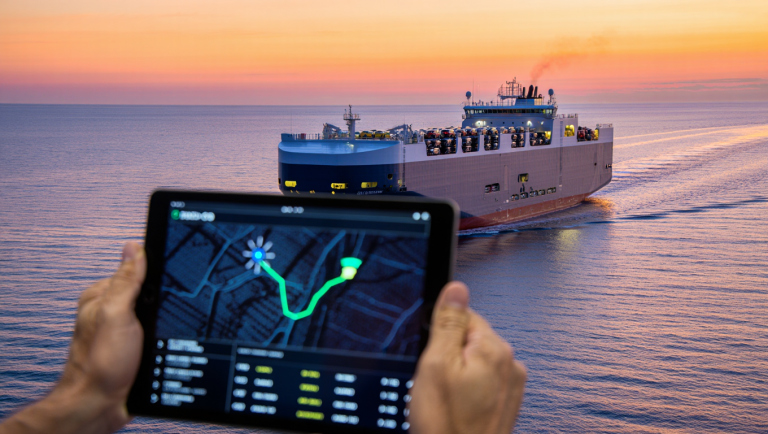
Transparent consumption data from the shipping company.
In practice, it is often the case that data interfaces between the shipping company, terminal and freight forwarder need to be optimised in order to avoid compliance risks.
Typical risks in the fueleu maritime roro environment
Unclear contractual clauses
Existing framework agreements often do not contain specific regulations on emission surcharges. This leads to uncertainties and potential conflicts.
Lack of transparency
Without a comprehensible basis for calculation, it is difficult to check surcharges.
Operational bottlenecks
Simultaneous timetable adjustments by several shipping companies can lead to capacity bottlenecks, especially in the PCTC segment.
Compliance violations
Incomplete or incorrect reports can lead to sanctions. Structured internal documentation is therefore essential.
Practical checklist for shippers and logistics managers
Strategic preparation
Analysing existing contracts with regard to environmental surcharges.
Evaluation of alternative routes and shipping companies.
Early coordination with relevant contacts.
Operational measures
Regular checking of ETD and ETA deviations.
Synchronisation of POL and POD data with internal systems.
Documentation of all surcharges in your own ERP system.
Compliance and documentation
Ensuring complete B L data.
Archiving of relevant evidence.
Training of employees on regulatory requirements.
FAQ on FuelEU Maritime and RoRo
What does fueleu maritime roro actually mean for my company?
emissions requirements have a direct impact on transport costs, transit times and contract design. Adapting processes at an early stage reduces risks.
Will all RoRo transports become more expensive?
Not necessarily. The development depends on the route, type of ship and fuel strategy. A personalised offer is required for individual calculations.
Does FuelEU Maritime affect ETD and ETA?
Yes, measures such as slow steaming or modified port calls can extend transit times and postpone schedules.
Do shippers have to report emissions data themselves?
As a rule, the reporting obligation lies with the ship operator. Nevertheless, shippers should check and systematically archive relevant documents.
How can I prepare myself optimally?
Through contract review, close coordination with the shipping company and regular monitoring of operational key figures such as capacity utilisation, transit time and surcharge structure.
Conclusion
FuelEU Maritime marks a profound change in European maritime transport. For the fueleu maritime roro sector, this means new surcharge models, changed timetable structures and increased transparency and documentation requirements.
Companies that adapt their processes at an early stage, review contractual clauses and systematically monitor ETD ETA and POL POD secure competitive advantages. The integration of emissions aspects into strategic and operational decisions is becoming standard in the RoRo business.
FuelEU Maritime is therefore not only a regulatory challenge, but also an impetus for more efficient and sustainable transport chains in European short sea and deep sea transport.
Disclaimer: All information in this article has been carefully researched but is subject to change at any time. ODS Orient accepts no liability for the topicality, accuracy and completeness of the information provided.