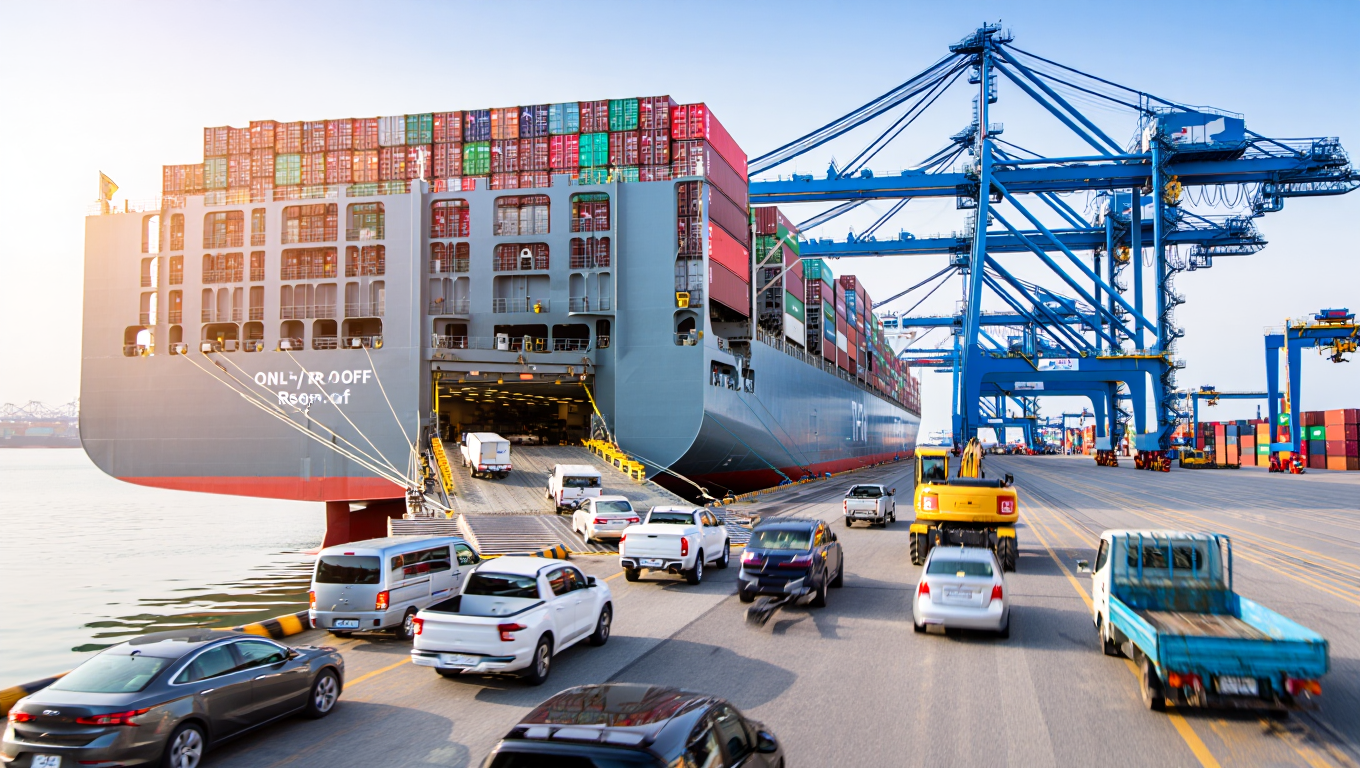
Transport insurance with RORO: 5 rates in comparison
September 9, 2025
Reading time: 2 minutes
RoRo (roll-on/roll-off) transport offers a safe and efficient method of shipping vehicles and construction machinery by sea. However, risks such as weather, theft or handling errors still exist. A suitable Transport insurance with RORO is therefore essential. In this article, we compare five tariff models, explain important concepts and show you which insurance solution meets your needs.
Introduction
As soon as your vehicle is loaded, you are defenceless without insurance. A suitable RoRo transport insurance policy covers transport damage, theft, total loss and unforeseen events - around the clock and worldwide. Our comparison will help you find the best solution.
1. why insurance for RORO transports?
Standard insurance policies often do not cover typical RoRo risks such as corrosion caused by seawater, loading or unloading damage, theft in the harbour area or piracy. Customised RoRo insurance specifically takes these risks into account:
Material damage during loading or on the ship
Theft in harbour or at sea
Storm, flood or corrosion damage
Shipwreck or total loss
2. five tariff models in comparison
Tariff type
Sum insured
Risks covered
Ideal for
Basic insurance
Vehicle value (CIF)
Loading and sea damage
Standard car, price-sensitive
Extended package
CIF + 10-20 %
incl. theft, fire, weather
High-quality vehicles
All-risk insurance
Fully comprehensive level
All-round protection incl. piracy, total loss
Luxury vehicles, export models
Time value insurance
Market value
Current vehicle value only
Used cars
Special cover
individual
Unique risks - e.g. classic cars
Collector & special vehicles
Note: The actual premium depends on the vehicle value, route and port of destination - it's worth getting a personalised quote.
3. important insurance components
Sum insured: Based on the CIF value with an appropriate safety buffer.
Deductible: Low deductible recommended for higher value vehicles.
Avoid underinsurance: All-risk tariffs often offer more flexibility for conversions or additional equipment.
Travel risks & route maps: Increased risk for certain routes (e.g. at risk from storms).
4. tips for choosing a tariff
Realistically estimate vehicle value
Analyse route risk (e.g. storm-prone sea routes)
Check cover: Does the tariff cover theft, forces of nature and total loss?
Check the small print: Pay attention to exclusions or claims periods
Consider unique features: special bodies, accessories, etc.
Respond correctly and in good time in the event of a claim
FAQ - Frequently asked questions
When do I need RORO transport insurance?
As soon as your vehicle is transported by ship - especially for valuable vehicles or high-risk routes.
What does basic insurance cover?
It covers loading and sea damage - but not theft or force majeure.
Is all-risk insurance worthwhile?
Yes - especially for luxury vehicles, valuable vehicles or sensitive freight.
How do I find the right amount of cover?
Use the CIF value of the vehicle as a guide and add 10-20 % buffers if necessary.
Does the tariff also cover harbour risks?
Only extended or all-risk tariffs fully include harbour and terminal risks.
Conclusion
Suitable transport insurance is essential to reliably protect your vehicle during RoRo shipments. Compare rates, check details and benefit from the expertise of ODS Orient - for worry-free transport.
Disclaimer:
All information in this article has been carefully researched and is subject to change at any time. ODS Orient accepts no liability for the topicality, accuracy or completeness of the content.
Do you have any questions or would you like to make use of our RoRo service?
Why 2026 will be a turning point From 1 January 2026, the International Maritime Organisation (IMO) will tighten its climate targets. The focus is on more binding efficiency paths for ships, stricter inspection obligations for shipping companies and concrete preparatory steps for global CO₂ pricing. For exporters, this means more transparency, more documentation - and potentially higher CO₂ cost components. Immediately helpful: Roadmaps → https://odsorient.com/fahrplaene What do I [...]
Why tracking with RoRo is more than just „ship on map“ RoRo (roll-on/roll-off) is a fast and robust shipping method for roadworthy vehicles. Nevertheless, many customers find the transport process opaque – especially when status information is scattered across emails, portals and PDF notifications. A structured RoRo tracking system brings order to this diversity of data and enables clear […]