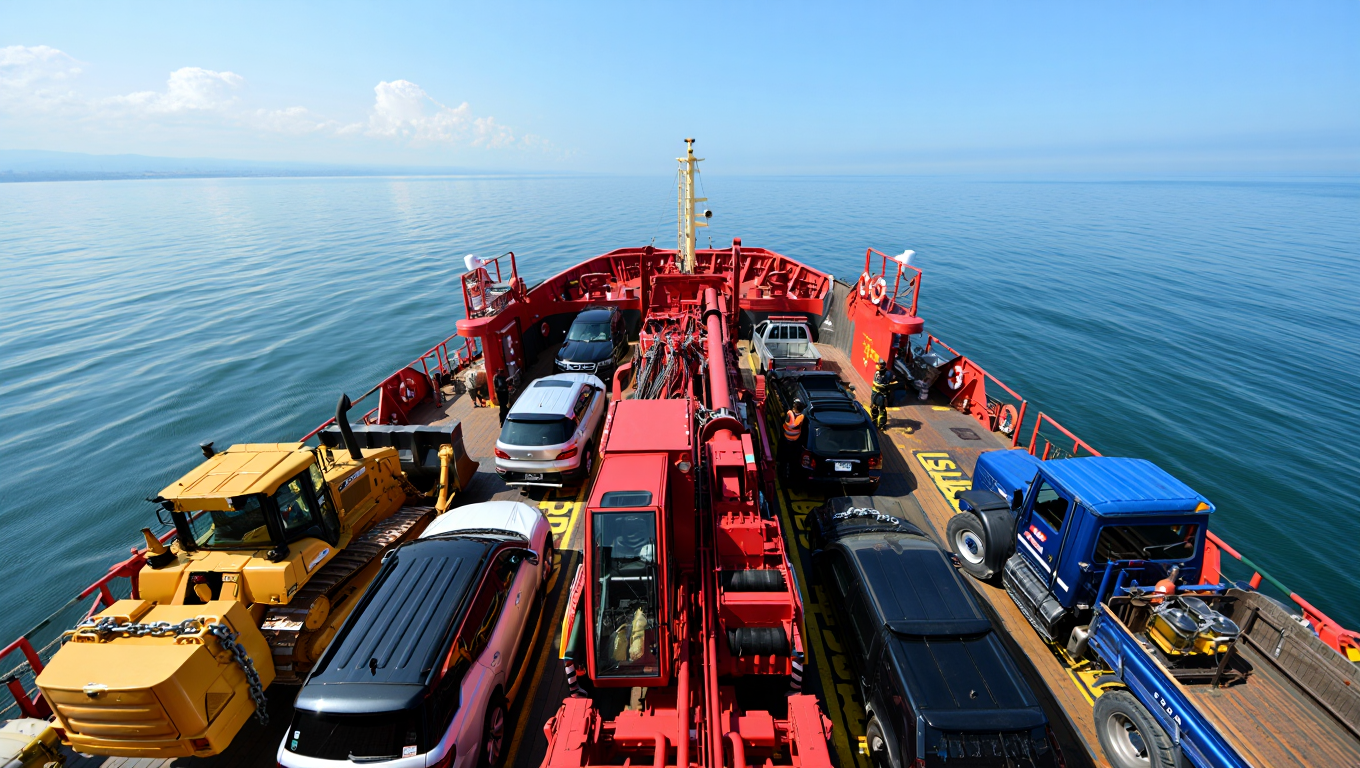
Transport insurance with RORO: 5 rates in comparison
16 December 2025
Reading time: 3 minutes
Why RoRo is risky without a clean policy
RoRo is fast, gentle and efficient – but risks remain: storm damage, general average, theft during unplanned temporary storage, damage during port handling or war/strike events. The insurance must therefore be appropriate for the type of cargo, relation and risk profile.
Three basic principles help with the selection:
Scope of cover (named perils vs. all risks)
Risk period (warehouse-to-warehouse, port-to-port, pre-carriage/post-carriage)
Obligations & exclusions (e.g. „no viewing“, proper securing, no personal belongings)
Practical tip: Check the General Average Rules (York-Antwerp Rules) and whether your policy covers GA contributions and salvage. This is crucial for sea transport.
The Institute Cargo Clauses (ICC) are international standard terms and conditions for goods transport insurance:
ICC (A): All risks (with standard exclusions such as inherent vice, corrosion, inadequate packaging)
ICC (B): Extended named perils (e.g. earthquake, seawater)
ICC (C): Basic named perils (e.g. fire, general average)
Add-ons: Institute War Clauses, Strikes Clauses (SRCC), GA coverage, warehouse-to-warehouse if applicable
The IUMI Guide at iumi.com provides a clear overview.
A comparison of the 5 most common RoRo tariffs
Tariff 1: Total Loss Only (TLO) – Budget protection
For whom? Older vehicles with low residual value
Coverage: Total damage/total loss only
Plus: Inexpensive, covers catastrophic scenarios
Minus: No partial damage such as dents or broken glass
Typical application: low-budget exports
Search intention: Minimum insurance solution for ro-ro transport
Tariff 2: ICC (C) – Basic Named Perils
For whom? Robust vehicles, simple relations
Coverage: Fire, collision, major accident, salvage
Plus: Basic cover including GA
Minus: No protection against theft or corrosion, for example
Use case: Unsensitive machines
Tariff 3: ICC (B) – Extended Named Perils
For whom? Moderate risk profile, additional protection desired
Coverage: Contains more hazards (earthquakes, seawater)
Plus: Wider than C
Minus: No genuine all-risk cover
Use case: Medium-value production vehicles
Tariff 4: ICC (A) – All Risks
For whom? High-quality vehicles, sensitive goods
Coverage: Almost all transport risks, including general average and salvage
Plus: Protection against crashes, theft, vandalism
Minus: Exclusions remain, e.g. rust without incident
Use case: Premium vehicles, new machinery
Tariff 5: All Risks + War/Strikes + Specials
For whom? Expensive EVs, project shipments with risk
Coverage: ICC (A) + War + SRCC + Special Clauses
Plus: Maximum protection against geopolitical risks
Minus: Higher contribution, strict obligations
Use case: High value on tricky routes
Comparison table: Scope of coverage & areas of application
Feature
TLO
ICC (C)
ICC (B)
ICC (A)
A + War/Strikes + Specials
partial damage
✖
✖
△
✔
✔
total loss
✔
✔
✔
✔
✔
GA & Salvage
△
✔
✔
✔
✔
seawater
✖
✖/△
△/✔
✔
✔
Theft
✖
✖
△
✔
✔
Wins/Strikes
✖
✖
✖
✖
✔
EV battery
✖
✖
△
△/✔
✔
Alt text: Matrix comparing the five standard RoRo insurance rates according to coverage elements and areas of application.
Key terms you need to know
General Average: In the event of extraordinary rescue operations (e.g. jettisoning), costs are distributed among the ship, cargo and fuel. Without a suitable policy, high advance payments may be required.
Liability regime (carrier): Shipping companies only have limited liability (e.g. according to the Hague-Visby or Hamburg Rules). It is therefore essential to take out your own transport insurance.
„Blickleer“ & obligations: No items in the vehicle, fuel level < ¼, document condition. Violations jeopardise coverage.
How to choose the right insurance
Assess vehicle value and risk
Select target coverage (TLO to All Risks + SRCC)
Check the risk period: Do you need warehouse-to-warehouse?
Inherent vice, normal corrosion, packaging defects
Personal belongings in the vehicle
Previous damage without condition documentation
Tip: For used vehicles, it is essential to create photo documentation before handing them over to the terminal.
Conclusion: Reach your destination relaxed with the right policy
The right transport insurance determines the resilience of your RoRo project. While TLO is sufficient for budget cases, ICC (A) or A + War/Strikes offer robust all-round coverage. Ensure you have clear documentation, GA coverage and compliance with obligations.
Note: Specific contributions depend on many factors. An individual enquiry is required to obtain a reliable quote.
Disclaimer: All information in this article has been carefully researched but is subject to change at any time. ODS Orient accepts no liability for the topicality, accuracy and completeness of the information provided.
Do you have any questions or would you like to make use of our RoRo service?
Why 2026 will be a turning point From 1 January 2026, the International Maritime Organisation (IMO) will tighten its climate targets. The focus is on more binding efficiency paths for ships, stricter inspection obligations for shipping companies and concrete preparatory steps for global CO₂ pricing. For exporters, this means more transparency, more documentation - and potentially higher CO₂ cost components. Immediately helpful: Roadmaps → https://odsorient.com/fahrplaene What do I [...]
Why tracking with RoRo is more than just „ship on map“ RoRo (roll-on/roll-off) is a fast and robust shipping method for roadworthy vehicles. Nevertheless, many customers find the transport process opaque – especially when status information is scattered across emails, portals and PDF notifications. A structured RoRo tracking system brings order to this diversity of data and enables clear […]