Shipping to New Zealand: costs, routes & customs 2025
October 28, 2025
Reading time: 3 minutes
You are planning a Shipping New Zealand for vehicles, machines or general cargo? Then you need a clear overview: Which routes make sense, how do you realistically calculate, and what does New Zealand require in terms of customs & biosecurity?
This guide brings together everything relevant - from routing and transit times to documents, import taxes, MPI biosecurity and NZTA authorisation rules. We also provide links to official bodies and practical resources from ODS Orient.
Why New Zealand - and what that means for planning
New Zealand is geographically far away, but very well connected via container and RoRo networks.
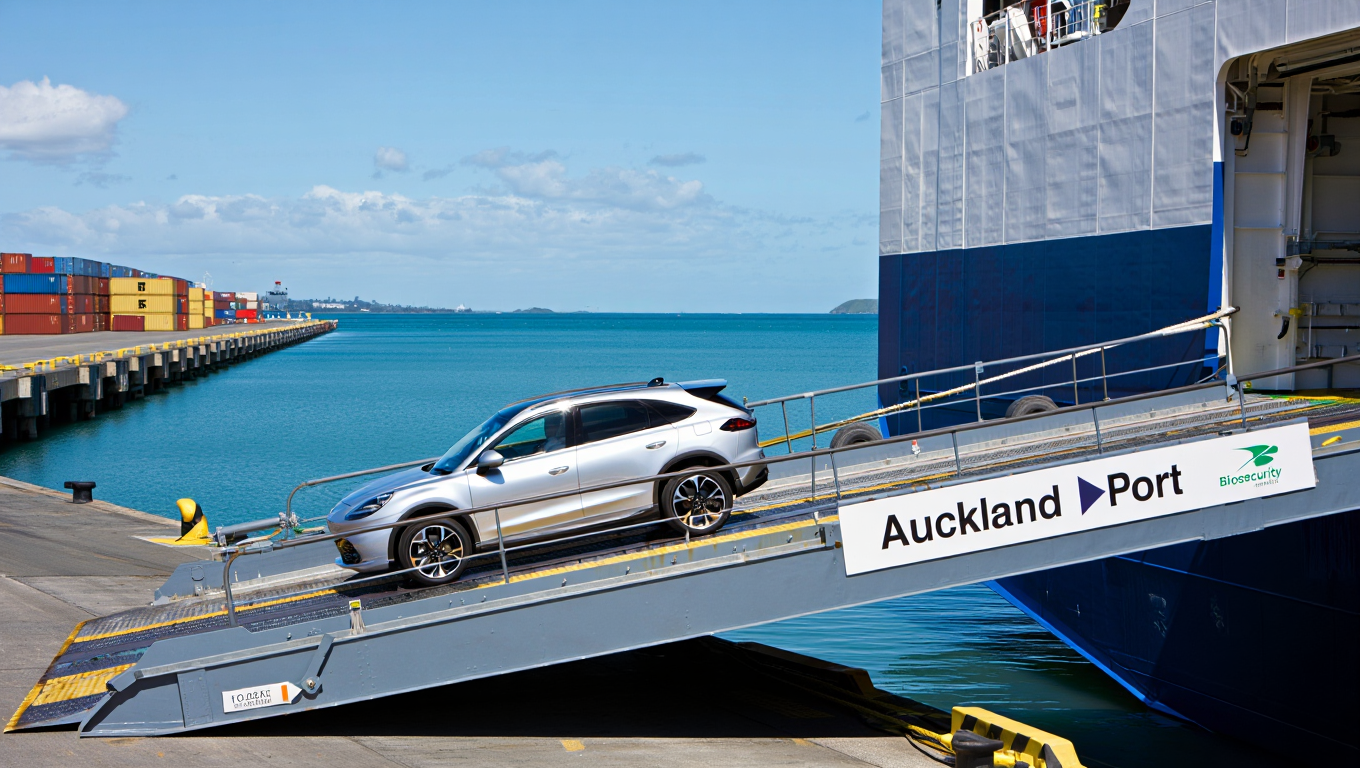
RoRo (roll-on/roll-off): ideal for vehicles and rollable machines
Container (FCL/LCL)suitable for palletised goods and spare parts
Transshipments are frequent - early planning with Live data from the timetables is essential.
Note biosecurity: The New Zealand Ministry for Primary Industries (MPI) requires that vehicles and machines Free from soil, plant residues and pests are. Violations can lead to cleaning, delay or rejection.
Cost factors: What sea freight really depends on
A customised offer is necessary as prices fluctuate. Typical influencing factors:
Relation & shipping companyDirect services vs. transshipment, frequency, season
Transport methodRoRo vs. container (20′/40′/HC)
Dimensions & weightOversize (OOG), special handling
Harbour duesGate, Handling, Slot
Packaging & securingISPM-15 wood, lashing material
InsuranceAll-Risk recommended
Target-side leviesGST, customs duty if applicable, MPI fees
Note: Flat rates are dubious - use real consignment data.
RoRo or container? Practical comparison
Criterion
RoRo
Container (FCL/LCL)
Ideal for
Vehicles, machines
Parts, palletised goods
Handling
Vehicle rolls on board
Craning, palletising
Plannability
Fewer harbours/frequency
Dense global network
Protection
Lashing/covers
Protected in a container
Cost logic
Vehicle-specific, OOG if necessary
Freight + surcharges + terminal costs
More basicsChecklist for RoRo shipping
Routes & transit times 2025: Europe/USA/Asia → New Zealand
Start region
Ports of departure
Destination ports NZ
Notes
Northern Europe
Bremerhaven, Zeebrugge
Auckland, Tauranga
Frequent transshipment
Mediterranean Sea
Barcelona, Livorno
Napier, Auckland
Seasonal frequency differences
East Coast USA
Baltimore, NY
Auckland
widely used for vehicles
Asia
Busan, HK, Kaohsiung
Auckland, Tauranga
Highest frequency
Use Live timetables for daily ETD/ETA.
Customs & taxes: What New Zealand charges
GST (Goods and Services Tax): 15 % on imports (assessment basis: value of goods + freight + insurance + customs duty if applicable)
Why 2026 will be a turning point From 1 January 2026, the International Maritime Organisation (IMO) will tighten its climate targets. The focus is on more binding efficiency paths for ships, stricter inspection obligations for shipping companies and concrete preparatory steps for global CO₂ pricing. For exporters, this means more transparency, more documentation - and potentially higher CO₂ cost components. Immediately helpful: Roadmaps → https://odsorient.com/fahrplaene What do I [...]
Why tracking with RoRo is more than just „ship on map“ RoRo (roll-on/roll-off) is a fast and robust shipping method for roadworthy vehicles. Nevertheless, many customers find the transport process opaque – especially when status information is scattered across emails, portals and PDF notifications. A structured RoRo tracking system brings order to this diversity of data and enables clear […]