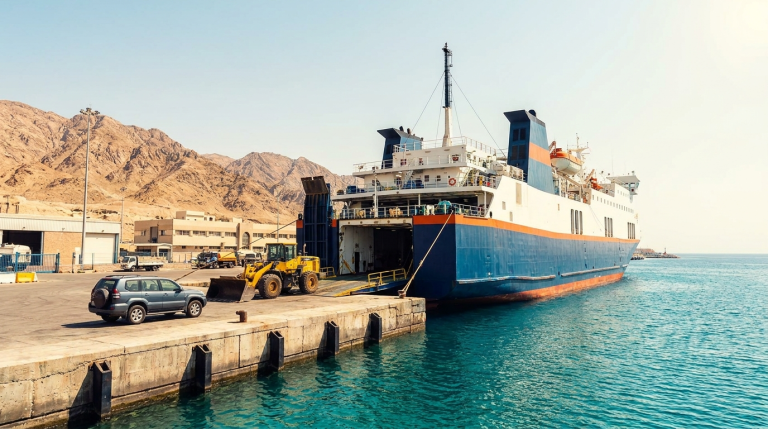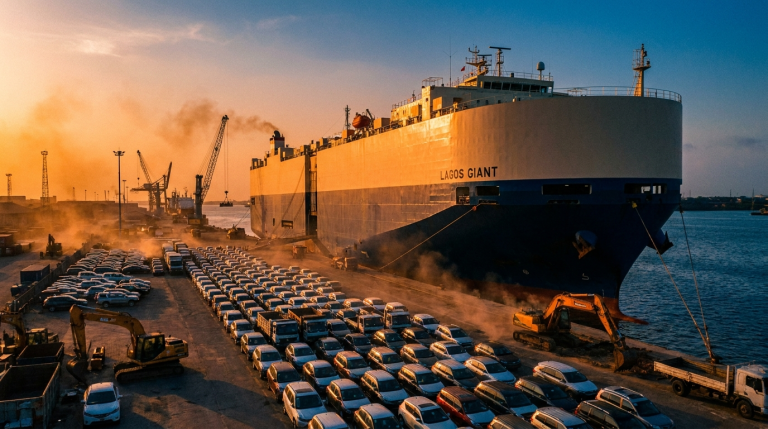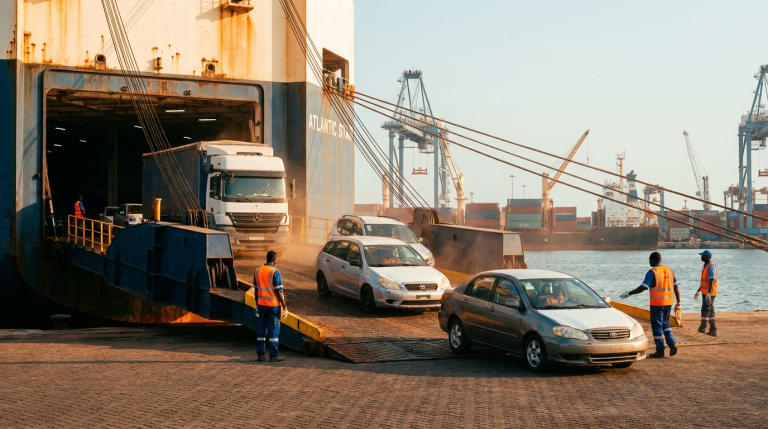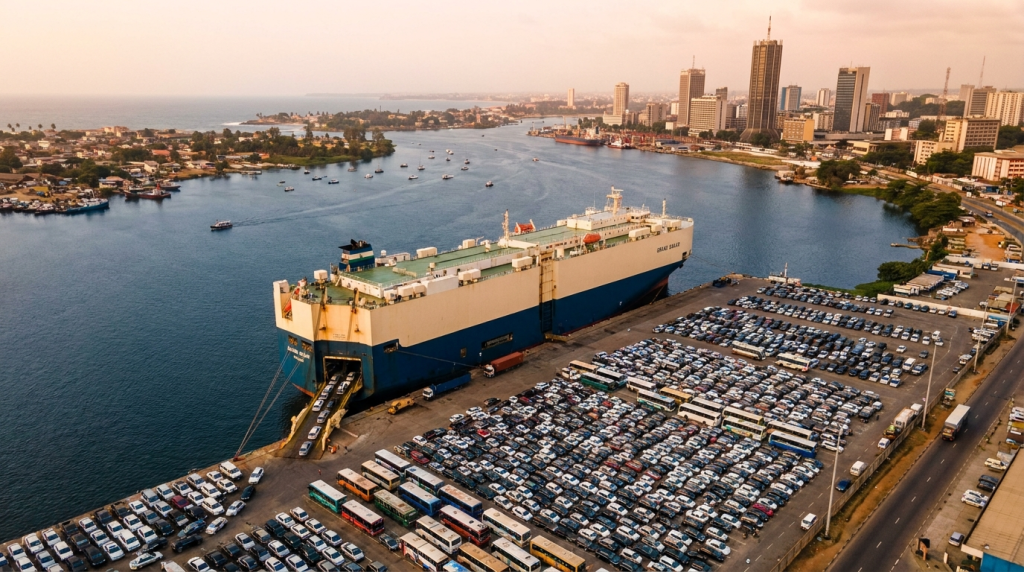
Short answer: You usually ship a car to the Ivory Coast by RoRo (roll-on/roll-off): the roadworthy vehicle is driven onto the ship in Hamburg and travels along the West African coast to Abidjan, the main port of the Côte d’Ivoire. Lorry, construction machinery and project cargo are also transported by RoRo or on flat racks, whilst cars that are not roadworthy are also shipped in containers. It is essential to have all the necessary documents and to be aware of the current import regulations, which you should check before booking. As French is the official language, paperwork and communication on site are often in French.
The key points in 5 points
- RoRo is the standard for roadworthy vehicles bound for Abidjan.
- Abidjan is a major port West Africa’s gateway, and also a gateway for landlocked countries.
- Heavy load Goods such as lorries, construction machinery and project cargo can be transported by RoRo or flat rack.
- Check import requirements in advance – they may change at any time.
- French documents facilitate clearance at the port of destination.
Why is Abidjan the most important port of call in Côte d’Ivoire?
Abidjan is the economic hub of Côte d’Ivoire and one of West Africa’s most important ports. As well as serving the domestic market, the port also acts as a gateway for landlocked countries such as Burkina Faso and Mali, whose cargo is transported via Abidjan into the hinterland. For you, this means: regular port calls, experienced terminals and a well-oiled logistics operation for vehicle imports.
What is the route from Hamburg, and how long does it take?
From Hamburg, the sea route takes you through the English Channel, along the European Atlantic coast and on along the West African coast to Abidjan. Along the way, the ships often call at other ports. The transit time therefore depends on the timetable, the stopovers and the shipping company; you should allow for a few weeks, plus pre- and post-carriage. You can find a more comprehensive overview of sailing routes and specific features in our article on Ro-Ro transport to Africa.
What sort of cargo can you ship to Abidjan?
You can ship cars, vans, lorries and self-propelled construction machinery such as excavators or wheel loaders via RoRo. For oversized or non-roadworthy vehicles and project cargo, flat racks are an option; these are loaded on board on roll trailers. A container is suitable for cars that are not roadworthy or if you require additional protection. ODS Orient has been operating as a freight forwarder in Hamburg since 1974 and will work with you to select the most suitable method of loading.
What documents and customs regulations apply to the Ivory Coast?
Key documents include the commercial invoice, bill of lading, vehicle documents and proof of export. On the German side, exports are processed via the electronic ATLAS export declaration, the basis for which is the German customs explained. Separate regulations apply to the import of vehicles into Côte d’Ivoire, covering vehicles, duties and documentation. As these are subject to change, please check the current import regulations before booking. You can find out how customs clearance works on arrival in our guide to Customs clearance at the port of destination.
What practical tips can make shipping easier?
As French is the official language, it is worth having documents and agreements with the consignee and customs agent ready in French. Make sure that the chassis number and details match across all documents. Remove any personal belongings from the vehicle, document its condition with photographs and clarify at an early stage who will handle the clearance process in Abidjan.
FAQ
How long does shipping to Abidjan take?
The sea journey from Hamburg usually takes a few weeks. The exact duration depends on the timetable and the ports of call.
Is RoRo or container shipping better?
For roadworthy vehicles, RoRo is usually the simplest solution. A container is suitable for non-roadworthy cars or if additional protection is required.
Can I also ship construction machinery to Abidjan?
Yes. Construction machinery that is roadworthy is transported by RoRo, whilst oversized or non-roadworthy units are transported on flat racks.
Do I need to know French?
It isn’t essential, but having French documents and local contacts makes the process much easier.
Can I import any vehicle into the Ivory Coast?
That depends on the current import regulations. Be sure to check these before booking.
All the information in this article has been carefully researched, but is subject to change at any time. ODS Orient accepts no liability for the timeliness, accuracy or completeness of the information provided. Please contact us directly for a no-obligation quote.