
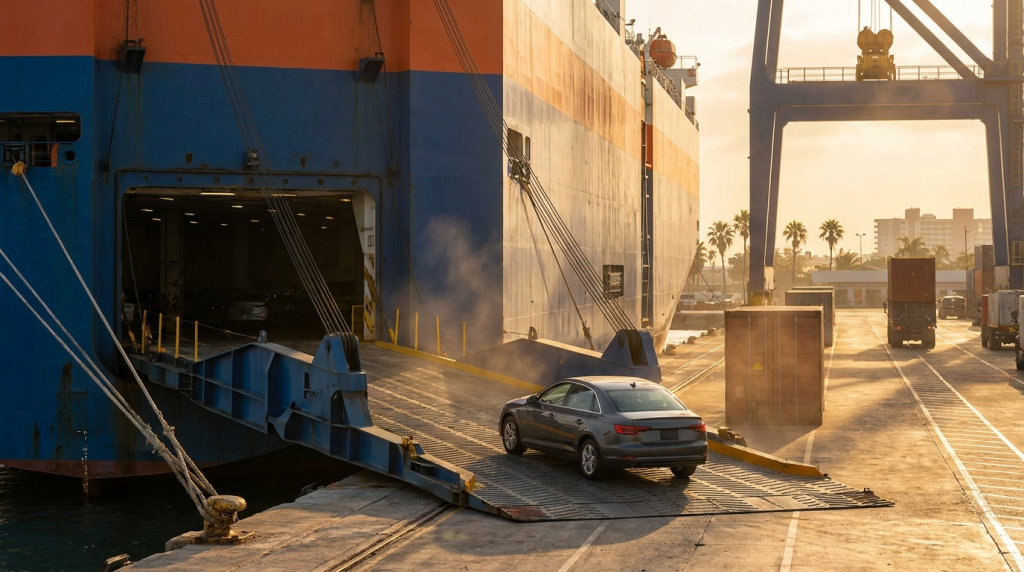
Short answer: The easiest way to ship a car to Mexico is by Ro-Ro via ports such as Veracruz or Altamira on the Gulf Coast. The transport itself is straightforward – the more complicated part is customs: Mexico regulates vehicle imports, and special regulations and documentation requirements apply to second-hand vehicles. You should therefore check in advance with Mexican customs and your freight forwarder to ensure your vehicle is eligible for import.
The key points in 5 points
- RoRo is the standard for roadworthy vehicles bound for Mexico.
- Major ports: Veracruz and Altamira on the Gulf Coast.
- Imports are regulated – particularly in the case of second-hand vehicles.
- Documents and customs are key to ensuring a smooth import process.
- Check import eligibility in advance, before you book.
How do I ship a car to Mexico?
Your vehicle will be driven onto the ship under its own power at the port of loading – usually Bremerhaven or Hamburg in Germany – secured on board, and then driven off the ship again at the destination port in Mexico. We’ll show you how the region as a whole is connected at Shipping to Central America.
Which ports in Mexico are of significance?
- Veracruz: The most important port on the Gulf Coast, with good connections to Europe.
- Altamira: a major industrial and transhipment port.
On the Pacific side, there are other ports to consider. You choose the appropriate port of destination in consultation with your freight forwarder, depending on the route and final destination.
Can I import a second-hand car into Mexico?
Mexico regulates the import of vehicles. Special regulations apply to second-hand vehicles, some of which include age limits and require additional documentation. The best way to find out whether your vehicle is eligible for import – and under what conditions – is to before the booking with Mexican customs and your freight forwarder – this will prevent the vehicle from getting stuck at the port.
What documents do you need?
- Commercial invoice or proof of purchase
- Bill of Lading
- Vehicle documents and proof of export from the EU
- Mexican customs and import documents
Exports from Germany are channelled through the ATLAS customs export declaration. We explain the role played by the bill of lading and the telex release in this context under Customs and documents for RoRo.
What practical tips do you find helpful?
- Plan ahead: Customs and paperwork need time to be sorted out.
- Document the condition: Draw up a photographic record before the handover.
- Clarify transport arrangements: What happens once you arrive at your destination port?
- Take out insurance: Shipping companies’ liability rarely covers the full value.
FAQ
Which port is best suited for Mexico?
On the Gulf Coast, Veracruz and Altamira are the main ports of call. Which one is best depends on your destination and route.
Can I ship a second-hand car to Mexico?
The import of second-hand vehicles is subject to regulation and must be assessed on a case-by-case basis. Please check the conditions with Mexican customs in advance.
How long does it take to ship to Mexico?
The journey time depends on the route and timetable. A journey from Northern Europe to the Gulf Coast is likely to take several weeks.
Which documents are absolutely essential?
Commercial invoice, bill of lading, vehicle documents, proof of export and the Mexican import documents.
Is it worth taking out transport insurance?
Yes. As the shipping company’s liability is limited, transport insurance is strongly recommended.
All the information in this article has been carefully researched, but is subject to change at any time. ODS Orient accepts no liability for the timeliness, accuracy or completeness of the information provided. Please contact us directly for a no-obligation quote.


