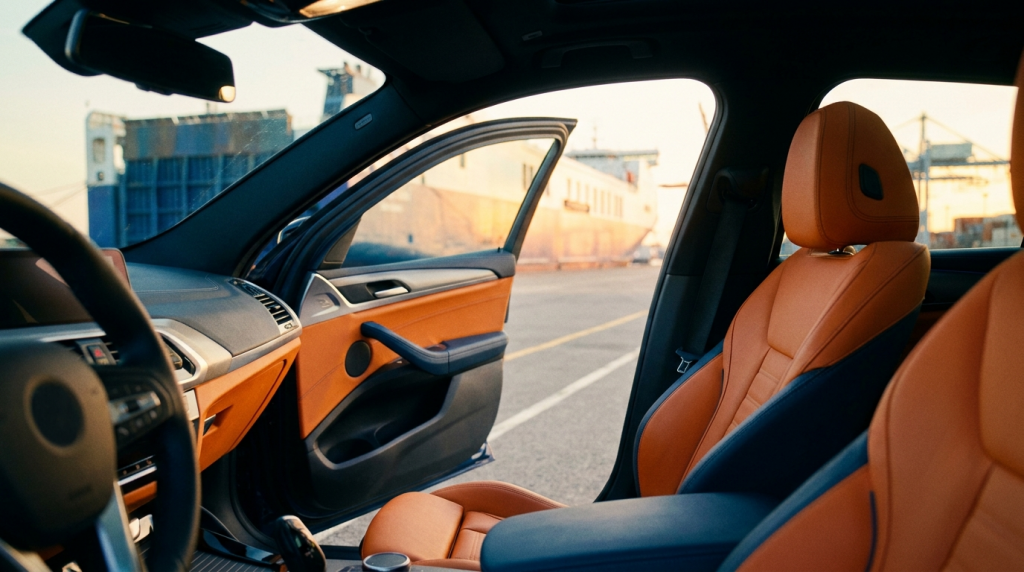
Short answer: When shipping by RoRo, your vehicle should always be empty, clean and free of any personal belongings. The reason: customs and biosecurity authorities expect an unladen car; loose items are generally not insured and increase the risk of theft. Permanently fitted accessories are usually permitted, as are a spare wheel or on-board tools, depending on the shipping line. Personal belongings, dangerous goods and a full fuel tank, on the other hand, are strictly prohibited. Keep the fuel tank low and, if in doubt, check with your haulage contractor or shipping line.
The key points in 5 points
- ‘Empty and clean’ is the basic rule: A Ro-Ro vehicle must be unladen and clean — that is the standard for safety.
- Loose items are not insured: As a rule, nobody is liable for personal belongings left in a car; you bear the risk of theft yourself.
- Fixed installations are usually fine: Factory-fitted or permanently installed accessories may remain; personal belongings must be removed.
- Fill the tank to no more than a quarter full: For safety reasons, shipping companies require a low fuel level and no dangerous goods on board.
- If in doubt, ask: The shipping company and freight forwarder are aware of the exact details of your route.
Why should the vehicle be empty when using RoRo?
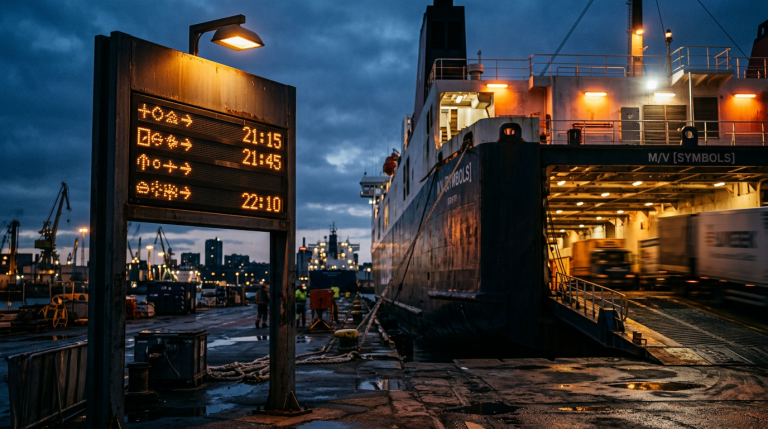
RoRo means that your car is driven onto the ship in running order and is parked on an open deck — accessible to terminal staff. This is precisely why you must not leave any personal belongings inside the vehicle. Customs and border authorities expect the vehicle to be unloaded. Items in the boot may be treated as separate goods and cause delays in clearance. Our guide shows you how to put together the necessary paperwork correctly: Overview of RoRo documents.
What about insurance and theft?
Transport insurance covers the vehicle — not its contents. Loose items in the car are almost never covered. If anything is lost or damaged, you’ll be left to foot the bill. As Ro-Ro decks are accessible during the journey, visible luggage also increases the risk of theft. An empty, tidy vehicle is therefore not just a requirement, but also protects you financially.
What role does biosecurity play?
Many destination countries carry out strict checks on vehicles for soil, plant matter, insects or seeds. A dirty car may result in a chargeable cleaning or quarantine upon arrival. You should therefore clean the interior, boot, wheel arches and underbody thoroughly before handing over your vehicle. Customs matters such as the Travel and the movement of goods These factors come into play when items carried are classified as goods subject to import duties.
What is allowed and what is forbidden?
Permanently fitted accessories are generally permitted: sat-navs, child seats with fixed mountings, and fitted roof racks. Some shipping companies accept a spare tyre, a set of tools or a jack — this depends on the specific requirements. However, personal belongings, household goods, dangerous goods such as spare fuel canisters or fire extinguishers not secured in their holders, and a full fuel tank are prohibited. As a rule of thumb, the fuel tank should be no more than a quarter full.
How do you prepare your car properly?
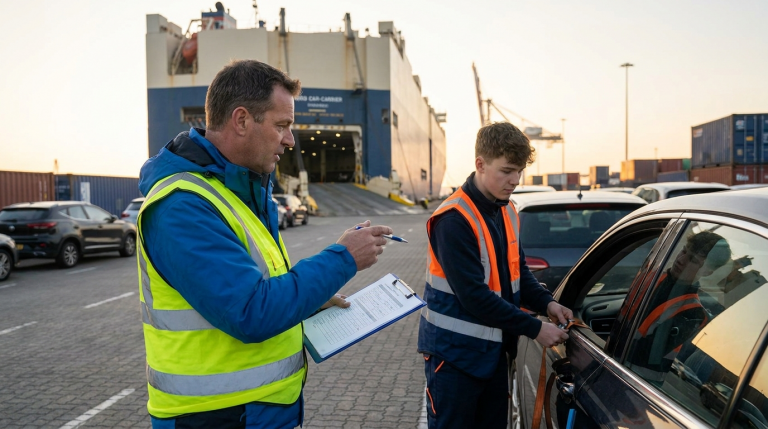
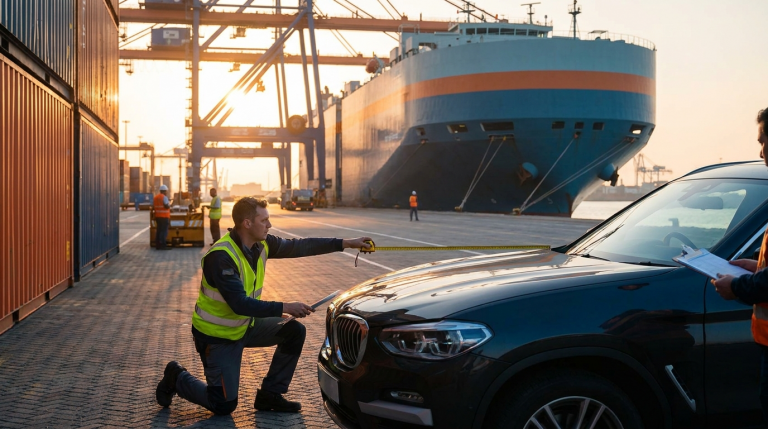
Empty the vehicle completely, clean it inside and out, and reduce the amount of fuel in the tank. Only leave the charging cable, warning triangle or first-aid kit behind if your shipping company expressly permits this. A structured Loading checklist for the Ro-Ro port helps you make sure you don’t miss anything. If you still have any questions, your haulier will clarify the exact rules for your route in advance.
FAQ
Am I allowed to leave luggage or household goods in the car?
No. Personal belongings and household effects do not belong in the vehicle. They are usually not insured and can complicate customs and clearance procedures.
Are spare tyres or vehicle tools permitted?
Often yes, but not always. It depends on the specific shipping company’s guidelines — check this before handing over the boat.
How full can the fuel tank be?
As a rule of thumb, the maximum is one quarter. For safety reasons, shipping companies require a low fill level; no dangerous goods.
Why does the car need cleaning?
For biosecurity reasons in the destination country. Soil, plant debris or insects may trigger a cleaning or quarantine procedure on arrival.
What happens if I leave items in there anyway?
You risk loss without insurance cover, delays in handling, and possibly refusal by the shipping company.
All the information in this article has been carefully researched, but is subject to change at any time. ODS Orient accepts no liability for the timeliness, accuracy or completeness of the information provided. Please contact us directly for a no-obligation quote.