
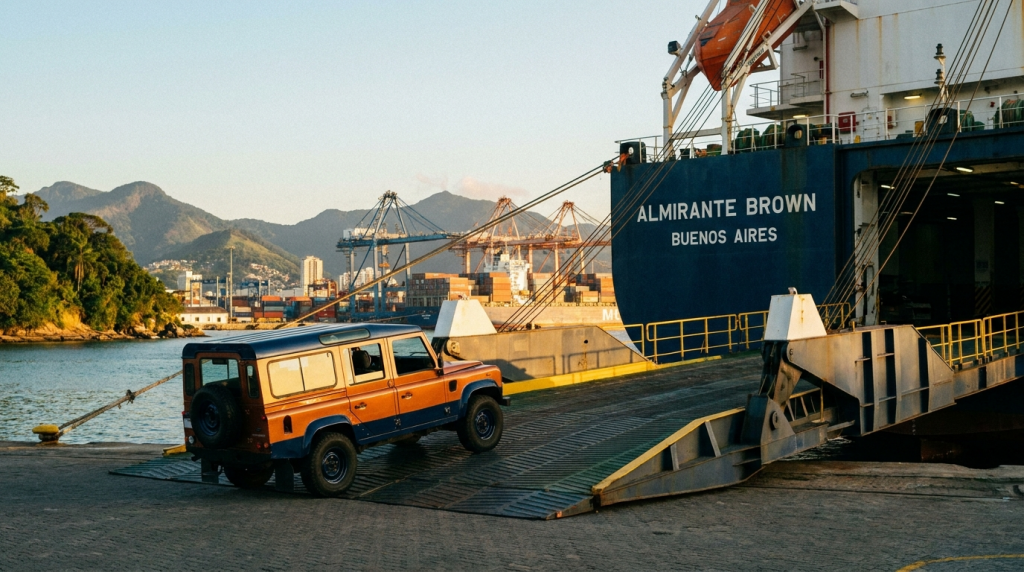
Short answer: You can ship a car to Argentina by Ro-Ro across the South Atlantic, usually from Bremerhaven or Hamburg, with the destination being Buenos Aires (partly Zárate). Transport by sea takes several weeks. The key factor is customs: Argentina’s vehicle imports are strictly regulated. You must therefore check in advance with Argentine customs and your freight forwarder whether your vehicle is eligible for import and under what conditions.
The key points in 5 points
- RoRo is the standard for roadworthy vehicles bound for Argentina.
- Port of destination: Buenos Aires, and also Zárate on the Río Paraná.
- Route: across the South Atlantic, taking several weeks from Northern Europe.
- Imports are strictly regulated – Check the requirements in advance.
- Documents and customs are key to ensuring a smooth import process.
How does shipping to Argentina work?
Your vehicle will be driven onto the ship under its own power at the port of loading – usually Bremerhaven or Hamburg in Germany – secured in place, and then driven off again at the port of destination. The route takes you across the South Atlantic, following the east coast of South America. To find out how the neighbouring region is connected, see our guide to Shipping to South America.
Which ports are relevant?
- Buenos Aires: the most important port and the main gateway for vehicle imports.
- Zárate: A major port for ships and container terminals on the River Paraná, upstream from Buenos Aires.
You choose the appropriate port of destination in consultation with your freight forwarder, depending on the route and destination.
How long does the transport take?
The journey time depends on the route, the shipping line and the timetable. For the route from Northern Europe via the South Atlantic to Argentina, you should allow for several weeks. Your freight forwarder will provide you with exact times when you make your booking – be sure to factor in the lead time and the cut-off time at the port of loading.
What are the import regulations in Argentina?
Argentina generally permits the import of vehicles, but regulates it strict: Specific authorisation, registration and customs requirements apply, and not every vehicle can be imported without further ado. Special rules apply in some cases to returning citizens, diplomats and household effects. The best way to find out whether your vehicle can be imported – and under what conditions – is to before the clearance process with Argentine customs.
What documents do you need?
- Commercial invoice or proof of purchase
- Bill of Lading
- Vehicle documents and proof of export from the EU
- Argentinian customs and import documents and, where applicable, licences
Exports from Germany are channelled through the ATLAS customs export declaration. We’ll explain exactly what’s important when it comes to the paperwork at Customs and documentation for Ro-Ro shipping.
How do you plan transport properly?
- Check import eligibility – liaise with Argentine customs and the freight forwarder at an early stage.
- Set the destination port and route.
- Compile all the documents.
- Document condition – Taking photos before loading helps in the event of complaints.
- Book RoRo shipping, take out insurance and arrange tracking.
FAQ
Which port is used for shipping to Argentina?
Usually via Buenos Aires, and sometimes via Zárate. The appropriate port of destination depends on the route and final destination and is agreed with the freight forwarder.
How long does it take for a shipment to reach Argentina?
The journey time depends on the route and timetable. From Northern Europe via the South Atlantic, the journey is expected to take several weeks.
Can I ship a second-hand car to Argentina?
Transport is possible, but importation is strictly regulated. You should check with Argentine customs in advance to find out whether your vehicle is eligible for import.
What documents do I need to prepare?
In particular, the commercial invoice, bill of lading, vehicle documents and proof of export, as well as the Argentine customs and import documents, including any necessary authorisations.
Is it worth taking out transport insurance?
Yes. As the shipping company’s liability is limited, transport insurance is strongly recommended. You should also document the condition of the vehicle before loading.
All the information in this article has been carefully researched, but is subject to change at any time. ODS Orient accepts no liability for the timeliness, accuracy or completeness of the information provided. Please contact us directly for a no-obligation quote.


