
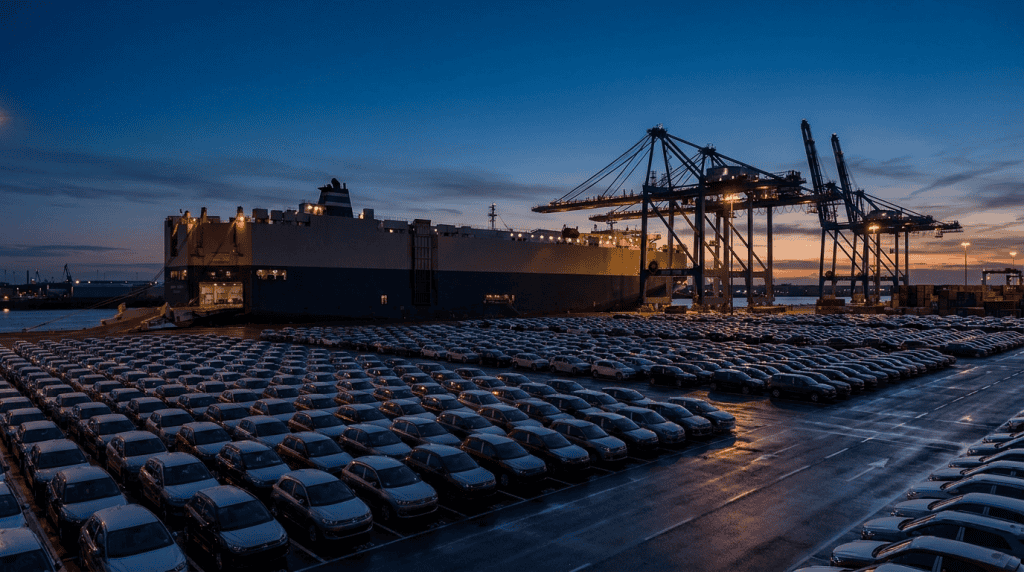
Short answer: There are various risks associated with RoRo shipping which shippers should be aware of and actively minimise. These include damage in transit caused by rough seas or improper handling, the effects of the weather, theft at port terminals, documentation errors and delays in port operations. These risks can be significantly reduced through careful preparation, a photographic record, the right insurance cover and the choice of an experienced freight forwarder.
The key points in 5 points
- Damage during transport caused by rough seas, handling or inadequate load securing is the most common risk.
- Delays and route changes due to weather conditions may extend the journey time.
- Theft and vandalism at port terminals are rare, but they do happen.
- Document errors lead to delays at customs and in the clearance process at the port of destination.
- A photographic record and transport insurance offer the best protection.
What are the risks involved in Ro-Ro shipping?
Ro-Ro transport is one of the safest and most tried-and-tested methods for international vehicle transport. Nevertheless, there are risks that shippers should be aware of in order to protect themselves as effectively as possible. The good news is that most risks can be significantly reduced through careful preparation and the right protective measures. Below, we outline the most common risks and show you how to deal with them effectively.
How does damage during transport occur, and how can it be prevented?
Transport damage is the most common risk associated with Ro-Ro shipments. It can be caused by a variety of factors:
- Sea conditions and the movement of the ship, which may cause scratches or dents
- Improper handling when entering and leaving the terminal
- Inadequate cargo securing on board the vessel
- Contact with other vehicles on the loading decks
To minimise damage, you should document the condition of your vehicle in detail before handing it over at the port. You should also remove all loose items from the vehicle, fold in the wing mirrors and ensure that the handbrake is applied. Which Safety protocols for Ro-Ro transport We have set out the applicable terms and conditions separately. Transport insurance provides you with financial protection should damage occur despite all precautions taken.
What weather risks are there at sea?
Weather conditions at sea cannot be controlled and can affect transport in various ways:
- Rough seas can lead to more pronounced ship movements and an increased risk of damage.
- Storms can cause route changes and delays.
- In rare cases, extreme temperatures can affect a vehicle’s paintwork or electronics.
- Salt spray can corrode metal parts during long sea crossings.
Shipping companies have experienced crews and access to up-to-date weather data to minimise risks. Nevertheless, you should allow for possible weather-related delays when planning your schedule.
How high is the risk of theft at ports?
Theft and vandalism at port terminals are rare thanks to modern security systems, but they do occur. The key factors are:
- Major international ports have extensive surveillance systems and access controls.
- The risk tends to be higher at smaller or less well-secured ports.
- Personal belongings left in the vehicle increase the risk of theft.
- Statistically speaking, some regions have higher rates of theft from ports.
Do not leave any valuables in the vehicle and remove all non-permanent fittings. Take photographs to document the condition of the vehicle before handing it over, so that you have evidence in the event of damage.
What documentation risks should you be aware of?
Incorrect or incomplete documents are among the most common causes of delays and additional costs in Ro-Ro transport. Typical documentation risks include:
- Incorrect information in the bill of lading: Discrepancies in the VIN number, recipient details or freight terms will cause problems during customs clearance.
- Missing commercial invoice: Without a correct commercial invoice, customs clearance at the port of destination will be significantly delayed.
- Incomplete export documents: Failure to submit export declarations may prevent the goods from being loaded at the port of departure.
- Proof of insurance: Without proof of insurance, no claim can be enforced in the event of a claim.
Check all documents carefully before shipment and keep copies – both digital and on paper – to hand.
How does an effective photographic record work?
The photographic record is your most important line of defence in the event of a claim. We explain in detail how to compile it correctly at Avoiding damage: Photographic record & pre-inspection. The key points:
- Date: Draw up the report immediately before handover at the port terminal – not before.
- Panoramic shots: Take photographs of the vehicle from all four corners, from the front, the rear and both sides.
- Close-ups: Document any existing damage, such as scratches, dents or stone chips, separately.
- Interior: Take photos of the dashboard, the odometer and the condition of the vehicle’s interior.
- Date and time: Please ensure that the photos are time-stamped.
Keep the photos in a safe place and send a copy to your haulage contractor. In the event of damage, they will serve as evidence for insurance claims.
How does transport insurance provide cover?
Specific transport insurance is the most effective protection against financial loss in the case of Ro-Ro shipments. The shipping company’s standard liability is usually limited and does not cover the full value of the vehicle. Good transport insurance covers:
- Protection against transport damage caused by rough seas and handling
- Coverage in the event of total loss (e.g. due to a shipping accident)
- Protection against theft and vandalism
- Coverage for damage caused by force majeure (storms, flooding)
Before each shipment, ask for a personalised insurance quote and make sure you check the exact terms of cover.
What are the risks of delays, and how can you plan effectively?
Alongside damage to property, delays are among the most significant risks. Possible causes include:
- Port congestion and waiting times for ships off the coast
- Route changes and delays due to weather conditions
- Strikes or political unrest at ports along the route
- Customs delays at the port of destination due to missing documents
- Technical problems on the ship
Always allow for a buffer when arranging time-sensitive shipments. Check the current situation at the port in advance and keep yourself updated on the status of your shipment.
FAQ
How often does transport damage occur with RoRo?
Statistically speaking, RoRo is a very safe method of transport. Minor damage such as scratches or slight dents does occasionally occur, but more serious damage is rare. A good photographic record helps to support any claims in the event of damage.
Does the shipping company’s liability cover all damages?
No, the shipping company’s liability is limited by law and does not usually cover the full value of the vehicle. Additional transport insurance is therefore strongly recommended.
What should I do if my vehicle arrives at the port of destination damaged?
Document the damage immediately with photographs, report it to the port agent and obtain written confirmation of the damage. Then inform your insurance company and freight forwarder, providing them with all the relevant documentation.
Are personal belongings in the vehicle covered by insurance?
No, personal belongings left in the vehicle are generally not covered either by the shipping company’s liability or by standard transport insurance. Do not leave any valuables in the vehicle.
How can I minimise the risk of theft?
Remove all valuables and accessories that are not permanently fitted. Document the condition with photographs and choose ports with good security standards. Insurance covering theft provides additional security.
Can I track the delivery status of my parcel?
Yes, most shipping companies offer online tracking, which allows you to track the current location and estimated time of arrival of your vehicle. Ask your freight forwarder for the tracking details.
All the information in this article has been carefully researched, but is subject to change at any time. ODS Orient accepts no liability for the timeliness, accuracy or completeness of the information provided. Please contact us directly for a no-obligation quote.