The decision between RoRo and container transport depends heavily on the type of cargo, the route and the safety requirements. When comparing ro-ro vs container, it is often found that ro-ro is particularly efficient for roadworthy vehicles or heavy machinery, while container solutions offer more protection and flexibility for sensitive or smaller cargo. In practice, a combination of cost structure, loading capacity of the goods, port infrastructure and transit time often determines which transport solution is more economical in the long term.
Short answer in five points
When it comes to roro vs container, some key differences can be quickly recognised.
RoRo is particularly suitable for rolling vehicles and machines.
Container transport offers more protection against external influences and theft.
RoRo is often faster in port handling.
Containers enable flexible groupage loading.
The choice depends heavily on the route, load type and logistics planning.
Introduction Why the roro vs container comparison is important for companies
In international vehicle and machinery transport, companies are often faced with a fundamental decision. Should the cargo be shipped by roll on roll off or does container transport make more sense?.
The roro vs container comparison is particularly relevant for car manufacturers, dealers, machinery exporters and project logistics companies. Both transport methods are established worldwide, but differ significantly in terms of process, risk profile and logistical flexibility.
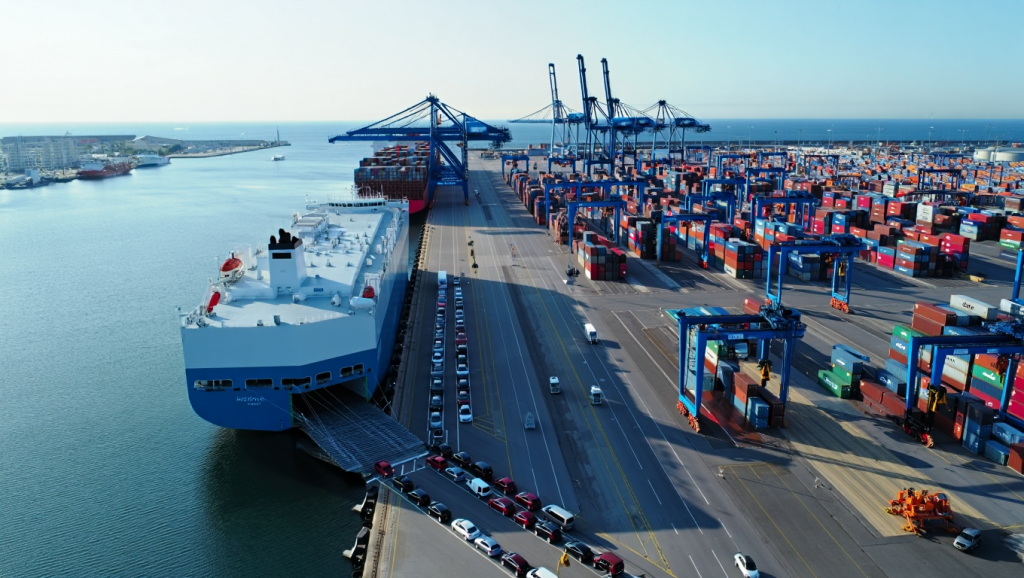
RoRo ships are specially built for rolling cargo. Vehicles, trailers or heavy machinery are driven directly on board via a ramp. Container transport, on the other hand, uses standardised steel containers that are loaded onto container freighters using cranes.
In practice, it is often the case that neither solution is fundamentally better. Rather, the optimal choice depends on various factors.
What does RoRo transport mean in international shipping?
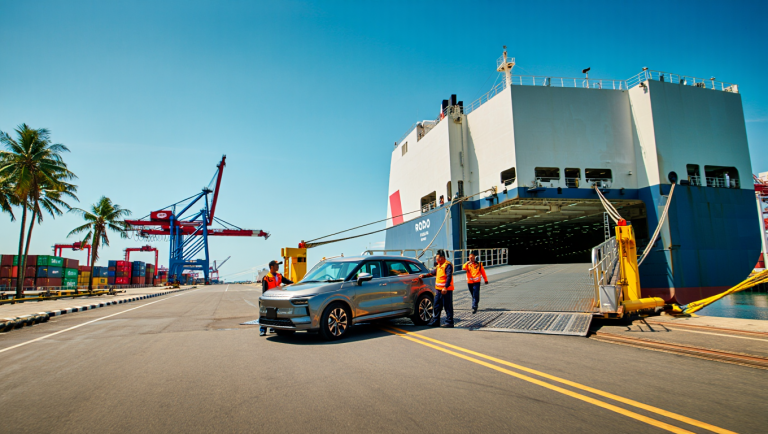
RoRo stands for Roll on Roll off. The cargo is driven onto the ship via a ramp and secured on special decks inside the ship.
This method is primarily used for vehicles. These include cars, lorries, buses, construction machinery and agricultural vehicles. MAFI trailers are also frequently used to transport heavy or non-rollable goods on RoRo ships.
RoRo ships are often referred to as PCTCs. This abbreviation stands for Pure Car and Truck Carrier and describes special car carriers with several vehicle decks.
If you are interested in the process in more detail, you can find a detailed explanation here
https://odsorient.com/wie-funktioniert-roro
The big advantage is the speed of handling. Vehicles can be loaded relatively quickly as no container loading is necessary.
How does container transport work in comparison
In container transport, the cargo is loaded into standardised steel containers. These containers are then lifted onto the ship using harbour cranes.
The containers can vary in size. Twenty-foot or forty-foot containers are often used. Vehicles are usually secured in special racks or with securing systems in the container.
Container transport offers particular advantages when goods require additional protection. Containers are closed and protect against the weather, dirt and unauthorised access.
When comparing roro vs container, this is one of the most important differences.
Containers can also be reused in intermodal transport. They can be easily transferred to rail or lorry without having to unload the load again.
How does a RoRo shipment work in practice
The operational process of a RoRo shipment usually follows several clearly defined steps.
First, the vehicle or machine is brought to the port of loading. In international transport, this port is referred to as POL. The abbreviation stands for Port of Loading.
Technical checks are carried out before shipping. This often includes a vehicle inspection and documentation of any previous damage.
After registration, the vehicle is driven to the terminal area and parked there until loading. As soon as the ship docks, the vehicles are driven onto the respective decks via ramps.
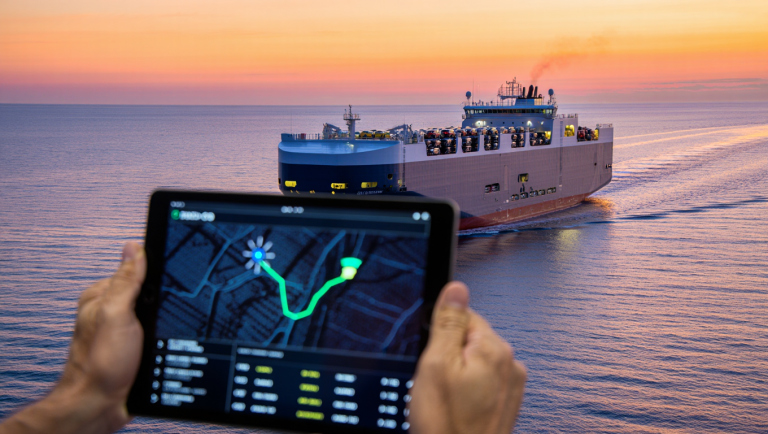
The scheduled departure time is referred to as ETD. The estimated time of arrival at the port of destination is indicated as ETA.
In international shipping, the port of destination is referred to as POD, i.e. Port of Discharge.
A detailed overview of important points for RoRo transports can be found here
https://odsorient.com/was-muss-ich-bei-einer-roro-verschiffung-beachten
Which documents are required for shipping
Transport documents play a central role in both RoRo and container transport.
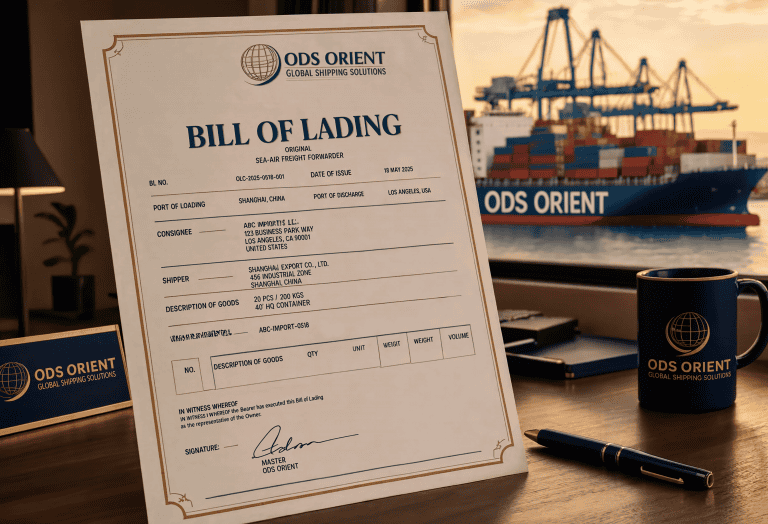
The most important document is the Bill of Lading, often referred to as B L. This document confirms the transport contract and also serves as proof of ownership of the goods.
Other important documents can be
Export documents and customs documents
Vehicle documents for vehicle exports
Commercial invoice and packing list
Depending on the country of destination, additional documents may be required.
The correct securing of cargo and means of transport is regulated internationally by the CTU Code. An official source can be found here
https://www.imo.org/en/OurWork/Safety/Pages/CTU-Code.aspx
What risks are there when comparing roro vs. container
When evaluating roro vs container, companies should also take possible risks into account.
RoRo transport takes place on open vehicle decks within the ship. Although the decks are protected, there is a certain risk due to movement during the sea voyage or handling processes in the harbour.
Containers offer additional protection here, as the cargo is completely enclosed.
However, container transport can also have risks. These include incorrect load securing in the container or damage due to incorrect stowage.
In practice, it is often the case that errors in preparation are one of the most common causes of transport damage.
Typical mistakes when planning international vehicle transports
Experienced logistics departments pay particular attention to some typical sources of error.
Inadequate load securing
Unclear documentation
Lack of coordination with the port of destination
Underestimated harbour processes
When comparing roro vs container, it becomes clear that the organisational effort can vary greatly.
RoRo transports require precise planning of vehicle availability and terminal delivery. Container transport, on the other hand, requires precise planning of container loading.
When is RoRo the better choice
RoRo transport is particularly efficient for certain scenarios.
Ready-to-run vehicles can be loaded quickly.
Large machines can be transported without dismantling.
Port handling is often faster than container handling.
RoRo has therefore established itself as the standard, particularly in the automotive sector.
Many international manufacturers use RoRo ships to export vehicles worldwide.
When container transport makes more sense
Container solutions offer clear advantages for certain transport requirements.
Sensitive or high-value goods require additional protection.
Several small consignments can be loaded together.
The containers are easier to use in multimodal transport.
A comparison of roro vs container therefore often shows that containers are particularly useful for smaller or mixed loads.
What role do harbours and routes play
Not every harbour has RoRo infrastructure. Special ramps and terminal areas are required to drive vehicles safely onto the ship.
Container ports, on the other hand, are much more widespread.
The available infrastructure therefore also plays a major role when planning international transport.
Companies often first check which routes are available and which ship connections operate regularly.
Current departures and timetables can be found here
https://odsorient.com/fahrplaene
How companies make the right decision
The decision between RoRo and container transport is usually made on the basis of several criteria.
Type of load
Condition and drivability of the vehicles
Destination region and port infrastructure
Transit time and logistics planning
Risk assessment
In practice, logistics experts often analyse several scenarios before deciding on a transport solution.
As every transport is individual, the exact cost structure is usually only calculated after a specific enquiry. A customised offer is therefore usually required for reliable planning.
FAQ Frequently asked questions about roro vs container
What is the main difference between RoRo and containers?
The most important difference lies in the loading process. With RoRo, vehicles are driven directly onto the ship. With container transport, they are loaded into containers and lifted onto the ship using cranes.
Is RoRo cheaper than container transport
This depends heavily on the route, the vehicle size and the available ship connection. In many cases, RoRo can be more efficient, while containers offer more protection.
Can vehicles that are not ready to travel also be transported by RoRo
Yes, special MAFI trailers are often used for this purpose, on which machines or damaged vehicles are loaded.
How long does an international vehicle transport take
The transit time depends heavily on the route and the ship connection. In addition to the pure sea voyage, port processes and customs clearance must also be taken into account.
Conclusion
The comparison of ro-ro vs container shows that both transport solutions have their own strengths. RoRo is particularly impressive for ready-to-go vehicles and large machines thanks to efficient loading processes and fast port handling. Container transport, on the other hand, offers additional protection and flexible application options in multimodal transport.
Companies should therefore not only consider costs, but also safety requirements, route availability and logistical processes. In many cases, detailed transport planning determines which solution is more economical in the long term.
Disclaimer: All information in this article has been carefully researched but is subject to change at any time. ODS Orient accepts no liability for the topicality, accuracy and completeness of the information provided.
When does a hybrid approach combining Ro-Ro and container transport make sense?
Ro-Ro and container transport are not mutually exclusive – for mixed shipments, it is often the case that a Combination the best solution. A hybrid approach is worthwhile, for example, if:
- You roadworthy vehicles ship by RoRo, but additional Accessories or spare parts would like to send it securely in a container,
- part of the load not roadworthy or is particularly valuable and requires the security of the sealed container,
- You can bundle several items with different requirements into a single consignment.
Careful planning is crucial: which unit is loaded onto the vessel, and which is stowed? Your freight forwarder coordinates the two routes so that the timing and costs are aligned.