Roro tracking in 2026 combines VIN-based vehicle identification, bill of lading references and AIS ship data into an integrated monitoring system. Linking ETD ETA, POL POD and document status in a structured workflow creates transparency across the entire ro-ro process. Clean master data, clear responsibilities and defined escalation channels in the event of deviations are crucial. This reduces risks, optimises throughput times and proactively informs customers.
Short answer in 5 bullet points
- VIN serves as a unique vehicle key across all systems
- B L links consignment, shipping company and contract data
- AIS enables live positioning of the RoRo or PCTC vessel
- ETD ETA and POL POD form the temporal and geographical structure
- A centralised dashboard reduces media disruptions and error rates
Introduction: Why roro tracking 2026 is becoming strategic
Global vehicle logistics is under increasing pressure to be efficient. Increasing volumes, volatile schedules and stricter compliance requirements make transparency essential along the entire transport chain. According to the UNCTAD Review of Maritime Transport 2025, global maritime transport continues to be highly dynamic, particularly in the area of rolling cargo.
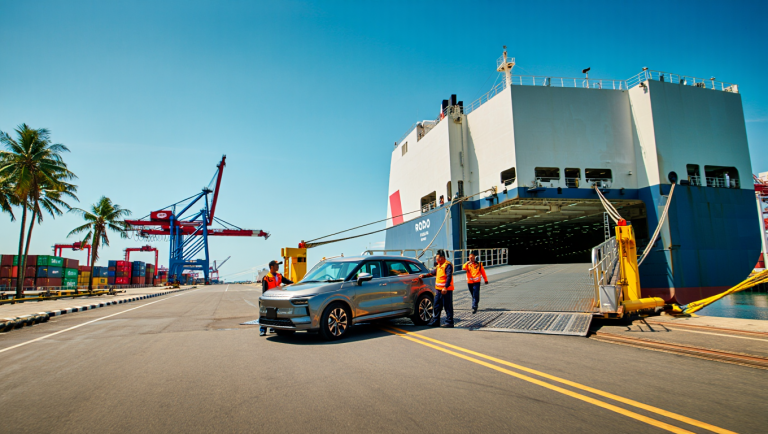
RoRo transports, often handled by PCTC vessels, require a different tracking logic than container transports. Vehicles travel independently on board, are distributed on decks and are often combined with MAFI trailers. Classic container tracking numbers are not sufficient here.
A professionally designed roro tracking system therefore combines three central data sources: VIN, B L and AIS. Below you will learn how these elements interact and how you can use them to develop a robust system for 2026.
What does roro tracking actually mean
Roro tracking describes the structured tracking of rolling cargo throughout the entire transport process. The focus is on individual vehicles or mobile units, not standardised containers.
The speciality lies in the identification. While the container number dominates in container transport, the Vehicle Identification Number, or VIN for short, is the most important key in the RoRo sector.
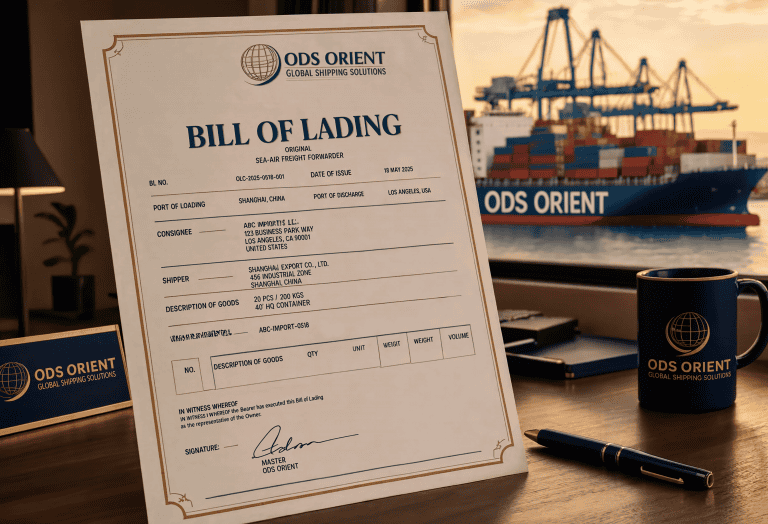
At the same time, each shipment is documented via a Bill of Lading. The B L links the shipper, consignee, shipping company, POL and POD as well as contractual details. This is supplemented by AIS data, which shows the current position of the ship almost in real time.
A modern roro tracking system brings these three levels together in a structured process.
How does an integrated RoRo tracking system work?
Step 1: Set up master data structure
The basis is a clean database. In practice, it is often the case that VIN numbers are recorded incorrectly or stored multiple times. Even a transposed number leads to tracking gaps.
A central database in which each VIN is clearly assigned to an order and a B L number is recommended. In addition, the following fields should be standardised:
ETD
ETA
POL
POD
Shipping company
Ship name
Voyage number
This structure forms the backbone for subsequent monitoring.
Step 2: Document linking via B L
The Bill of Lading acts as a legal and logistical link. Each VIN must be clearly assigned to a B L.
Error images from practice:
Unclear allocation for groupage shipments
Several vehicles under false B L reference
Manual transfer errors between Excel and ERP
A digital system reduces these risks by automatically linking the VIN and B L.
Step 3: Integration of AIS data
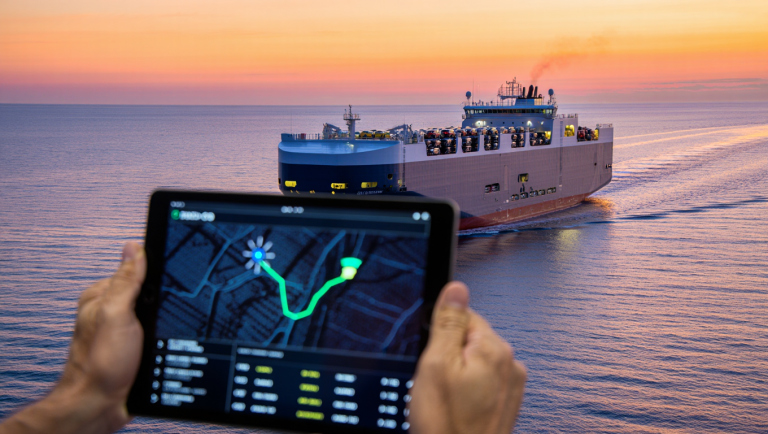
AIS, the Automatic Identification System, provides the ship's position data. For RoRo and PCTC carriers, this source is essential for checking ETD ETA forecasts.
A tracking dashboard should display the following information:
Current position of the ship
speed
Course
Last port call
Prognostic arrival at the POD
This creates transparency about possible delays or route changes.
Which documents are relevant for roro tracking
In addition to the VIN and B L, other documents also play a role:
Booking confirmation
Export customs documents
Vehicle documents
Dangerous goods documents for special units
Harbour instructions
Compliance with international guidelines on cargo securing is particularly important. The CTU Code of the International Maritime Organisation provides binding standards in this area: https://www.imo.org/en/OurWork/Safety/Pages/CTU-Code.aspx
Structured document storage should be digital and directly linked to the VIN.
How ETD ETA and POL POD are systematically utilised
ETD and ETA as time axes
ETD indicates the planned departure at the Port of Loading, ETA the expected arrival at the Port of Discharge.
In a professional roro tracking workflow, this data is not only recorded but also actively monitored. Deviations between planned and actual departures are automatically highlighted.
Typical practical problem: ETA is not updated even though the ship is travelling significantly slower according to the AIS. An intelligent system synchronises this data.
POL and POD as geographical anchors
POL and POD structure the route. For international automotive logistics, it is crucial to map transhipment points transparently.
During transshipment processes, it must be clear which ship the vehicle is currently on. Information gaps often occur here if systems do not communicate with each other.
Which risks can be minimised with roro tracking
A well thought-out system reduces, among other things:
Loss of vehicles in the information flow
Unclear responsibilities in the event of delays
Lack of transparency towards customers
Problems with customs clearance
Reputational risks due to delayed status reports
In practice, it has been shown that media discontinuities between shipping company portals, internal systems and manual Excel lists in particular lead to errors.
A centralised dashboard provides a remedy here.
Checklist: How to set up a RoRo tracking system
- Define a central VIN database
- Link each VIN uniquely to a B L number
- Store ETD ETA POL POD standardised
- Integrate AIS data automatically
- Set up warning messages for time deviations
- Train employees in the use of status codes
- Document escalation processes in the event of delays
Structured preparation of the vehicles is also recommended before shipping. You can find practical instructions under Timetables → https://odsorient.com/fahrplaene and in the article What do I have to consider when shipping a RoRo? → https://odsorient.com/was-muss-ich-bei-einer-roro-verschiffung-beachten
This content helps to avoid operational errors even before tracking.
How to integrate MAFI and special cargo
Not every RoRo load is a vehicle ready to travel. Construction machinery, project cargo or oversized units are often loaded onto MAFI trailers.
For roro tracking, this means
Enter additional identification numbers
Link MAFI reference with VIN or project number
Document special safety regulations
Close coordination with the terminal and shipping company is required here in order to avoid information gaps.
Which technical solutions will be relevant in 2026
Modern systems rely on:
Cloud-based platforms
API connection to shipping companies
Automated AIS feeds
Dashboard visualisation
Mobile status queries
However, the software itself is less important than process clarity. Without defined responsibilities, even the best tool is ineffective.
Typical errors when setting up a tracking system
In practice, there are recurring weak points:
Incomplete master data
No standardised spelling of ports
Manual data entry without validation
Lack of escalation rules
No synchronisation between AIS and ETA
A structured roro tracking concept therefore begins with clearly documented processes.
FAQ on the subject of RoRo tracking
What is the difference between container tracking and RoRo tracking?
Container tracking centres on the container number. In RoRo tracking, the VIN is the central identification feature. Vehicles are recorded individually, not as standardised boxes.
How often should AIS data be checked
Ideally automated and continuous. However, at least daily for time-critical consignments.
What role does the Bill of Lading play in tracking
The B L links the vehicle, contract, shipping company and route. Without correct B L allocation, reliable tracking is not possible.
Can roro tracking be fully automated?
Technically, yes to a large extent. Nevertheless, human control and plausibility checks are essential, especially in the event of deviations.
How to obtain customised cost information
The costs depend on the route, vehicle type, volume and additional services. A customised quote is always required for a reliable calculation.
Conclusion: Transparency as a competitive advantage
Roro tracking is evolving from an operational tool to a strategic control instrument in 2026. Intelligently combining VIN, B L and AIS creates transparency across the entire transport process.
Clean data, clear responsibilities and digital integration are crucial. Companies that monitor their RoRo processes in a structured manner reduce risks, increase predictability and strengthen their position in international competition.
All information in this article has been carefully researched but is subject to change at any time. ODS Orient accepts no liability for the topicality, accuracy and completeness of the information provided.