The IMO CO2 fee for shipping is to take effect worldwide from 2028. However, the strategic, contractual and operational decisions will already be made in 2026 and shipping companies, shippers and logistics service providers will have to adapt their fleets, routes, charter contracts and reporting processes at an early stage. Those who do not react until 2028 risk higher cost pressure, capacity bottlenecks and contractual risks. Scenario planning, documentation security and sustainable transport strategies are crucial now.
Short answer in 5 bullet points
- The IMO CO2 shipping fee is expected to be mandatory from 2028
- 2026 is the key year for investment and contract decisions
- RoRo and PCTC transport are a particular focus
- Emission-intensive routes may become structurally more expensive
- Early planning reduces risks in B L, ETD ETA and POL POD processes
Why the year 2026 is crucial
International shipping is facing a historic turning point. The planned IMO CO2 shipping levy is intended to create a global mechanism that will make emissions more expensive and promote climate-friendly technologies.
Although the introduction is scheduled for 2028, regulatory processes, investment cycles and charter terms clearly show that 2026 is the actual decision year.
In practice, it is often the case that fleet modernisation, alternative fuels or new construction decisions require at least 24 to 36 months' notice. Those who only react when the regulation formally comes into force lose strategic flexibility.
What does the IMO CO2 shipping fee mean in concrete terms?
How does CO2 pricing in maritime transport work?
The IMO CO2 charge for shipping aims to make greenhouse gas emissions more expensive per transported unit. Under discussion:
- Global CO2 taxes per tonne emitted
- Emission intensity limits
- Fund systems to promote climate-friendly technologies
The International Maritime Organisation is driving these developments forward in regulatory terms. The relevant principles can be found in the framework of the IMO CTU Code
https://www.imo.org/en/OurWork/Safety/Pages/CTU-Code.aspx
Why does this affect RoRo and PCTC in particular?
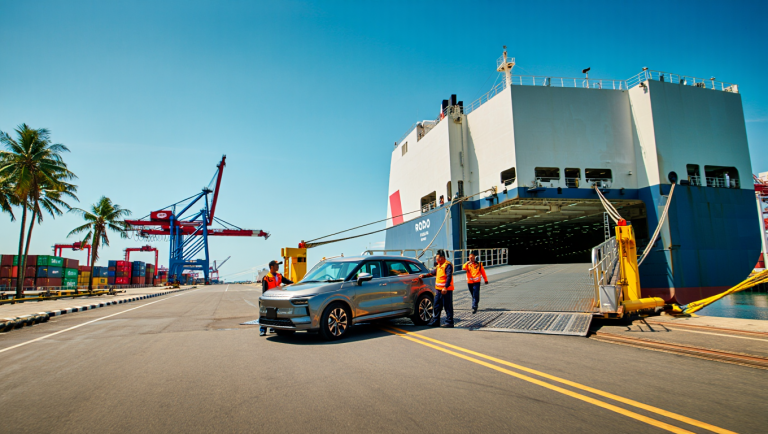
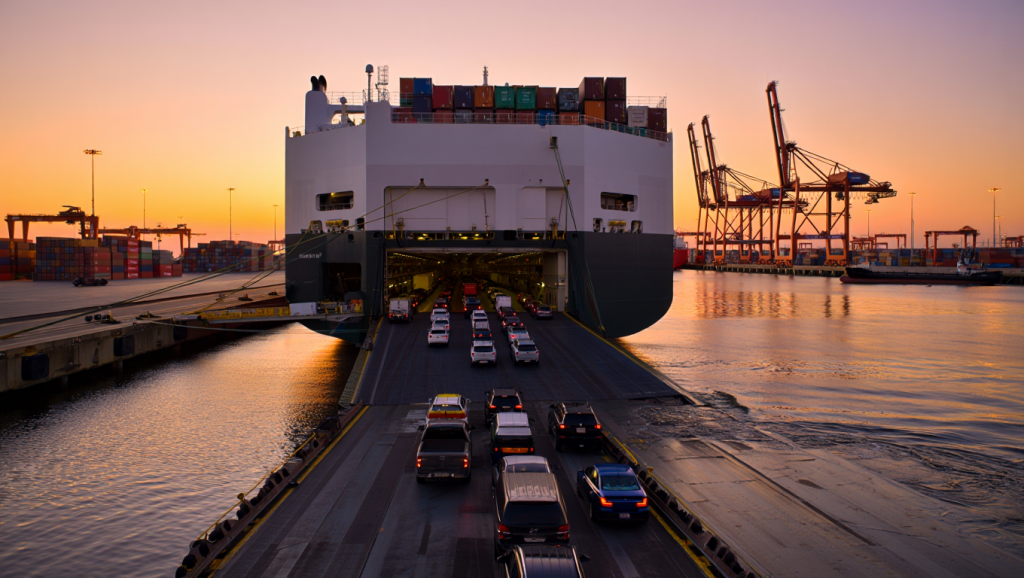
RoRo and PCTC transport services transport vehicles, construction machinery and project cargo. These ships are
- Large volume
- Partly energy-intensive
- Travelling on fixed lines with clearly defined ETD ETA structures
If emission costs rise, they have a direct impact on route calculations and timetables. You can find current departures at
https://odsorient.com/fahrplaene
Why 2026 is strategically more important than 2028
Investment cycles and fleet planning
Newbuildings or retrofits for alternative fuels such as methanol or LNG require years of planning. Shipping companies will have to decide in 2026 whether:
- Existing tonnage is modernised
- New PCTC or RoRo vessels can be ordered
- Routes to be restructured
These decisions will determine the cost structure from 2028 and beyond.
Contract terms and B L structures
Many framework agreements run for two to three years. Anyone concluding new contracts in 2026 must already factor in possible CO2 costs.
Important documents are
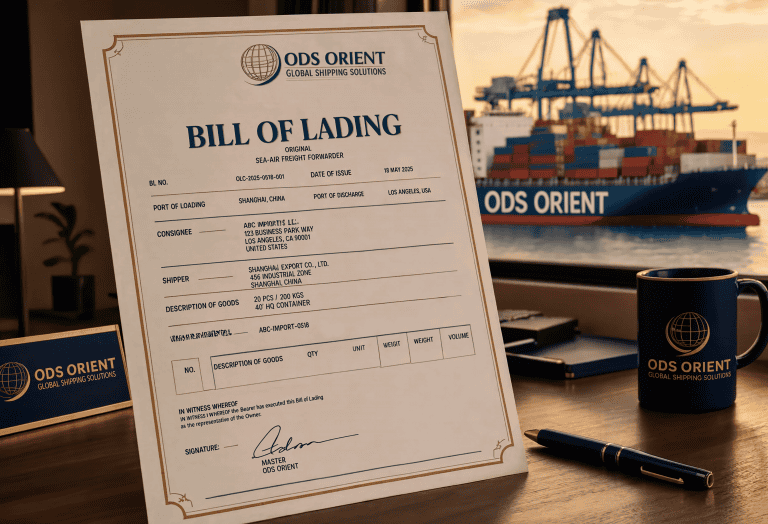
- B L Bill of Lading
- Charter parties
- Service Level Agreements
- Emissions reporting
In practice, unclear regulations often lead to disputes about the passing on of costs.
What operational effects are to be expected
Adjustments to ETD ETA and route planning
To reduce emissions, shipping companies can:
- Drive slower
- Choose alternative routes
- Change harbour rotations
This directly influences ETD ETA planning and supply chain stability.
Effects on POL POD structures
Emission-intensive ports or long distances can become more expensive. Companies need to check:
- Is the current POL still optimal
- Are there closer alternatives to the POD
- How do transit times affect storage costs?
Checklist preparation for the IMO CO2 shipping fee
Strategic preparation
- Analyse emissions intensity per route
- Check existing charter contracts
- Develop scenarios for passing on costs
- Updating the sustainability strategy
Operational preparation
- Optimise documentation processes for B L
- Standardise loading processes
- Customise reporting systems
- Check supply chains for time buffers
The loading checklist Error-free in the RORO harbour offers practical preparation for RoRo transports
https://odsorient.com/beladungs%E2%80%91checkliste-fehlerfrei-in-den-roro%E2%80%91hafen
Typical error patterns in practice
In practice, this is often the case:
- Issue costs are not regulated transparently in offers
- No contractual clauses on passing on costs
- Routes are not regularly checked for efficiency
- Documents contain contradictory information on loading units
Such errors can have a considerable economic impact when the IMO CO2 shipping fee is introduced.
Digitalisation as a competitive advantage
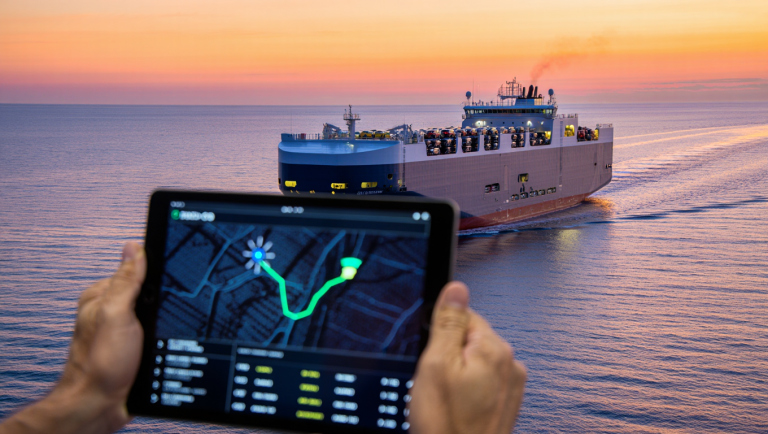
Digital processes help to make emissions and performance transparent. In addition to maritime reporting obligations, digital visibility also plays a role.
Technical performance factors such as Interactivity to Next Paint INP will become more relevant for digital services in the future. Background information on this is provided by
https://web.dev/blog/inp-cwv-march-12
Efficient quotation and tracking processes also strengthen competitiveness. Customised transport can be requested via the quotation calculator
https://odsorient.com/angebotsrechner
A personalised quotation is always required for specific costs.
FAQ on the IMO CO2 shipping fee
When does the IMO CO2 shipping fee apply?
The introduction is expected from 2028. However, political decisions and detailed regulations will already be prepared and finalised by 2026.
Why 2026 is so important
Because investment decisions, charter contracts and fleet modernisations require lead time. Those who plan strategically for 2026 will secure advantages from 2028.
Does this only apply to container transport
No. RoRo, PCTC and project transport are particularly affected, as they have large volumes and specific route structures.
Will transport automatically become more expensive
A generalised statement is not possible. The effects depend on the route, type of ship, capacity utilisation and contract design. A case-by-case analysis is necessary for individual assessments.
What should shippers do now
- Collect emissions data
- Check contract clauses
- Define sustainability goals
- Coordinate closely with shipping companies and logistics partners
Conclusion Act now instead of waiting
The IMO CO2 shipping fee marks a structural change in international maritime transport. Even though the formal introduction is planned from 2028, the economically relevant decisions will already be made in 2026.
Companies that analyse, negotiate and adapt their processes now will reduce risks and secure strategic advantages. Sustainability is not just a regulatory obligation, but a competitive factor.
Disclaimer: All information in this article has been carefully researched but is subject to change at any time. ODS Orient assumes no liability for the topicality, correctness and completeness of the information provided.